Classical music
Josef Krips
Josef Krips (1902-1974) was one of the great conductors of the twentieth century, renowned for a Mozart of limpid self-evidence. Born in Vienna and a pupil of Felix Weingartner, he conducted seventy-three different operas in seven years at Karlsruhe before his career was broken by Nazism: driven out of Germany in 1933 because of his father’s Jewish ancestry, barred from all activity after the Anschluss, he survived by working clandestinely in a factory. In 1945 it was he who was asked to revive the musical life of Vienna. His relationship with Montreux was a lasting one: he lived in Territet, was one of the first major donors of the Septembre Musical and conducted it seven times, from 1952 to 1971.
Josef Krips: from hiding in Vienna to the quays of Territet
A career broken by Nazism
Born in Vienna in 1902, Josef Krips began as a violinist at the Volksoper before becoming chorus master, then conductor. A pupil of Felix Weingartner, he was appointed music director at Karlsruhe at twenty-nine and conducted there, in seven years, seventy-three different operas. Bayreuth and Salzburg called on him.
In 1933 the Nazis drove him out of Germany: his father was of Jewish ancestry. He fell back on the Vienna State Opera, until the Anschluss of 1938. He tried Belgrade, but the war reached Yugoslavia in 1940 and he could return to Austria only by becoming a factory worker, clandestinely.
In 1945, in a city in ruins, it was he whom Vienna asked to take up the baton again and revive the musical life of the city.
Seven times at the head of the Septembre Musical
Krips settled in Territet, on the Montreux quays, and his attachment to the Riviera went beyond mere residence: he was one of the first major donors of the Septembre Musical, the classical music festival of Montreux-Vevey.
He conducted it seven times, in 1952, 1954, 1958, 1960, 1964, 1965 and 1971, which makes him one of the most constant conducting figures in the festival’s history. His wife Harrietta still lived in Territet at the end of the 1990s.
The music critic Numa F. Tétaz summed up his art thus: with him, the music seems to flow from the source, and that self-evidence rests on a rare balance between aesthetic perfection and a refusal of academicism.
Related places
▸Septembre Musical Montreux-VeveyClassical music festivalOpen the place →
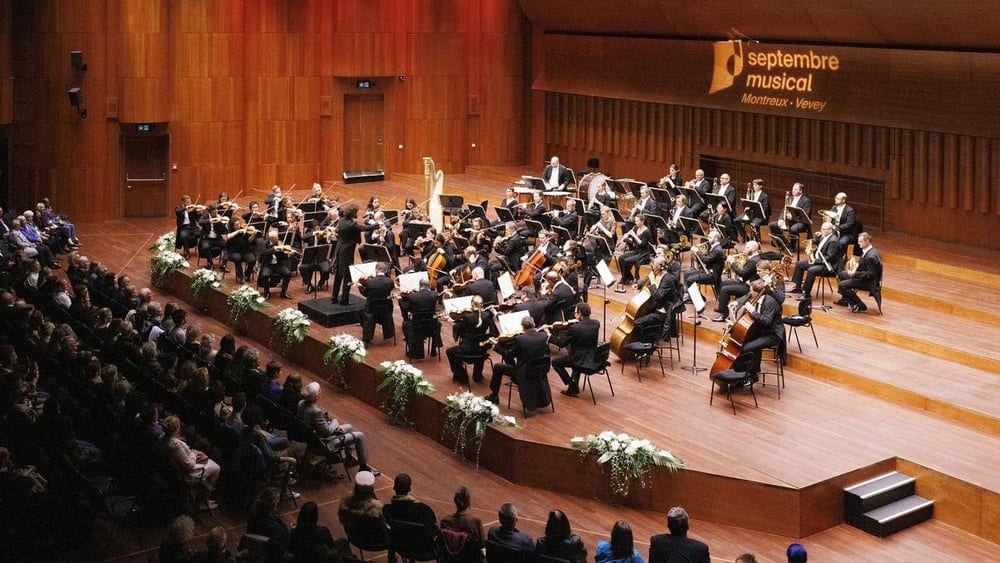
© Septembre Musical Montreux-Vevey One of the oldest classical music festivals in Switzerland, born in 1946, which each autumn spreads its concerts from the Auditorium Stravinski to the Château de Chillon.
