Jazz, soul & blues
Quincy Jones

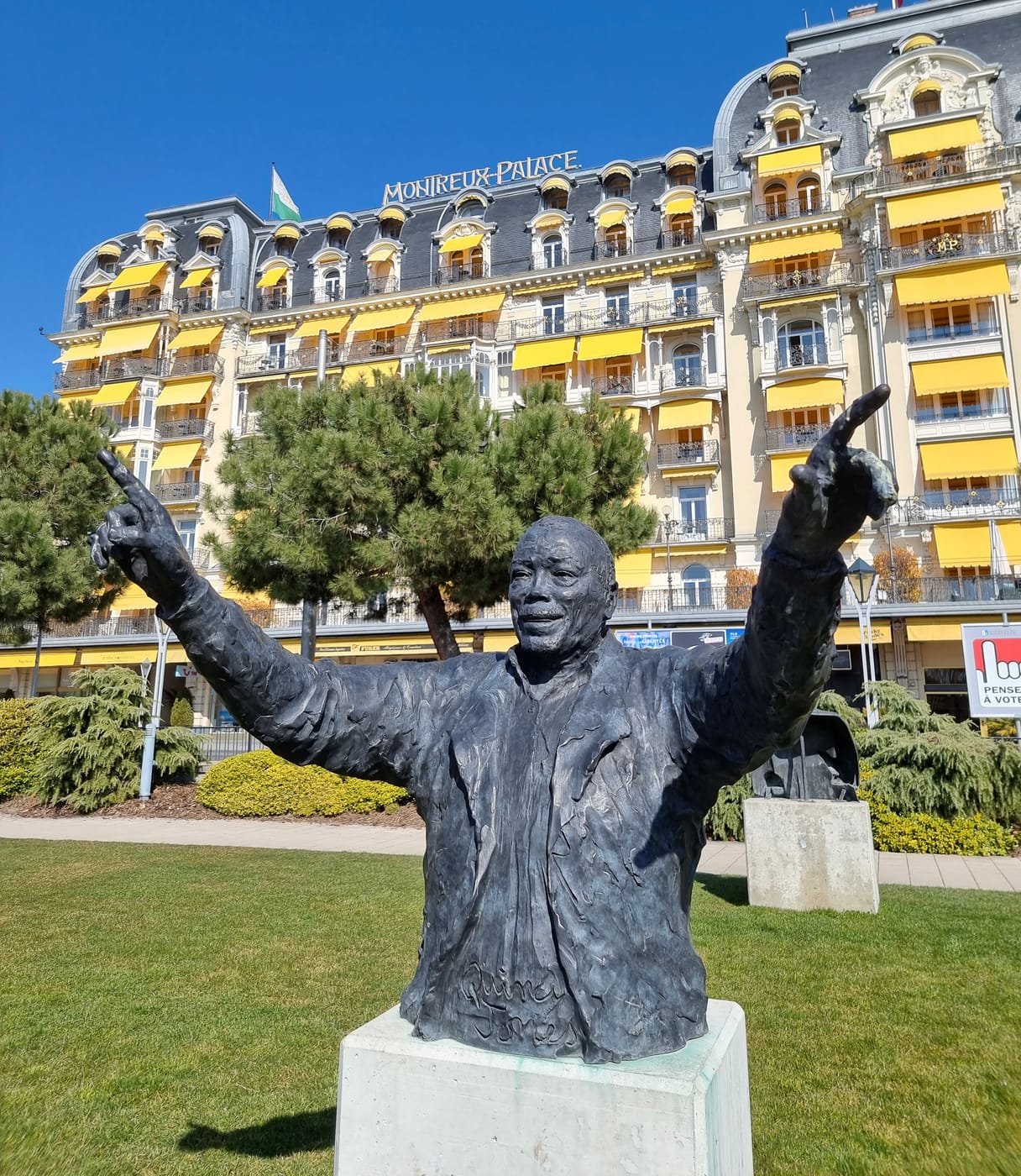
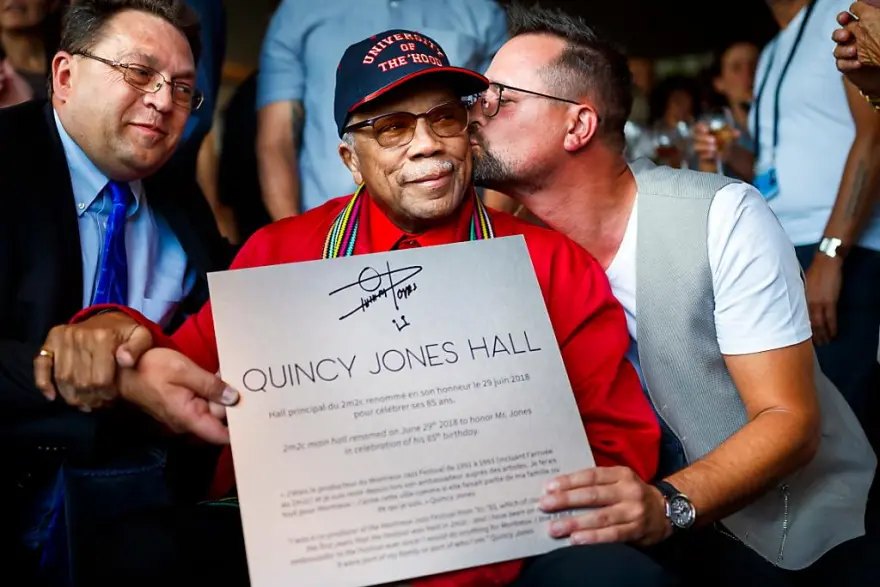
A legendary producer, arranger and composer, Quincy Jones was far more than a guest of Montreux: he was Claude Nobs’s close friend and one of the festival’s artistic pillars. In 1991 he co-directed its edition and conducted the orchestra for Miles Davis’s final concert, a moment etched into jazz history. His attachment to the town can be seen everywhere: a bust in the garden of the Montreux Palace, a signed portrait given by the painter Franck Bouroullec to the Montreux Jazz Café, and one of the large halls of the renovated 2M2C that now bears his name.
Quincy Jones: three years as co-director, thirty years of loyalty
Co-director of the festival
In 1991, Claude Nobs made Quincy Jones the official co-producer of the Montreux Jazz Festival, a three-year term, until 1993. For Nobs it was a dream fulfilled: bringing into the direction of his festival one of the most decorated producers in the history of music.
The two men shared the same idea of programming: not to be confined by a genre, and to make jazz, soul, pop and classical music talk to each other on the same stages.
The opening masterstroke: persuading Miles Davis
The co-directorship opened with a feat. Together with Claude Nobs, Quincy Jones obtained from Miles Davis what nobody had obtained: that he play his old repertoire again, when he had refused any form of looking back for decades.
So on 8 July 1991, Miles Davis performed the arrangements written for him by Gil Evans in the late 1950s. Quincy Jones conducted the orchestra. It was the only time in their lives that the two men shared a stage, and one of Miles Davis’s last concerts; he died on 28 September that year.
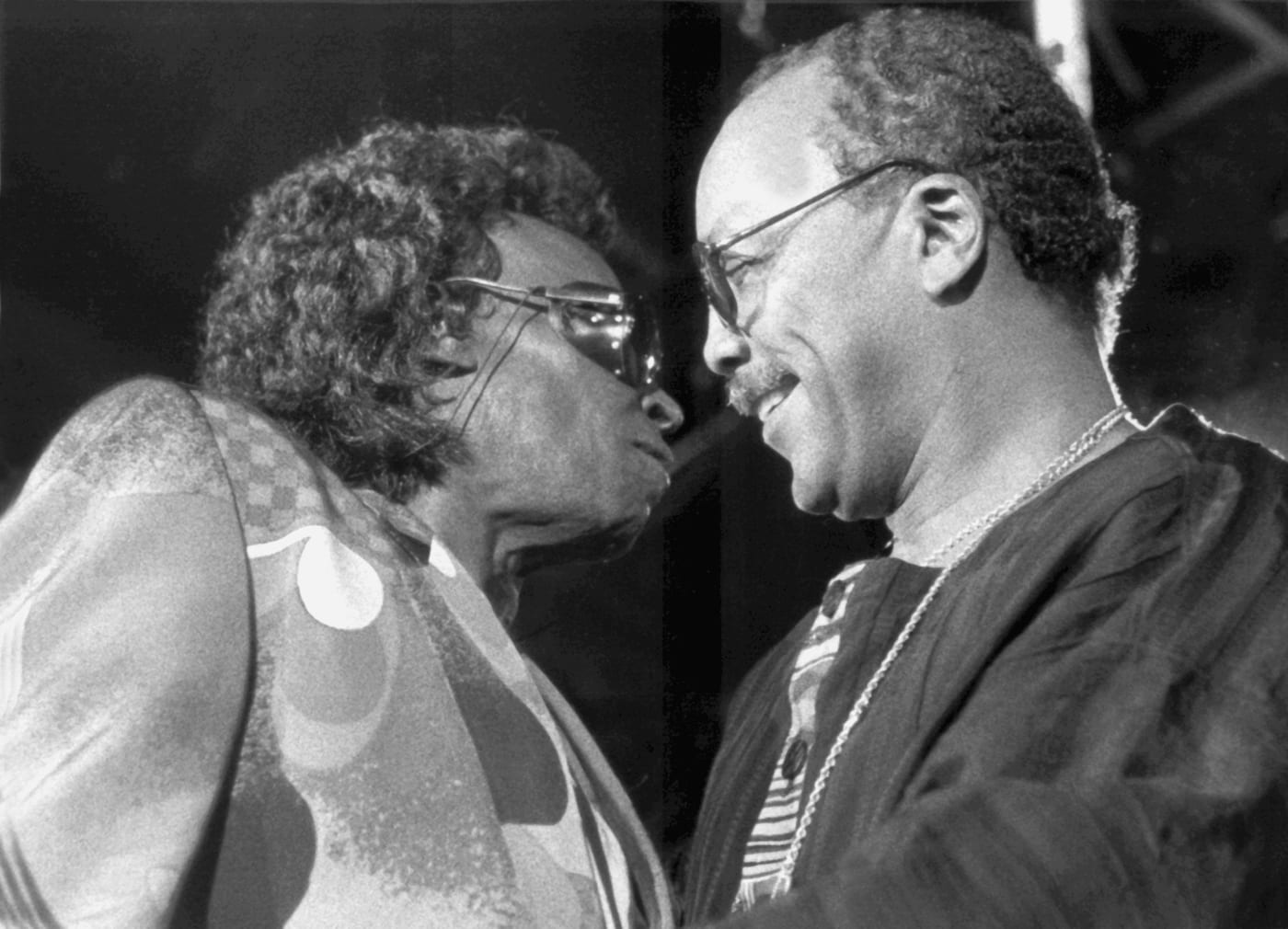
The recording was released in 1993 as “Miles & Quincy Live at Montreux” and earned Davis his seventh Grammy.
A friendship that outlived Claude Nobs
The relationship between the two men went far beyond the professional: it was described, on both sides, as brotherly. Each called the other “his brother from another mother”. Quincy Jones returned to Montreux every summer, to play, to programme, or simply to listen. “Montreux has always been the Rolls-Royce of all festivals, I tell everybody in the world,” he liked to say.
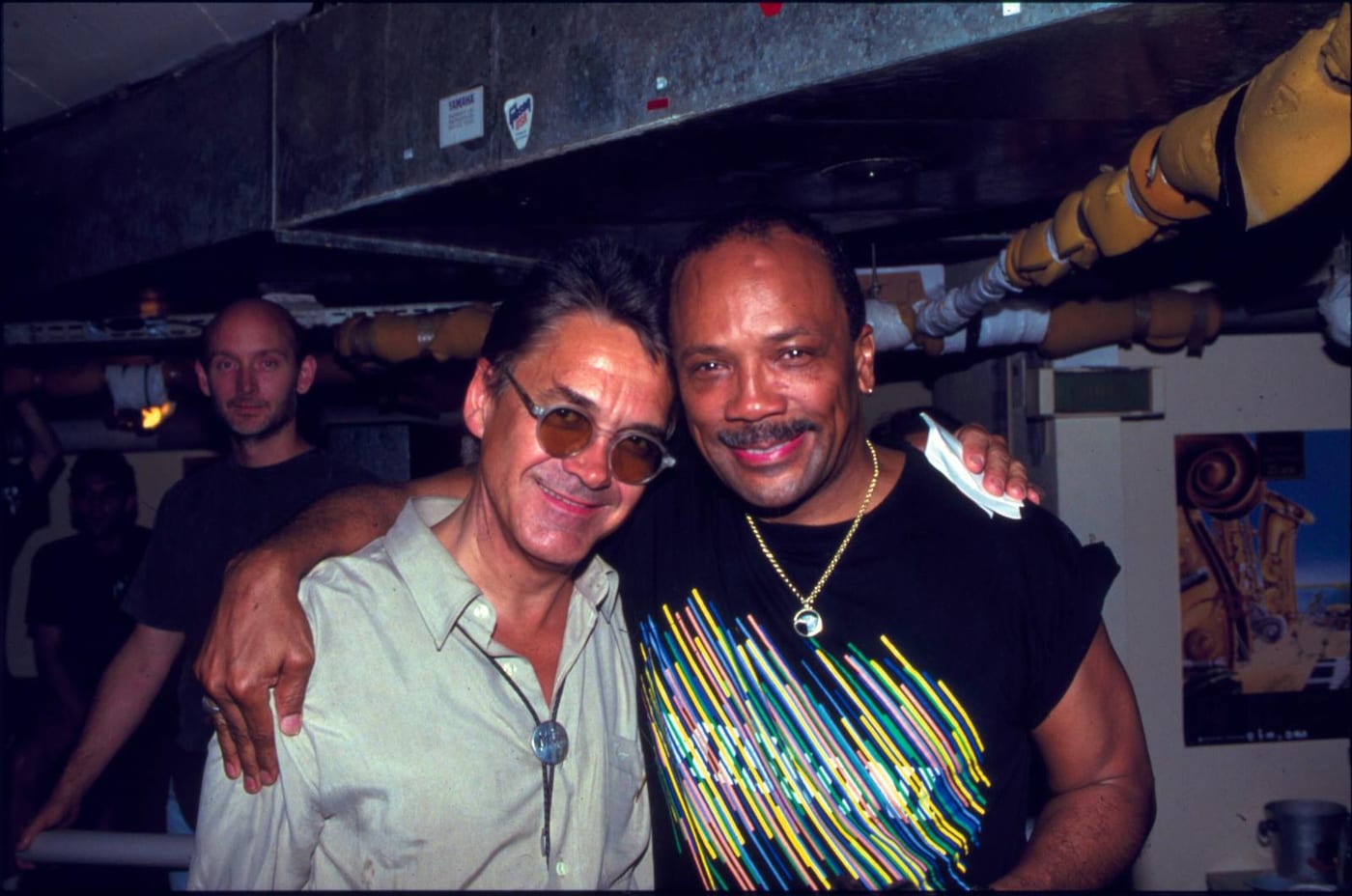
When Claude Nobs died in January 2013, many expected the bond to loosen. The opposite happened: Quincy Jones kept coming every summer and took on the role of the festival’s ambassador. His visits continued until 2019.
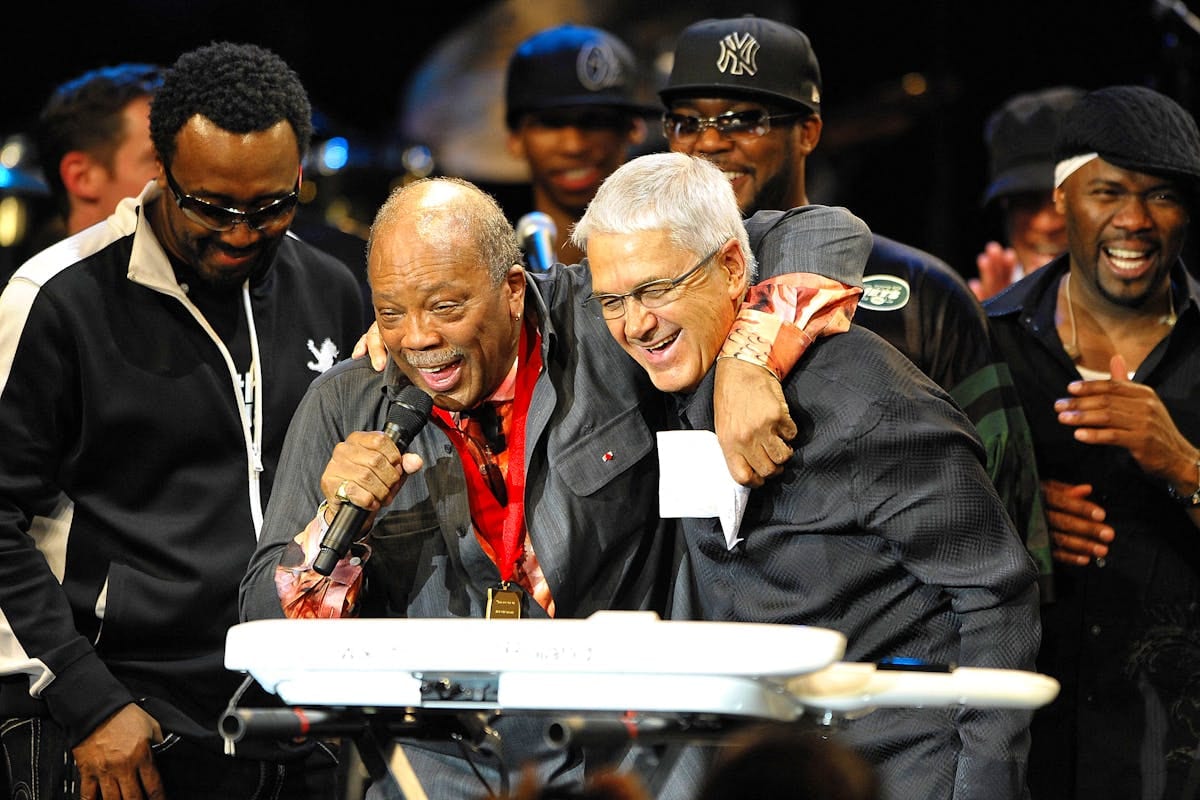
Throughout the 2000s, Quincy Jones staged great nights in Montreux bringing together artists from all over the world, making a point of presenting the young talents he mentored, from Jacob Collier to the Cuban pianist Alfredo Rodríguez. In 2013, the summer after Claude Nobs’s death, he returned to the festival and restated his loyalty before the Foundation’s camera.
He died in November 2024, aged 91. The festival paid tribute to him as one of its godfathers.
His statue in the Palace garden
His bust, arms raised like a conductor, stands in the garden of the Montreux Palace, among those of the artists Claude Nobs had brought to town. At the Montreux Jazz Café, a portrait painted by Franck Bouroullec carries his handwritten dedication.
One of the large halls of the 2M2C now bears his name. His concert of 8 July 1991, filmed, belongs to the festival archives inscribed on UNESCO’s Memory of the World register.
The City medal and a hall in his name (2018)
In 2018 the Montreux Jazz Festival and the town of Montreux honoured the producer: one of the large halls of the convention centre (2M2C) was dedicated to him and now bears his name, and he received the “Honorific Medal of the City of Montreux”. He had by then been part of the festival for more than two decades.
On 2 July 2018 he voiced his gratitude on social media: “What. An. HONOR!! I’ve been a part of this festival for over two decades now, & some of my favorite memories have been made right here. Montreux remains the Rolls Royce of all festivals & the absolute best place for musicians to share their gifts with the rest of the world.” He thanked by name Mayor Laurent Wehrli and director Mathieu Jaton (Facebook).
1960: Quincy Jones in Lausanne
Long before co-directing the festival, Quincy Jones had already set down his bags in the land of Vaud. On 7 July 1960, Swiss television filmed his big band in Lausanne — Phil Woods on alto saxophone, Melba Liston on trombone, Julius Watkins on horn, Jerome Richardson on tenor — playing “Stockholm Sweetnin’”, “Ghana” and “Big Red”. The twenty-seven-year-old arranger was not yet the legend he would become, but Switzerland was already part of his story.
These places on the map
Tap a marker to open the place page.