French song & variety
Patrick Juvet

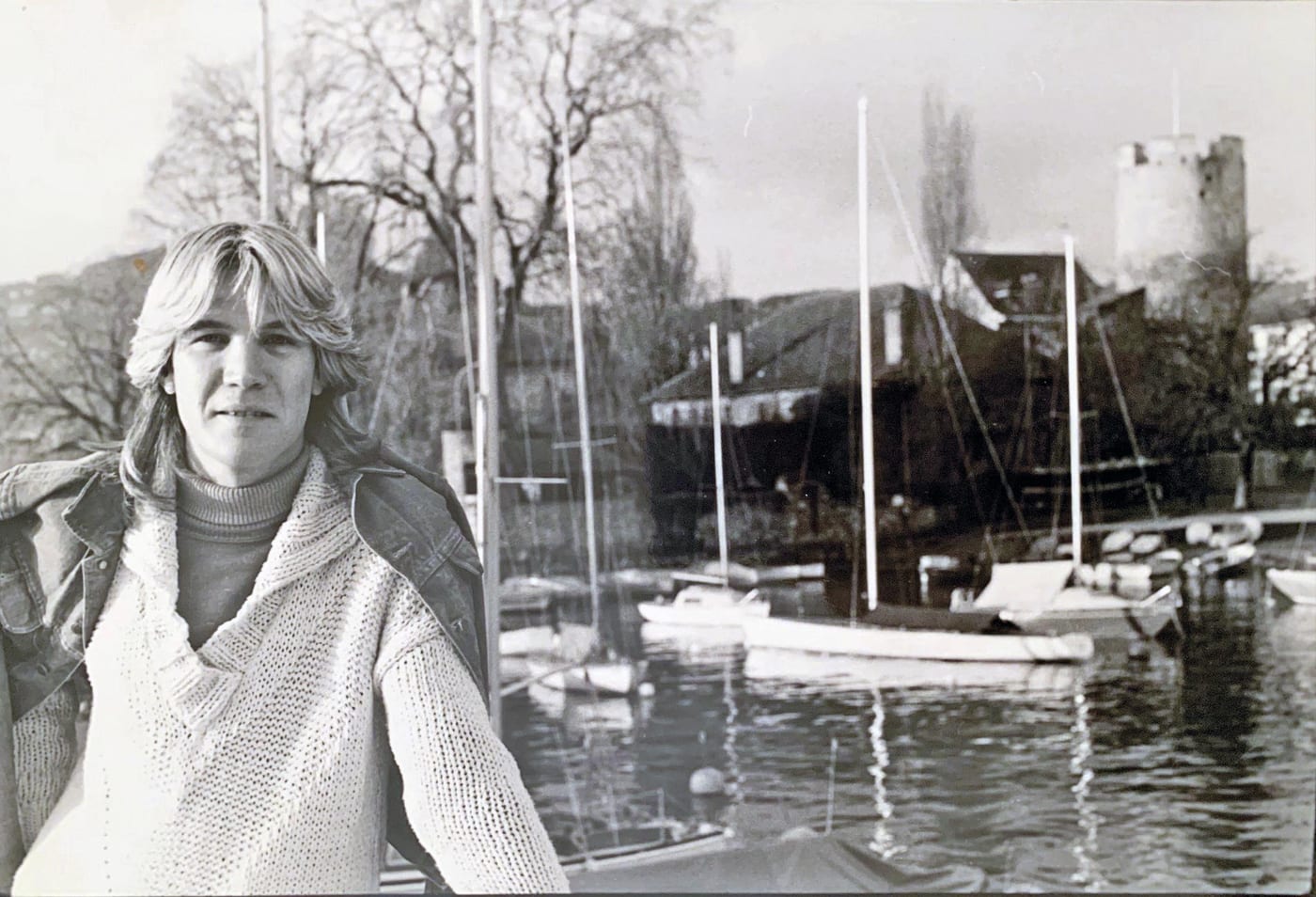
Born in Montreux on 21 August 1950 and raised in La Tour-de-Peilz, Patrick Juvet (1950-2021) went from modelling to songwriting, composing the music for Claude François’s “Le Lundi au soleil”, before becoming a performer himself. Launched by Eurovision 1973, he found huge success with “Où sont les femmes?”, “I Love America” and “Lady Night”, co-written with Jean-Michel Jarre, which made him an international star. A local son who remained attached to his region, he came back to record at the famous Mountain Studios in Montreux, Queen’s studio: the vocal sessions for “Still Alive” (1980) were made there, and in September and October 1981 he cut the album “Rêves immoraux” there, produced by the in-house engineer David Richards.
Patrick Juvet: the son of Montreux who came back to record at Queen’s studio
From Montreux to the American clubs
Patrick Juvet was born in Montreux on 21 August 1950 and grew up in La Tour-de-Peilz. His father, from Neuchâtel, ran a radio and television shop there that gave him early access to American records; his mother, originally from France, pursued a political career of her own, going as far as standing as a candidate for the National Council. After studying piano at the Lausanne Conservatoire from a very young age, crowned with a first prize, this early talent had a brief spell as a model before becoming a songwriter: he composed the music for “Le Lundi au soleil”, Claude François’s huge 1972 hit (État de Vaud).
Spotted by talent agents, he was propelled to the front of the stage as a performer. In 1973 he represented Switzerland at the Eurovision Song Contest and played the Olympia; from then on he mixed with the great stars of French variety and rubbed shoulders with visiting Anglo-Saxon rock stars on the Vaud Riviera. His collaboration with the Frenchman Jean-Michel Jarre, who became his lyricist, began with the album “Love” (1973) and peaked in 1977 with “Paris by Night”, which contains “Où sont les femmes?”.
He liked to tell of driving oversized limousines along the winding roads of Caux to reach Claude Nobs’s chalet, and of introducing Montreux’s clubs to a not-yet-famous Freddie Mercury, who, he joked, had “impossible teeth” (24 heures).
Then came the American conquest: “I Love America” (1978) and “Lady Night” (1979) extended that success and completed his rise as an international star. Within a few years, a boy born on the Vaud Riviera found himself at the top of New York dance floors; he then settled in the United States.
The return home, into Queen’s studio
Once disco had passed, Juvet came back to record where he was born. The vocal sessions for the album “Still Alive” (1980) were made at Mountain Studios in Montreux.
He returned the following year for a whole record: “Rêves immoraux” was recorded in September and October 1981 at Mountain Studios, then owned by Queen. Producing was David Richards, the in-house engineer, the very man who co-produced Queen’s albums and worked with David Bowie, with whom Juvet had already collaborated.
The record was released on Barclay in 1982.
“Rêves immoraux”: a scandal written by Dabadie
For the title track, Juvet composed the music and called on Jean-Loup Dabadie, one of the great French lyricists. After two rejected attempts, Dabadie wrote a text about bisexuality, all dream imagery and forbidden desire, following the singer’s instructions.
The single came out in spring 1982. Despite heavy radio play, its content caused a scandal, even though France had only just decriminalised homosexuality. It reached number 42 in the French chart and sold around 65,000 copies, staying nine weeks on the chart, from 18 April to 13 June 1982.
This record, born in Queen’s studio in Montreux, remains one of the most personal of his career.
The Villard house and after disco
His house stood in the Villard valley, above Montreux. He recorded at Mountain Studios, which has since become the Queen: The Studio Experience exhibition.
The decline of disco then complicated his career: several comebacks and several albums through the 1980s and 1990s, without finding the same success again. Around 1991 an unhoped-for deal came his way to fund a techno album: “I immediately bought a white Rolls-Royce, like my neighbour, one of the Bee Gees! We used to wave at each other through the window” he said of that short-lived episode (24 heures).
He nonetheless kept performing, with a calm lucidity about what audiences wanted from him: “People expect me to sing ‘I Love America’. It doesn’t really interest me any more” he confided in 2007. His signature songs are still remembered today, those of a Vaud icon of the 1970s.
Three RTS reports, filmed in 1977 and 1978, show him at the very start of his career. He died on 1 April 2021 in Barcelona, aged 70.
These places on the map
Tap a marker to open the place page.