Homes, hotels & restaurants
Caux Palace

- Type
- Belle Époque grand hotel / concert venue
- Address
- Rue du Panorama 2, 1824 Caux
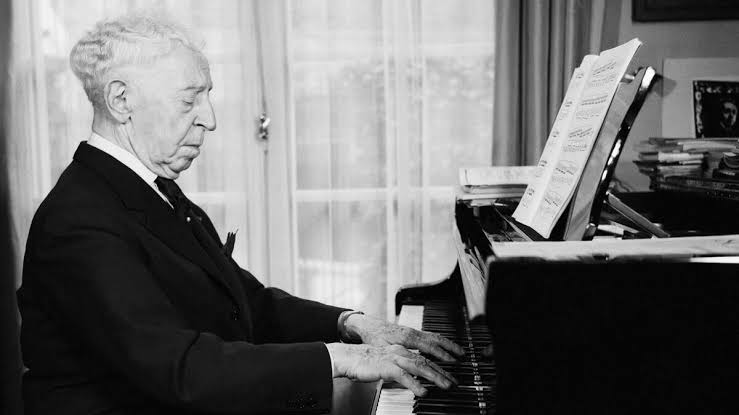
Built in 1902 at a thousand metres above sea level, clinging to the mountainside above Montreux and served by the Montreux, Glion, Rochers-de-Naye railway, the Caux Palace is one of the great witnesses of the Riviera’s hotel golden age. Its elongated silhouette, its galleries and its hundreds of windows earned it early on a comparison that has stuck: the young pianist Arthur Rubinstein, who stayed there around 1905 when the establishment was only three years old, saw in it “a motionless ocean liner”. The hotel has never stopped hosting music: it is today one of the five venues of the Septembre Musical and receives concerts each autumn, including those of the Émergences musicales. The building, home of Initiatives of Change (IofC), can be visited during the themed days organised by the foundation.
The Caux Palace, from stone liner to house of reconciliation
A stone liner at a thousand metres
Inaugurated in 1902 at a thousand metres, clinging to the mountainside above Montreux, the Caux Palace is the work of architect Eugène Jost, who also designed the Montreux Palace. With its elongated silhouette, its galleries and its hundreds of windows, it was one of the largest and most luxurious palaces of the Belle Époque. The young pianist Arthur Rubinstein, who stayed there around 1905, compared it to “a motionless ocean liner” suspended between lake and sky.
The end of a golden age
The golden age was brief. The First World War dried up the flow of grand travellers, and visitor numbers never regained their splendour. Between the wars, the mountain’s immense palaces, too costly to run, emptied out; the Caux Palace, like so many others, brushed with abandonment. Its fate could have ended there, a giant asleep above the lake.
1946: Caux, a laboratory of reconciliation
In 1946 the palace found an unexpected second life. Swiss families and volunteers of Moral Re-Armament bought it and turned it into a meeting centre to rebuild post-war Europe. In its lounges, former enemies spoke to one another: Caux became one of the great sites of Franco-German reconciliation, where figures such as Konrad Adenauer and Robert Schuman passed through, along with delegations from Germany, Japan and around the world. The palace traded its luxury for a calling: to bring people together.
Music at the summit
Music never left Caux. After Rubinstein, the palace is today one of the five venues of the Septembre Musical and hosts concerts each autumn, including those of the Émergences musicales, in an acoustic and a setting out of the ordinary. Close by, the mountain keeps other artists’ refuges, such as the chalets of Claude Nobs.
Going up there today
You reach Caux as of old, by the rack railway climbing from Montreux via Glion, on the Rochers-de-Naye line. The building now houses a hotel school during the academic year, while Initiatives of Change holds its summer conferences there; it can be visited during the foundation’s thematic days. From its terrace, the view over Lake Geneva and the Alps has not changed since 1902.
Related artists :Arthur RubinsteinFelix Mendelssohn