Classical music
Barbara Hendricks

Barbara Hendricks, born in 1948 in Stephens, Arkansas, is a world-renowned American soprano who long lived in Territet, in the commune of Montreux. A pastor’s daughter, she first sang the negro spirituals of the Methodist church before discovering jazz, then, her chemistry studies over, went to study singing in New York. Revealed at the San Francisco Opera in 1974, she led an immense operatic career under the baton of Karajan, Bernstein, Barenboim and Karl Böhm. It was in Montreux, with Claude Nobs, that she opened up to jazz and blues, from a memorable concert in 1994.
Barbara Hendricks, a soprano in Territet
From Arkansas to the great stages
Born in 1948 in Stephens, Arkansas, Barbara Hendricks grew up in a pastor’s family, under a very strict upbringing. She trained first in the Methodist singing of the parish, then discovered jazz at school. After four years of university and a degree in mathematics and chemistry, she left to study singing at the Juilliard School in New York, with the mezzo-soprano Jennie Tourel. Her parents, who had sacrificed so much to give her an education, at first thought she had lost her mind.
Her first public appearance took place in 1974, at the San Francisco Opera. She then began an international career, notably as Susanna in “The Marriage of Figaro”, performing on the greatest stages, from La Scala to the Paris Opera. She keeps a moving memory of her Berlin debut in that role: a young unknown, she was surrounded by the conductor Daniel Barenboim and the singers Dietrich Fischer-Dieskau and José van Dam. She then sang under legendary conductors, Herbert von Karajan, Leonard Bernstein, Carlo Maria Giulini and Karl Böhm, from whom, she says, she learned a great deal. She has more than one hundred and thirty recordings to her name and in 2006 founded her own record label, Arte Verum, to preserve her artistic independence.
Territet, the chosen Riviera
In the 1980s, after a burglary in Paris, Barbara Hendricks and her family looked for a calmer setting for their children. A friend offered to rent them his house in the canton of Vaud: it would be Territet, on the upper quays of Montreux. “It wasn’t I who chose Switzerland, it’s almost as if it had chosen me” she says.
She already knew the region, where as a very young woman she had given recitals for a small Vevey chamber-music society. “Each time we came back, when the train came out of the tunnel and we saw the Riviera, we would say: God exists!” In 1990 the Commune of Montreux awarded her its “Reconnaissance”, a distinction honouring the personalities who bring it lustre in the arts, culture, sciences or technology, alongside Yehudi Menuhin, Henri Salvador and the comedian Emil. Now settled in Sweden, she has kept her Swiss nationality and votes conscientiously in the country.
Jazz and blues, thanks to Claude Nobs
Her operatic repertoire is immense, Mozart’s “Magic Flute”, French mélodies, Debussy’s Mélisande, but it was in Montreux that she took another turn. Living close to Claude Nobs, whom she often visited on Sunday family walks, she was persuaded by the festival’s founder to explore jazz and blues: in 1994 she gave an exceptional concert in tribute to Duke Ellington. “It was like playing chamber music” she says.
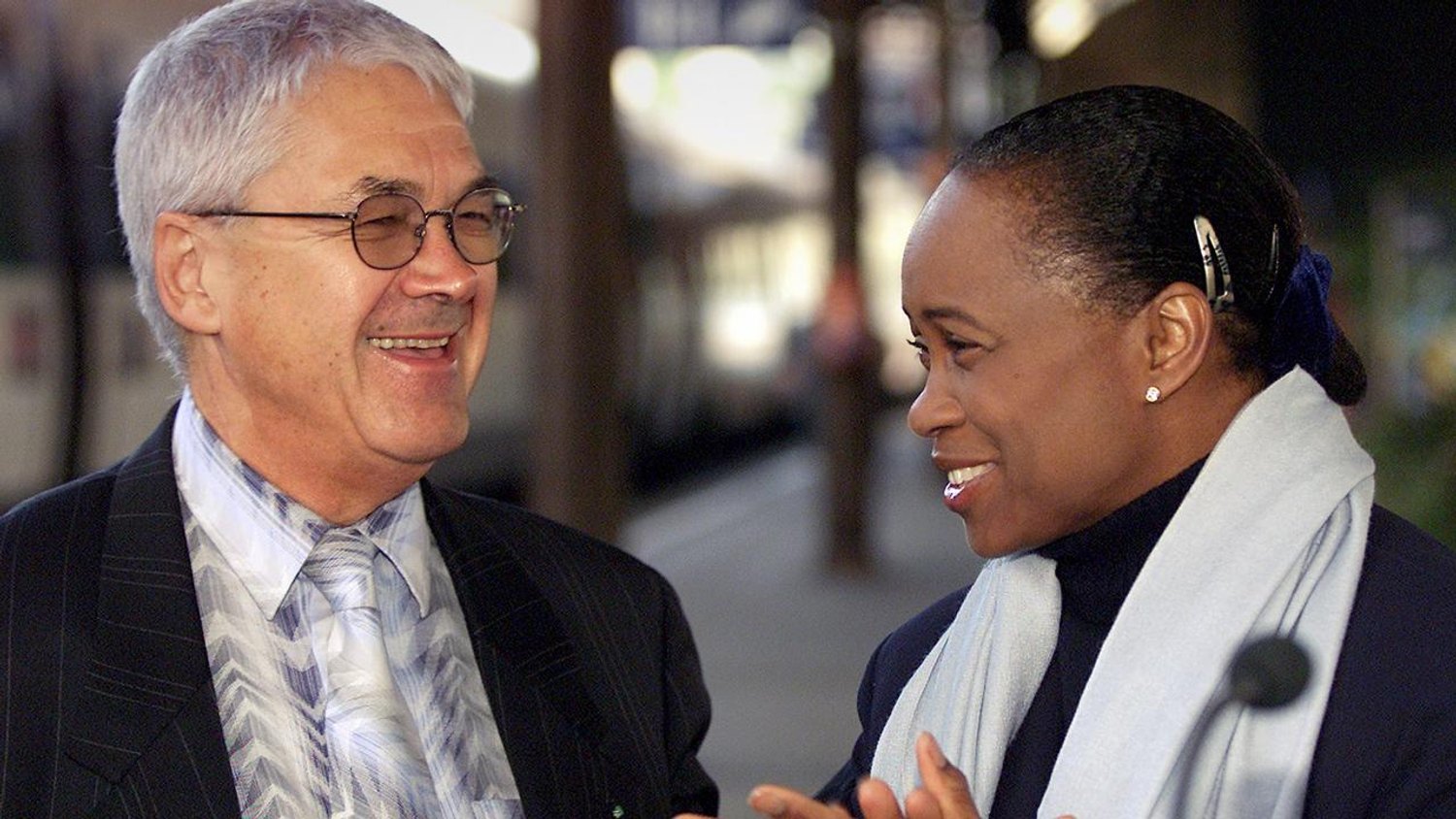
The bond with Claude Nobs never broke. After his death in January 2013, she returned to sing at the Auditorium Stravinski, on 8 February 2013, to pay tribute to him, accompanied on piano by Mathias Algotsson.
The blues caught up with her through her roots, the negro spirituals sung in her father’s church, for whom it was nonetheless “the devil’s music”. To explore this tradition she barely knew, she immersed herself in the recordings made in the 1950s by Alan Lomax of the forgotten old artists of the Mississippi delta, and drew from them a collection of songs, “Blues Everywhere I Go” (2015), then the programme “The Road to Freedom” (2018). “It took me about ten years to use my voice the way I do today. It’s an extraordinary journey, thanks to Claude Nobs!” (RTS)
A committed voice
Born a month before the Universal Declaration of Human Rights, Barbara Hendricks defends its principles as a Lifetime Honorary Ambassador of the United Nations High Commissioner for Refugees, a role she has held since 1987 and of which she is today the most senior holder. This commitment goes back to childhood: raised in the segregated Deep South, under the strict authority of her pastor father, she was eight when the “Little Rock Nine” school crisis showed her, in her words, “the faces of hatred”. She carries this awareness of injustice everywhere, notably at the International Film Festival and Forum on Human Rights (FIFDH) in Geneva, where she is a patron and juror.