Jazz, soul & blues
Stevie Wonder

Stevie Wonder (born 1950), the Motown genius with twenty-five Grammys, is one of the greatest voices in soul. His 2014 appearance at the Montreux Jazz Festival fulfilled one of Claude Nobs’s most cherished dreams.
Stevie Wonder: a dream of Claude Nobs
16 July 2014: Claude Nobs’s dream
Bringing Stevie Wonder to Montreux was one of Claude Nobs’s most stubborn dreams. For years the founder had tried to convince the artist, in vain: a long string of missed appointments. Nobs died in January 2013; eighteen months later, on 16 July 2014, Stevie Wonder finally took the stage of the Auditorium Stravinski, for the 48th edition.
The evening was bound to be special. The festival’s director, Mathieu Jaton, opened it, then handed over to Quincy Jones, Nobs’s old friend, who dedicated the concert to his memory and asked for a minute of silence before warming up the hall. The Swiss audience, which hates lateness, whistled a little: the star kept them waiting nearly three quarters of an hour. But when the lights finally went down, all was forgiven.
Two hours of Motown
At 9.15 pm, Stevie Wonder walked alone to the centre of the stage, his portable synthesiser in hand, his sunglasses reflecting Lake Geneva, and let fly “How Sweet It Is (To Be Loved By You)”, a Marvin Gaye cover, at full power. Then he spoke at length: he dedicated the concert to Claude Nobs, celebrated those who had inspired him, saluted Quincy Jones as a brother and a father, mentioned Michael Jackson, and turned the hall into his choir.
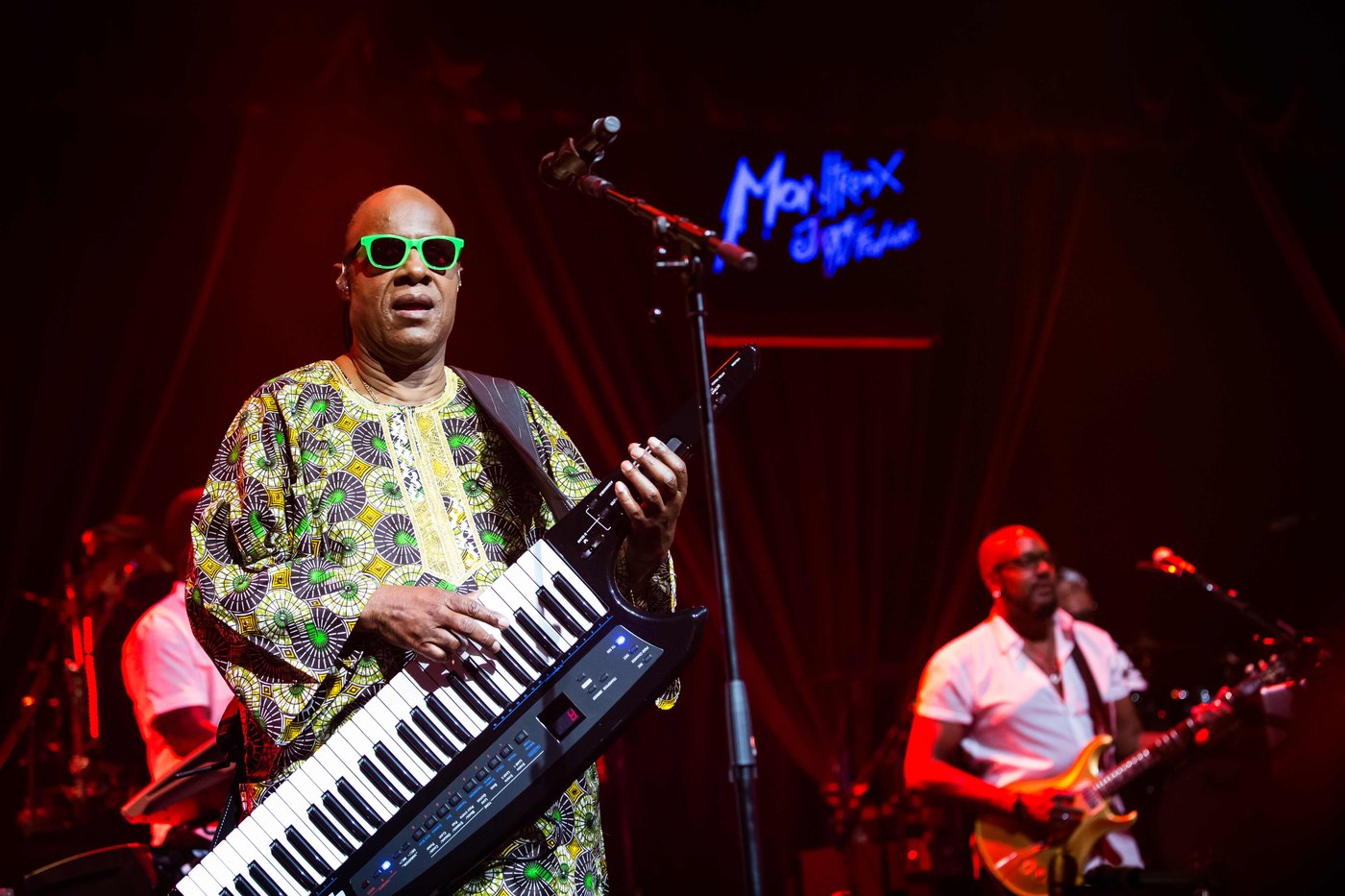
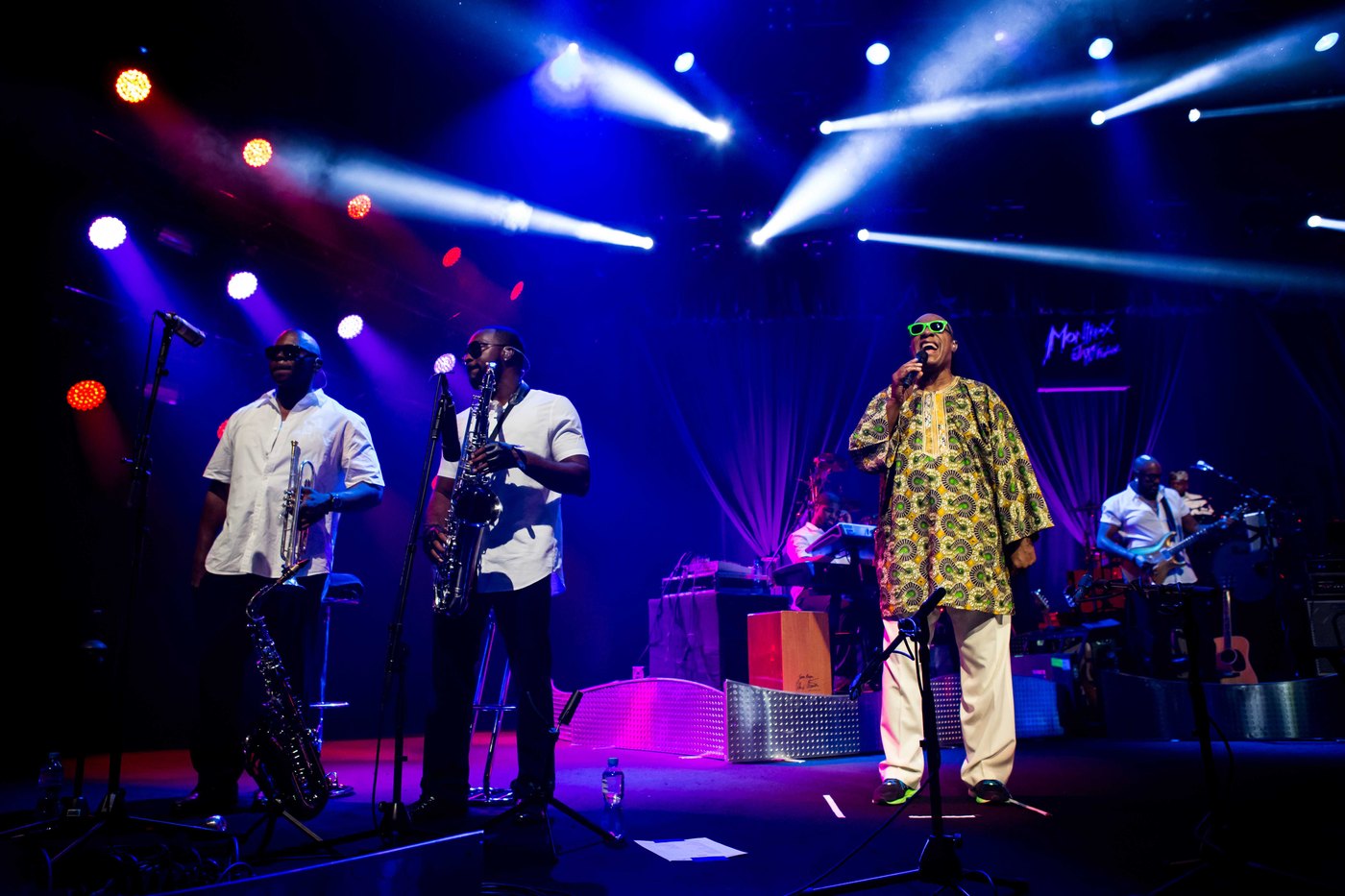

Then the music took over. “Master Blaster” and then “Higher Ground” were carried by a band of impressive precision. Stevie moved to the piano, sounded his harmonica for the first time of the evening, then slipped in a soul-funk version of the Beatles’ “Day Tripper”. Quincy Jones sat at the edge of the stage: they struck up “Killer Joe”, a Benny Golson standard, into which the singer mischievously wove snatches of “Billie Jean” and “Rock With You”.
There followed a nod to John Coltrane’s “Giant Steps”, a “Michelle” again borrowed from the Beatles, then the great crossing of his own work: “Overjoyed”, “You Are the Sunshine of My Life”, “Don’t You Worry ’Bout a Thing” in Cuban colours, “Sir Duke”, “I Wish”, “Living for the City”. The evening closed on “As” and “Superstition”, at 11.35 pm, with no encore: none was needed. Alongside Pharrell Williams, Stevie Wonder had delivered one of the highlights of the 48th edition, and the tribute at last paid to the friend who had so longed for him.