Memorials & tributes
Parc des Roses

- Type
- Park and cemetery
- Address
- Parc des Roses, Territet, 1820 Montreux
This place is a cemetery. Please visit quietly and with respect for the dead, for families and for those who come to gather here.
By the lake in Territet, the Parc des Roses brings together, in a single green setting, the marble statue of Empress Elisabeth of Austria, known as Sissi, and a small old cemetery in the shadow of the Anglican church of St John’s. Here lie the grave of Henri Nestlé, who spent his final years on the Riviera, and the long-forgotten grave of George Dormer Fawcus, one of the founders of Genoa, Italy’s oldest football club. The park holds its place in the Riviera’s musical memory through Henri Nestlé, whose company today supports the Septembre Musical and the Montreux Jazz Festival, and through the neighbouring church of St John’s, which regularly hosts concerts.
Sissi, Nestlé and a founder of Genoa
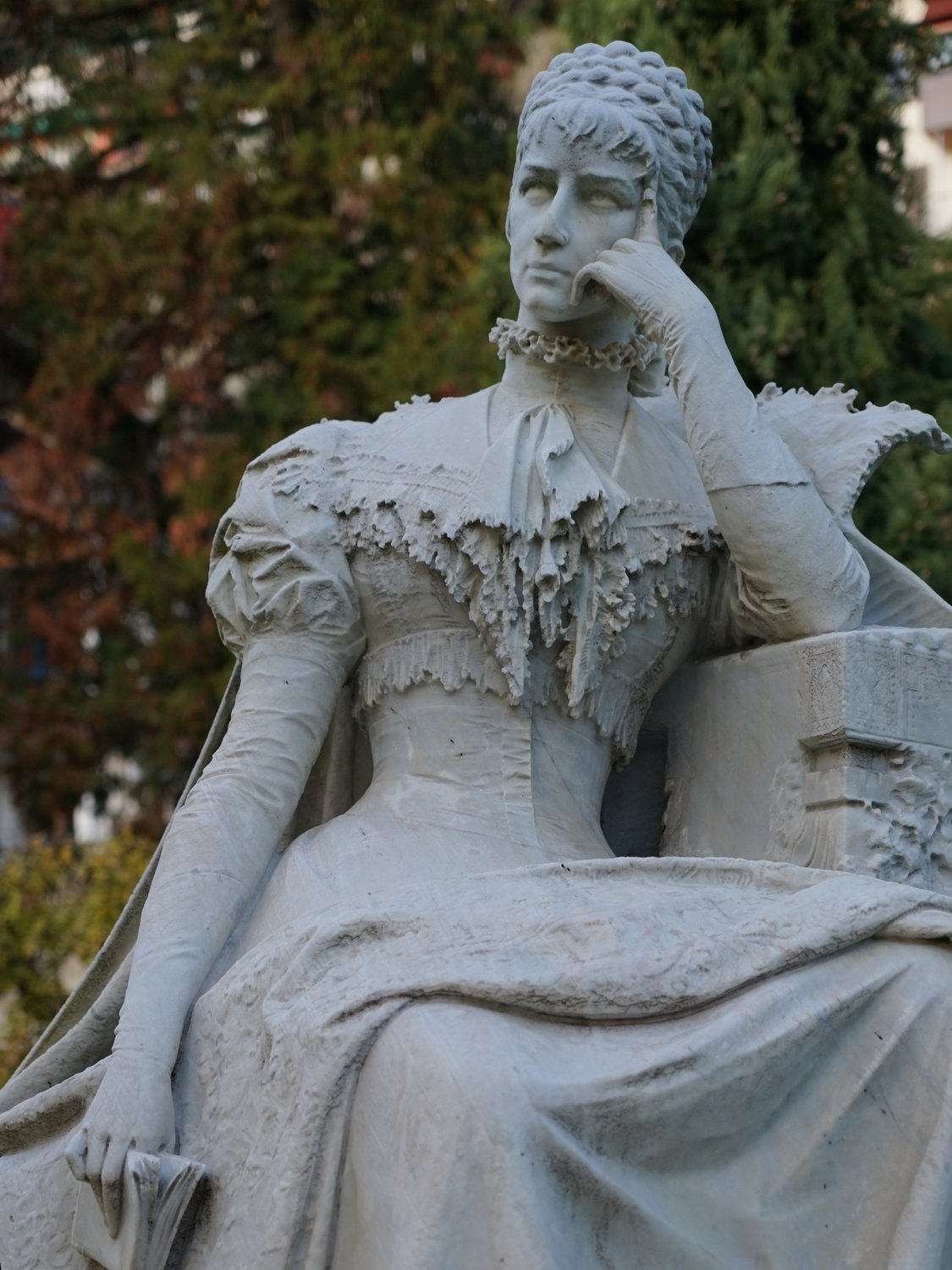
Sissi’s pensive statue
It took eighteen tonnes of Carrara marble for the sculptor Antonio Chiattone, of Lugano, to carve this pensive Sissi, her gaze turned towards the lake she loved so much. The empress had left such a memory of respect, tenderness and compassion in Territet and in Caux that, after her assassination in Geneva in 1898, a committee raised funds across Switzerland to erect this monument, unveiled in 1902 (“Montreux et ses hôtes illustres”, A. Gonthier, 1999).
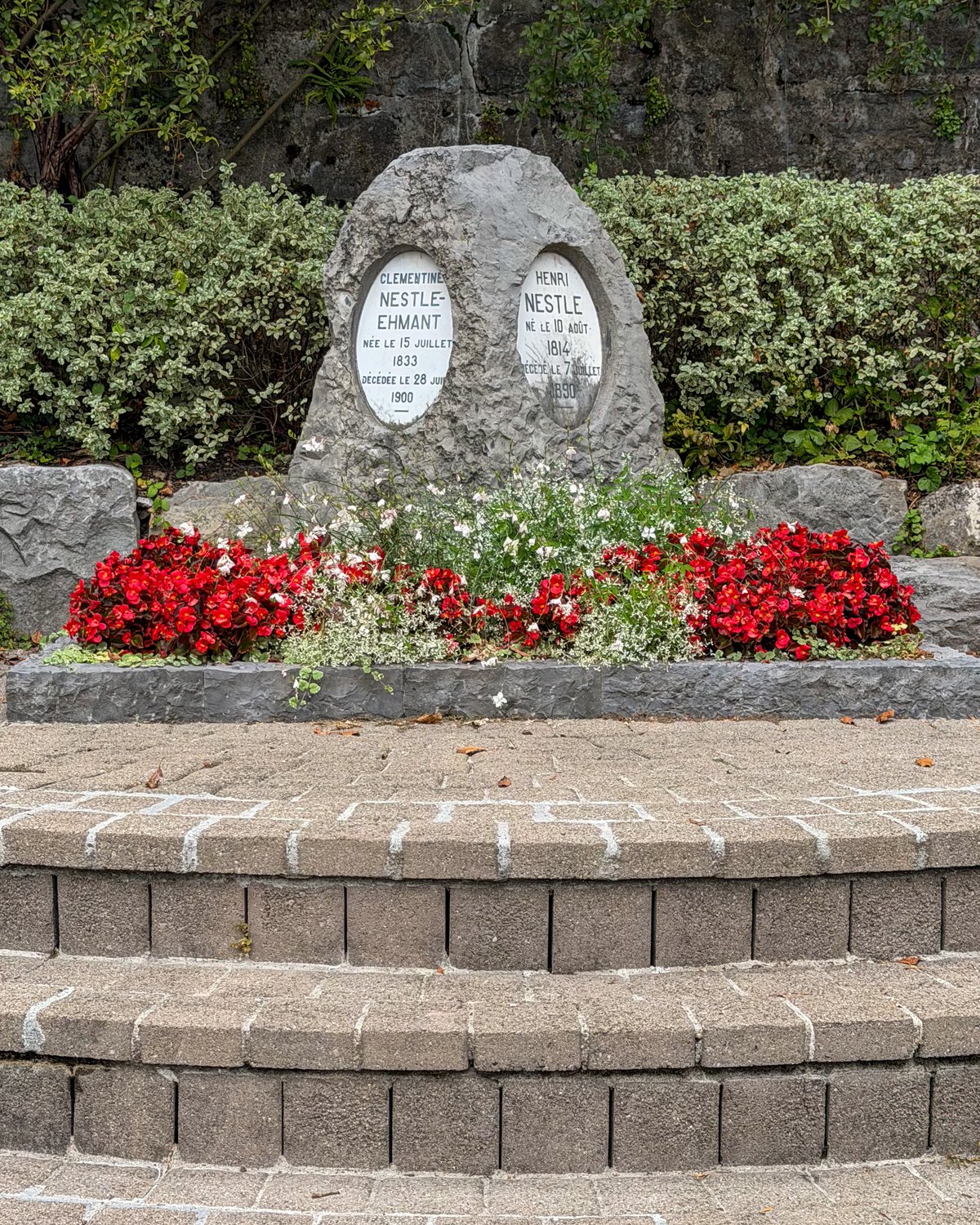
Henri Nestlé’s grave
It is here, in the park’s small cemetery, that Henri Nestlé rests, the founder of the Vevey company, who divided his winters in Montreux and his summers in Glion, and to whom Montreux owes its covered market. The company that bears his name is today among the leading patrons of music on the Riviera, from the Septembre Musical to the Montreux Jazz Festival.
Fawcus, forgotten founder of Genoa
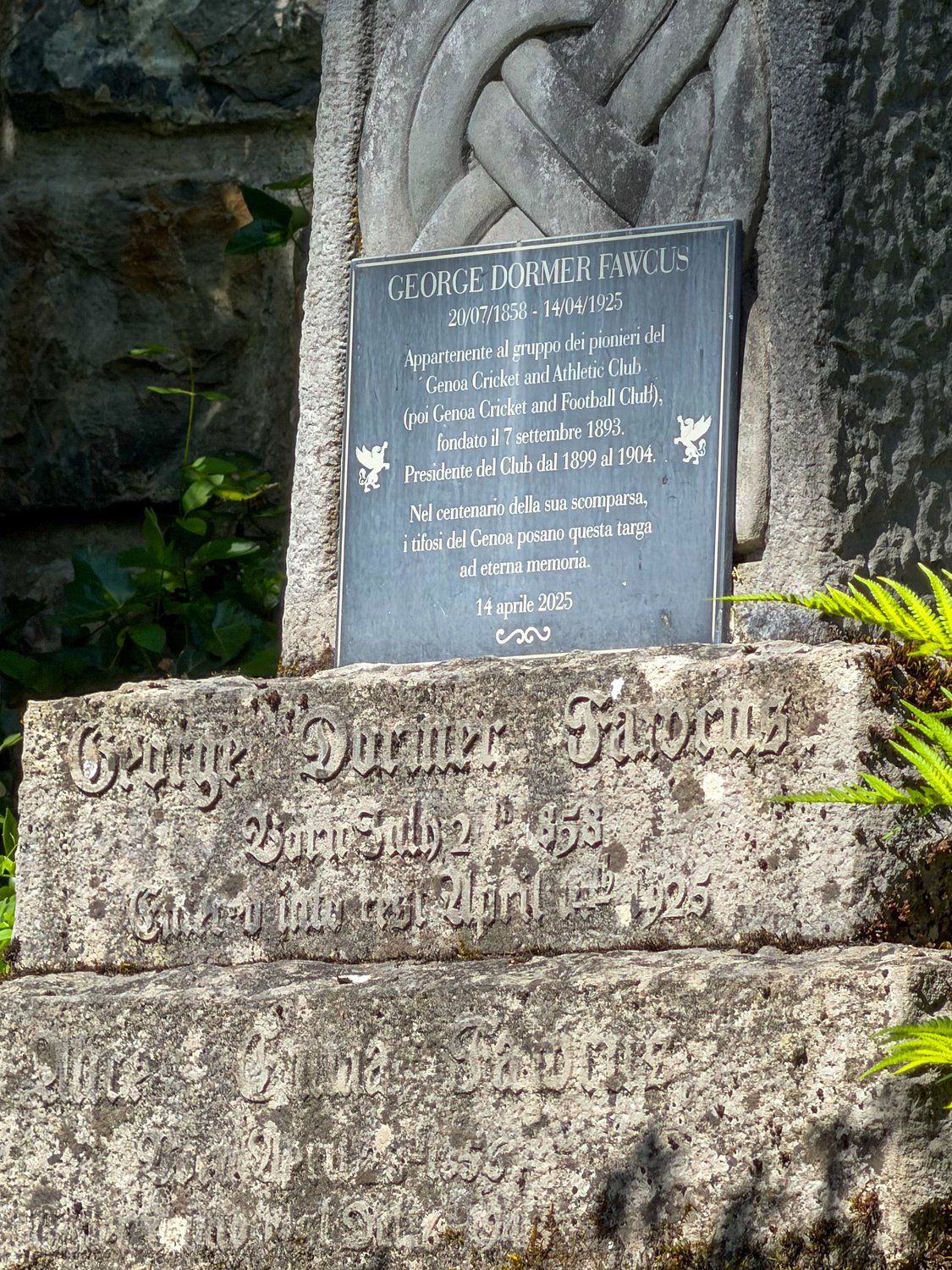
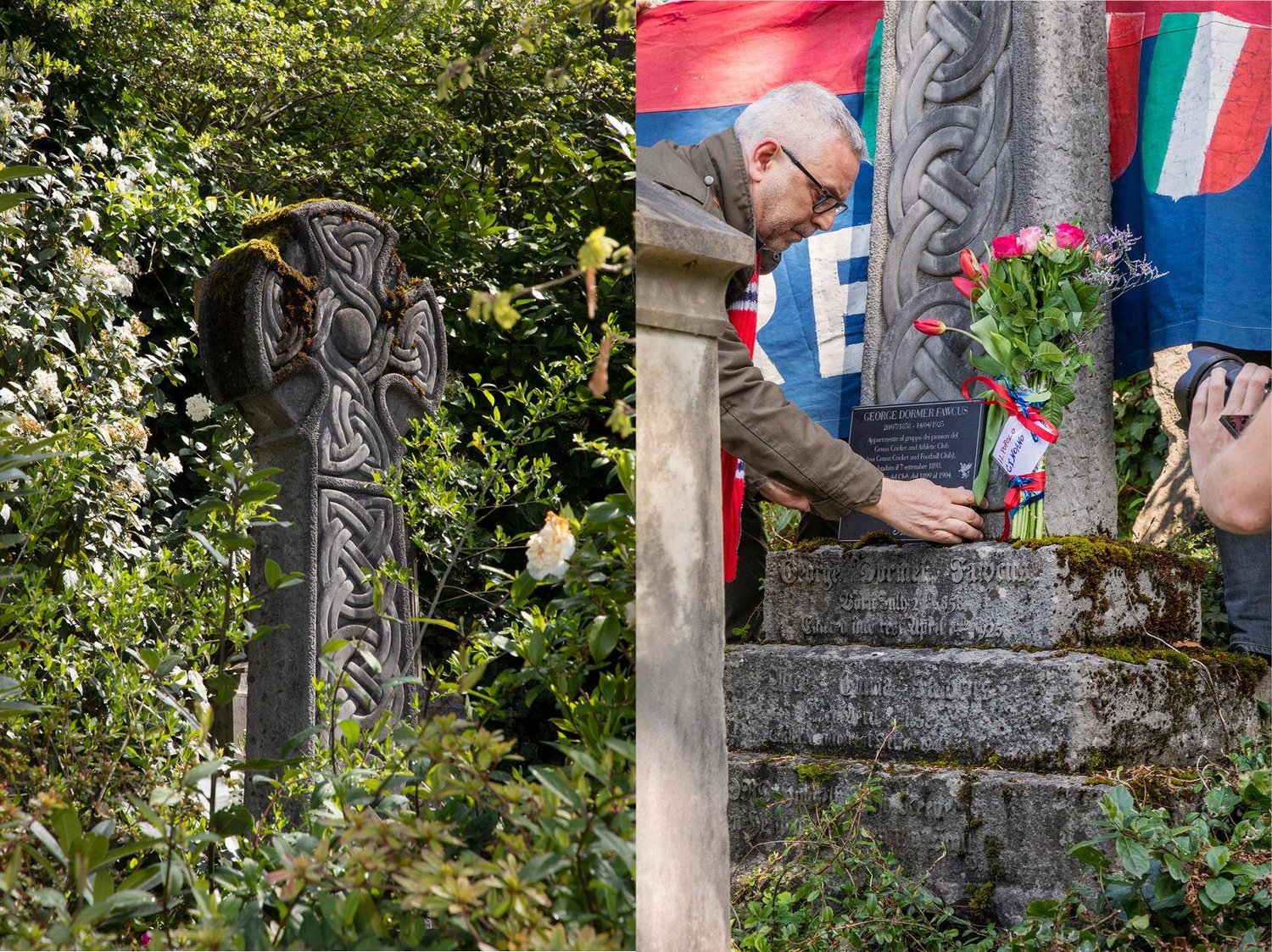
Nearby rests George Dormer Fawcus (1858-1925), an Englishman from North Shields, one of the pioneers of the Genoa Cricket and Athletic Club, founded on 7 September 1893 and the oldest football club in Italy, of which he was president from 1899 to 1904. Forced to leave Genoa for health reasons, he ended his life in the nearby municipality of Blonay, and was buried in Territet at his death on 14 April 1925.
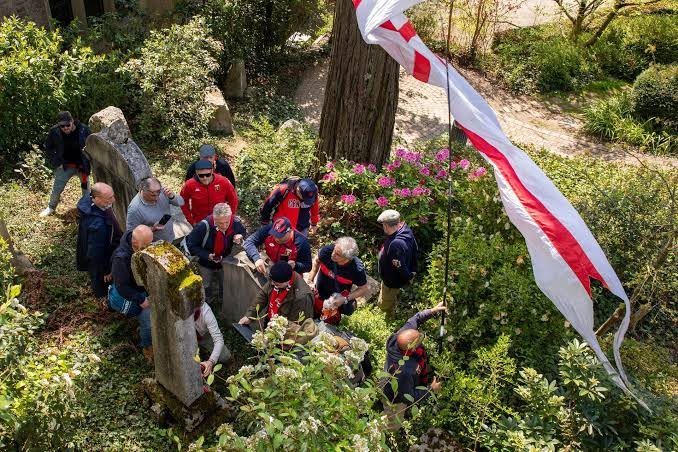
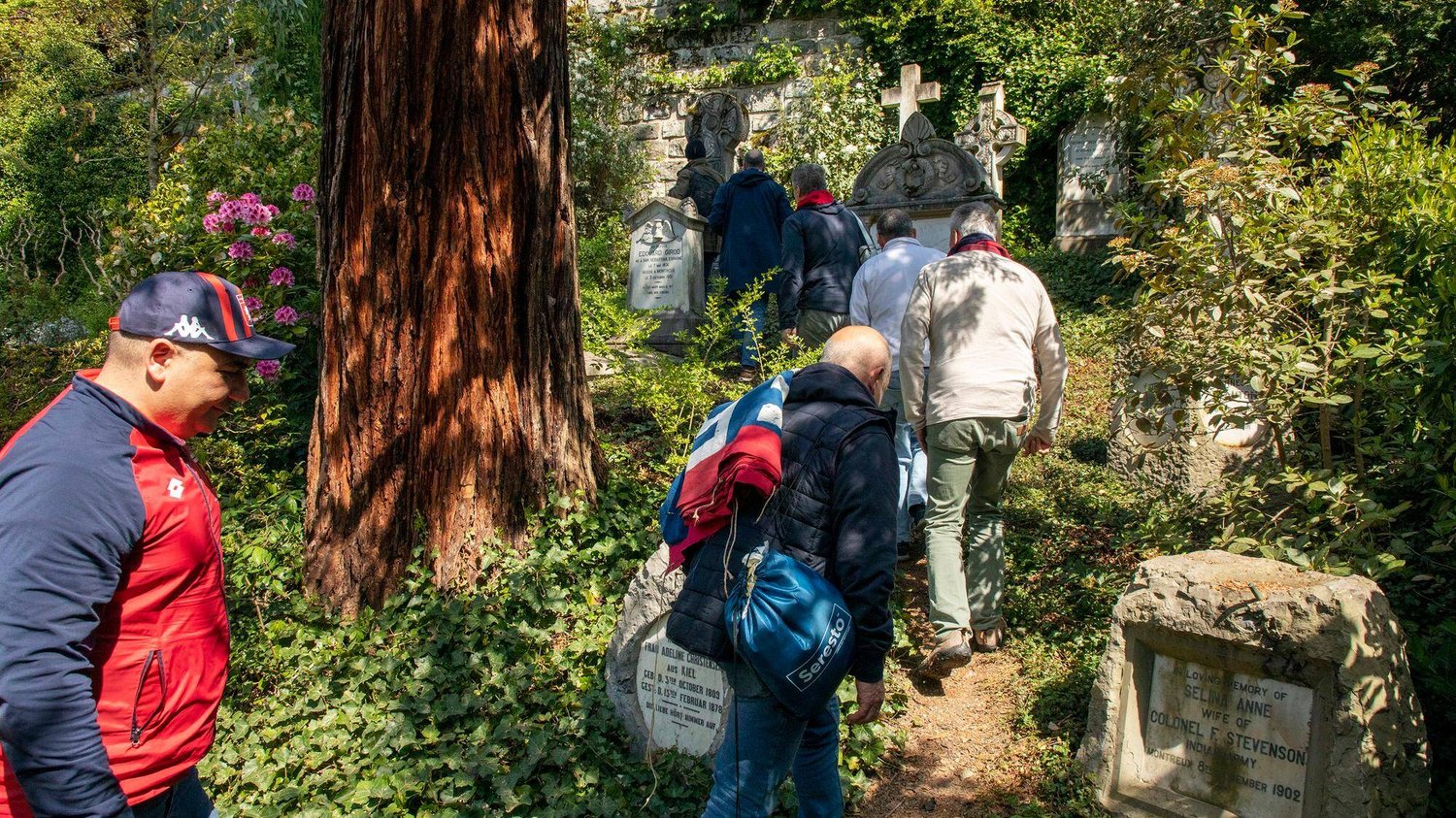
Long forgotten, his grave was rediscovered recently. For the centenary of his death, on 14 April 2025, supporters and the Genoa Foundation came to lay a plaque and flowers on his grave.
Related artists :Henri Nestlé