Visual arts
Keith Haring

Keith Haring (1958-1990) was not a musician, and yet Montreux owes him one of the strongest images in its history. Invited by Pierre Keller, he came first in April 1983, then returned in July for the Montreux Jazz Festival. He was twenty-five and had barely left the New York subway where he drew in chalk. In ten days he covered the town with his figures, painted an eight-panel work facing the Casino, and came back three years later to sign the festival’s twentieth-anniversary poster with Andy Warhol.
Keith Haring in Montreux: ten days in July 1983
Pierre Keller, the man through whom Switzerland came
Keith Haring owes his discovery of the country to the Vaud artist Pierre Keller, who took him to the Montreux festival and opened his address book to him.
Keller also introduced him to his artist friends. Among them Jean Tinguely, whom he would meet again in Lausanne.
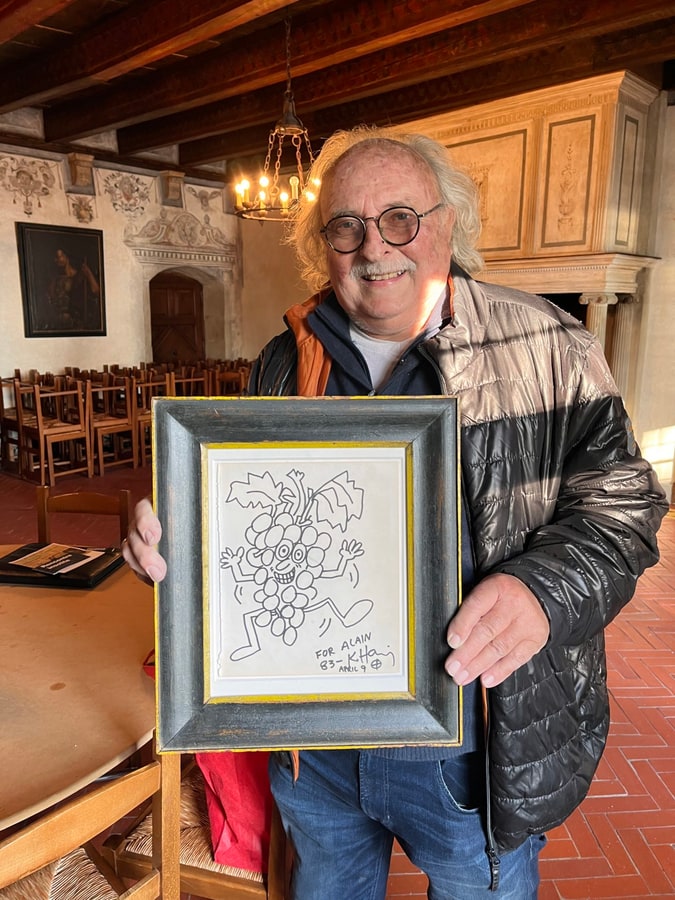
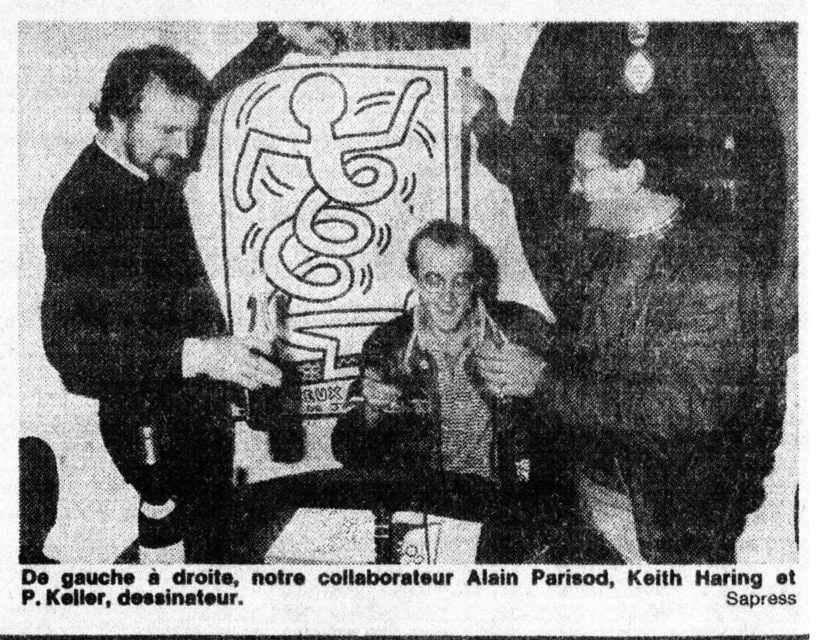
His first visit dates from April 1983, four months before the festival. On 9 April Keller took him to a winegrower in Grandvaux, Alain Parisod. The three men shared a bottle at his table, and Haring drew in the guest book, in two or three strokes, a smiling bunch of grapes, signed and dated.
The winegrower kept it: taken out of the book in 2018 for a New York exhibition and insured for fifty thousand dollars, it was never sold. Forty years on, it became the label of a wine, “Le Pot Joyeux” (Le Courrier).
The 1983 poster
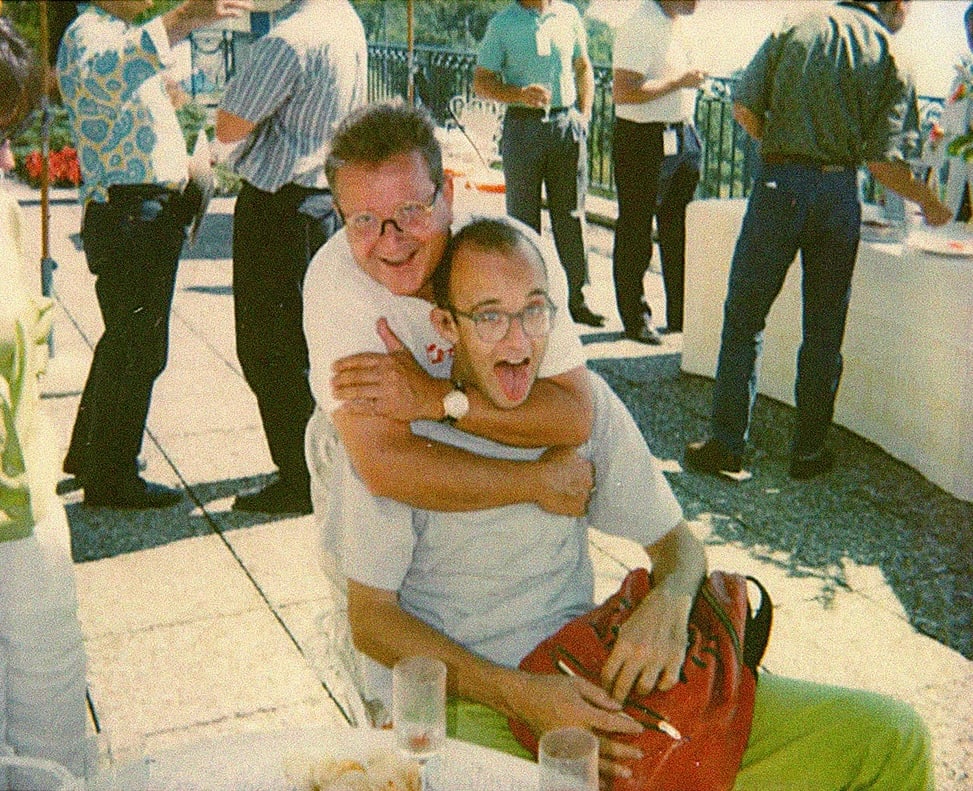
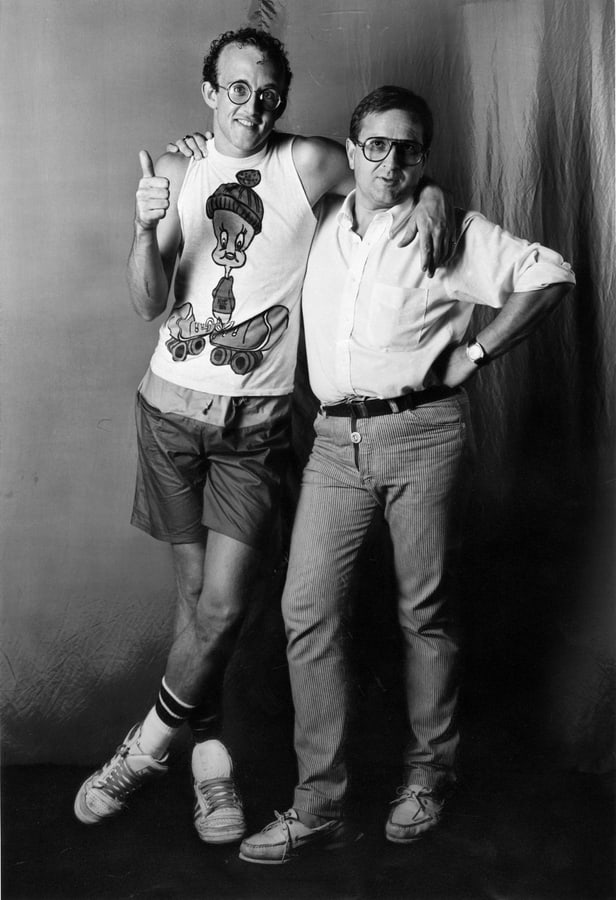
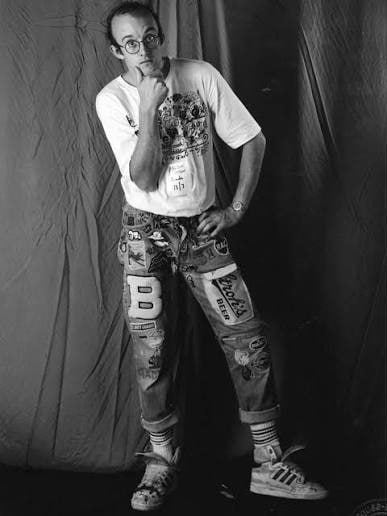
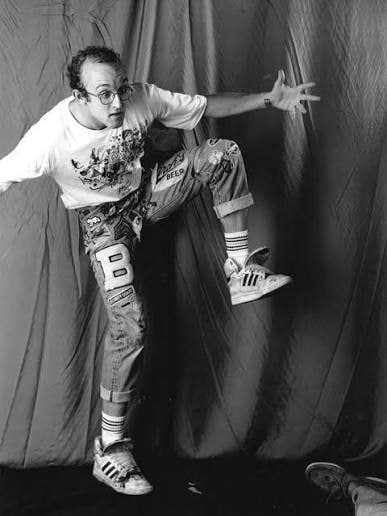
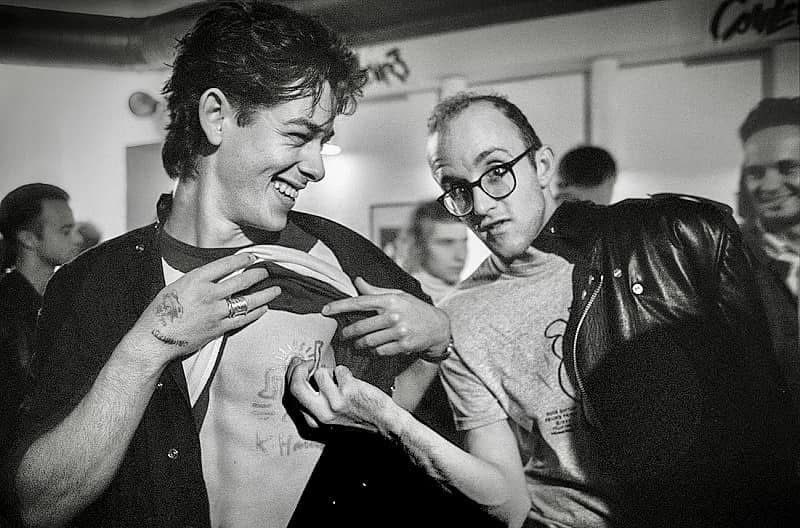
Even before arriving, he had given the festival its image for the year. His figures cover the poster of the 1983 Montreux Jazz Festival, and the T-shirt that goes with it — the one he wears in Roxanne Lowit’s photograph at the top of this page.
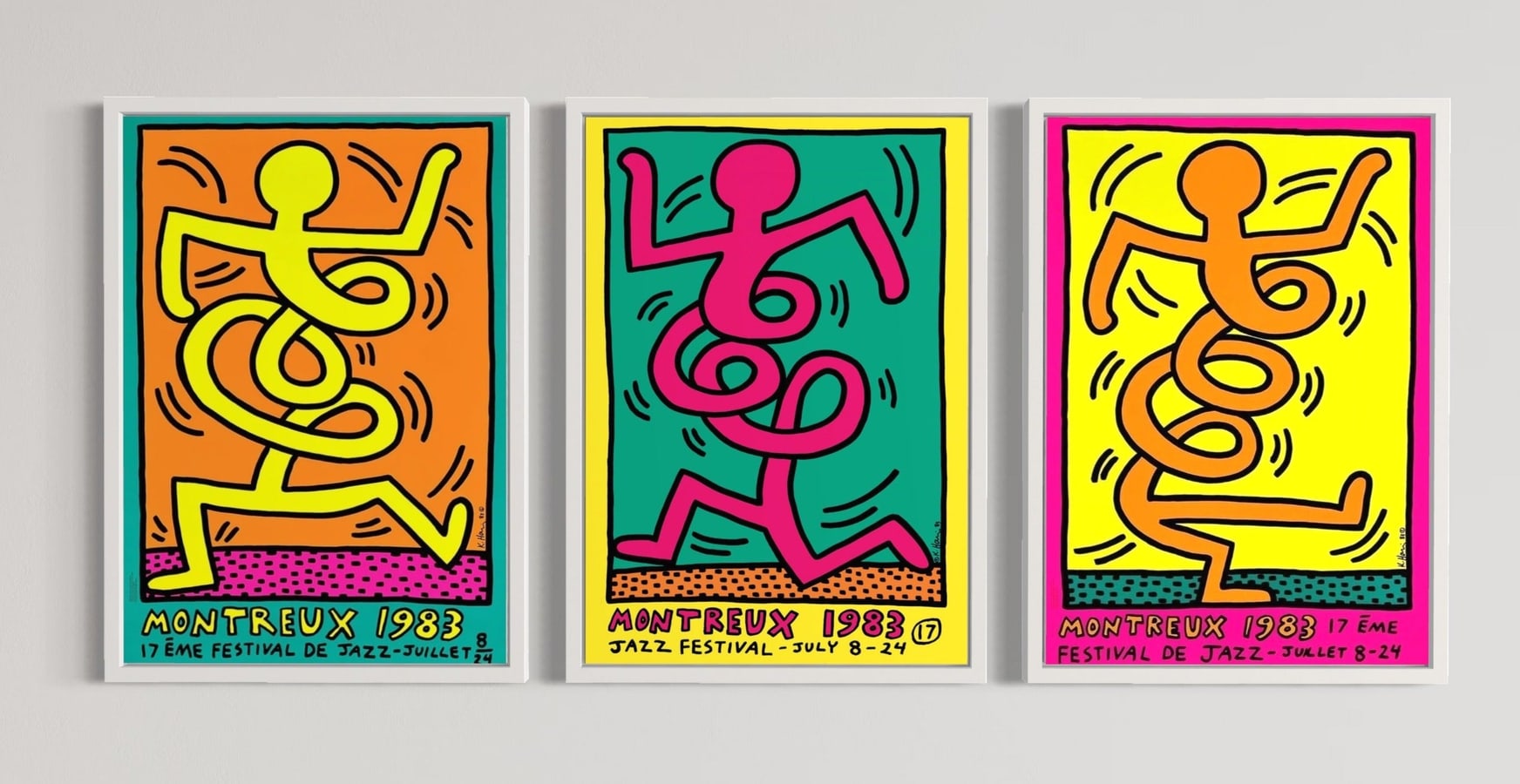
It is his first poster for Montreux. He would design a second one three years later, for the festival’s twentieth year, with Andy Warhol.
What the invitation papers say
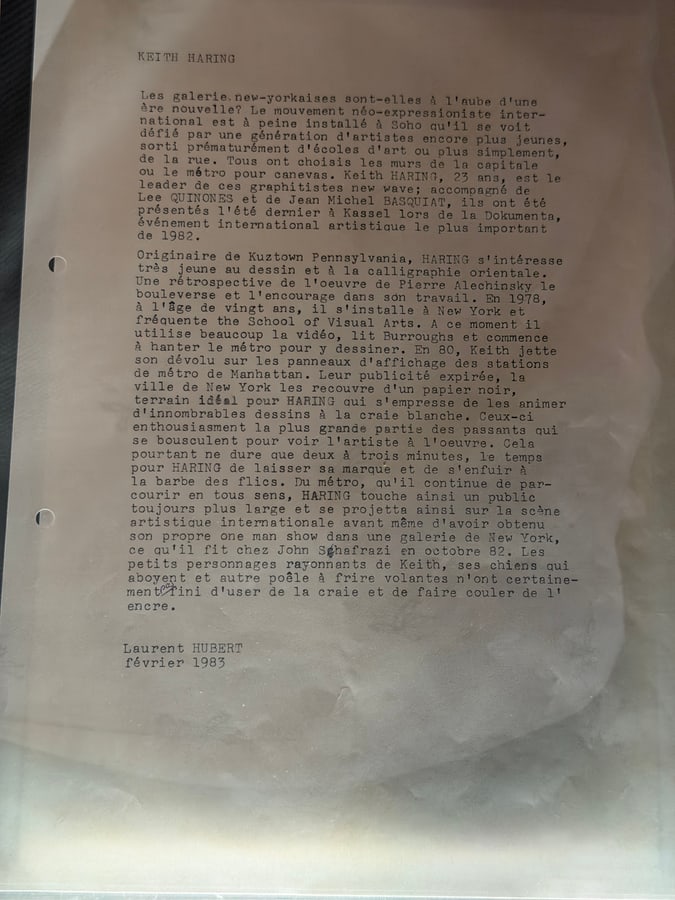
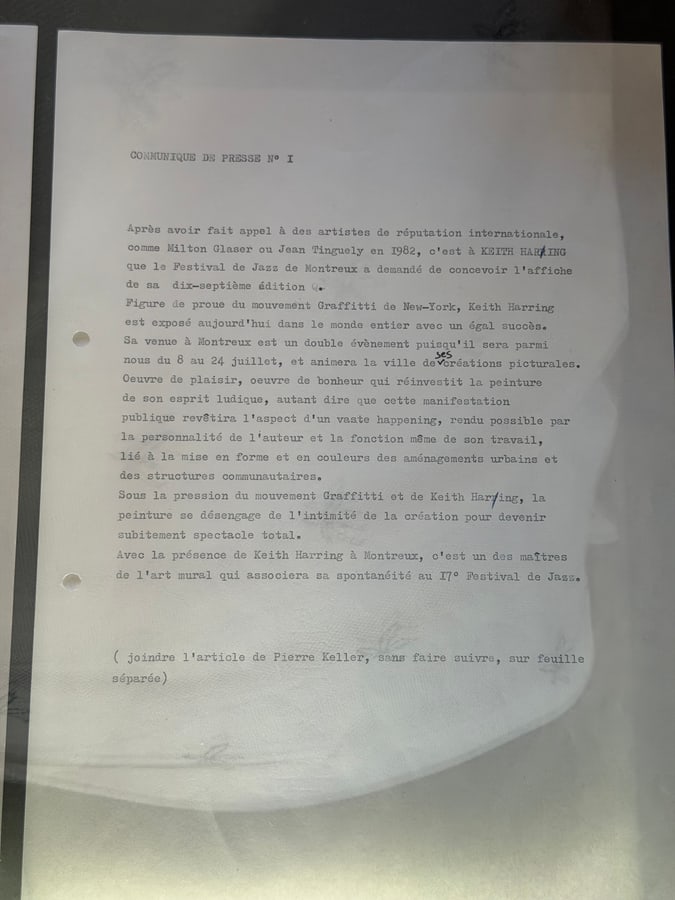
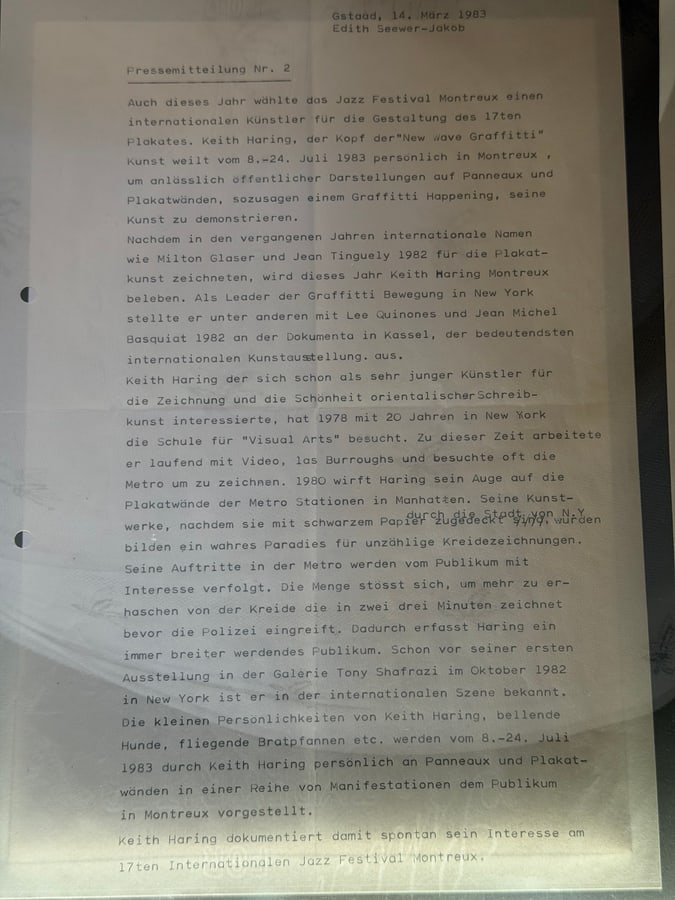
The papers of the operation have been kept. In February 1983 a note signed Laurent Hubert circulated in Montreux to introduce the artist: a boy from Kutztown, Pennsylvania, trained at the School of Visual Arts, who draws in white chalk on the expired advertising panels of the New York subway, gets chased by the police, and has just had his first solo show at Tony Shafrazi’s.
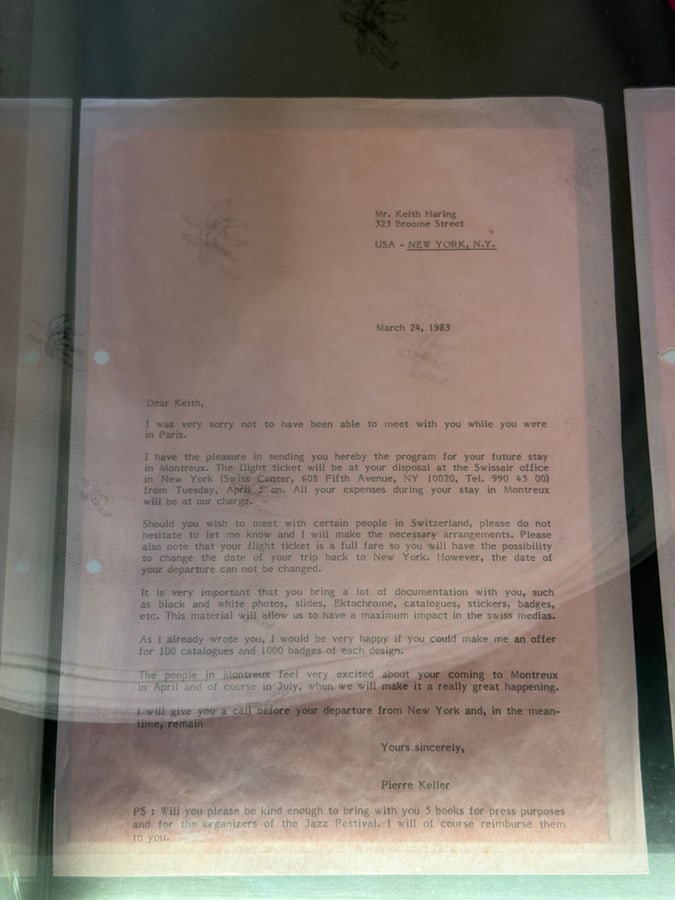
On 24 March, Pierre Keller wrote to him in New York, at 325 Broome Street. He apologises for missing him in Paris, tells him his ticket is waiting at the Swissair office on Fifth Avenue from Tuesday 5 April, and that all his expenses in Montreux will be covered. He asks him to bring material for the Swiss press: black-and-white photographs, slides, Ektachromes, catalogues, stickers, badges — and wants to order a hundred catalogues and a thousand badges of each design.
The letter ends on a sentence that says everything about the expectation: “The people in Montreux feel very excited about your coming to Montreux in April and of course in July, when we will make it a really great happening.”
July 1983: ten days in Montreux
He arrived on Wednesday 6 July 1983 with his partner. Pierre Keller welcomed them. They stayed at the Hôtel Eden au Lac, on the Rue du Théâtre, almost opposite the site where the artist was to work, and took their meals at the Casino. They left on 16 July.
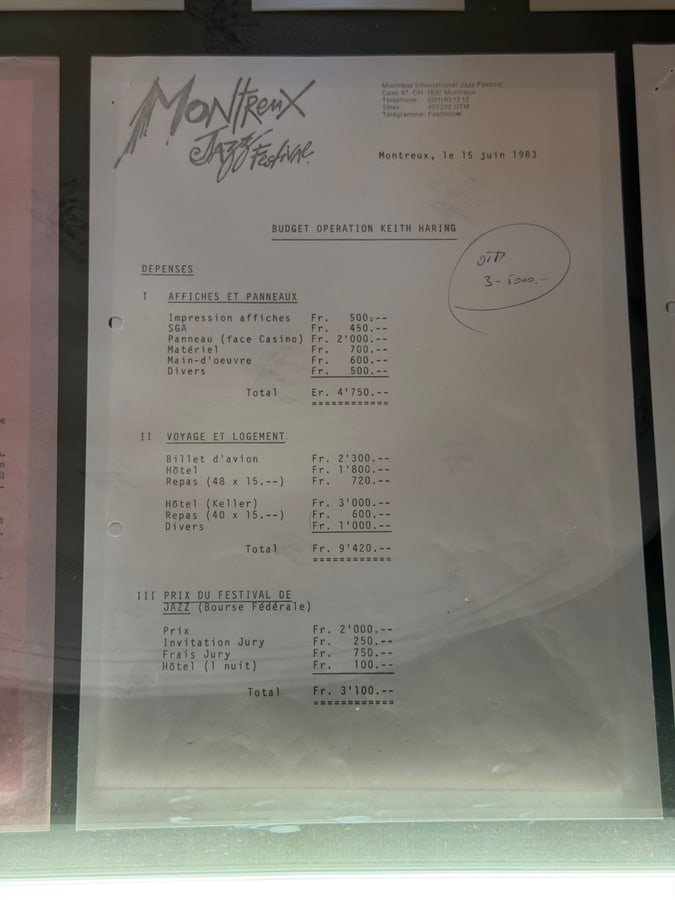
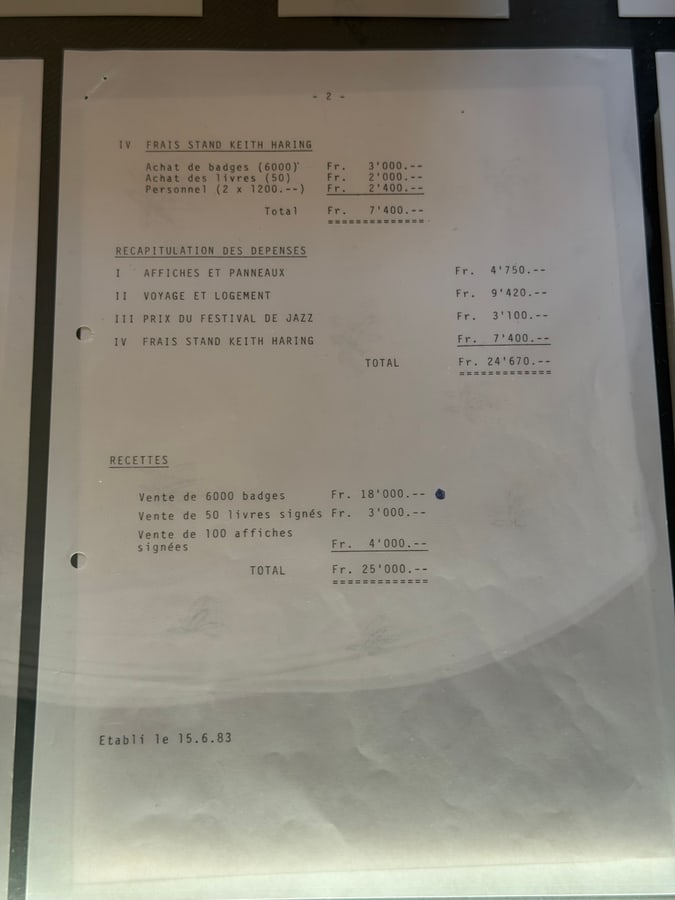
Keller had christened the whole thing “operation Keith Haring”: a projected budget of 24,670 francs. The work made opposite the Casino cost the festival 2,000 francs.
A “Keith Haring Festival” all over town
He did not stop at the building site. For ten days he worked all over town, on advertising hoardings as well as posters. In his correspondence Pierre Keller spoke of a real “Keith Haring Festival”.
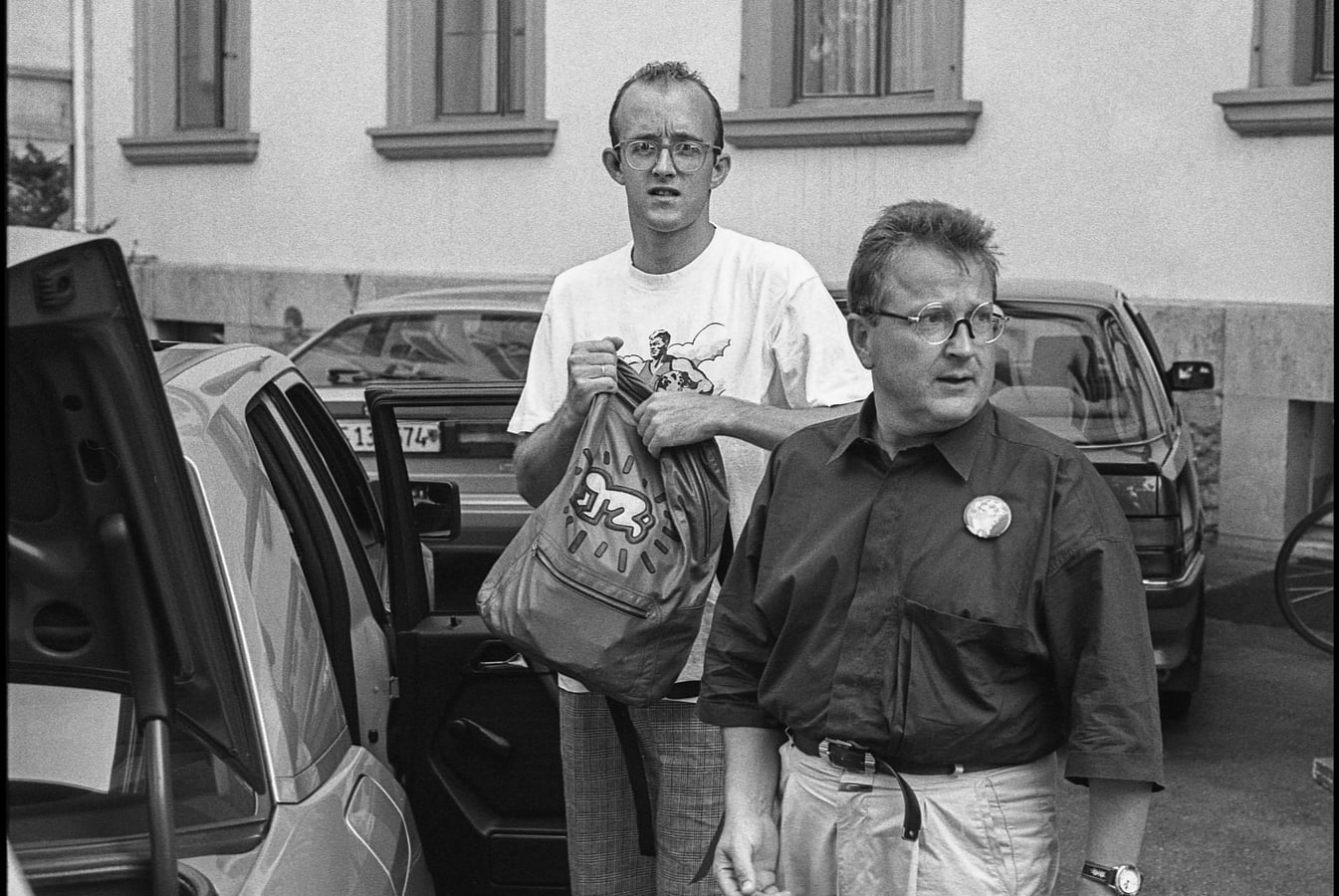
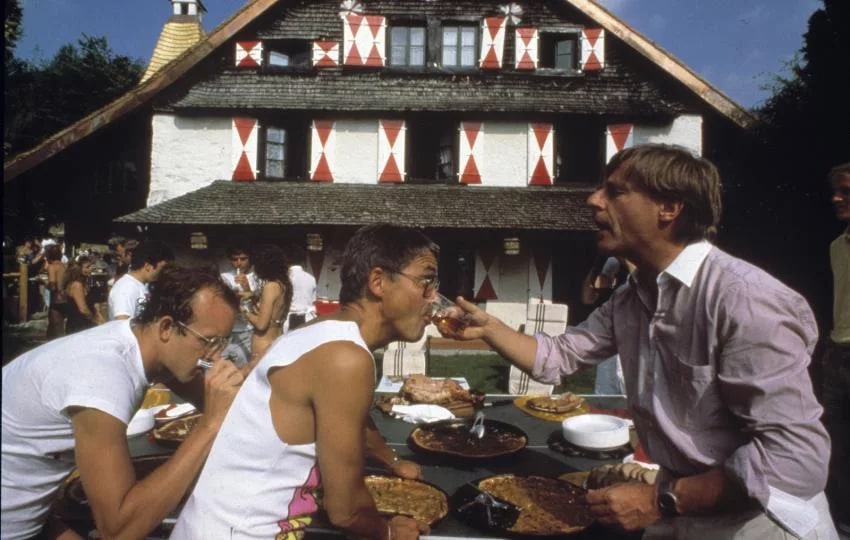
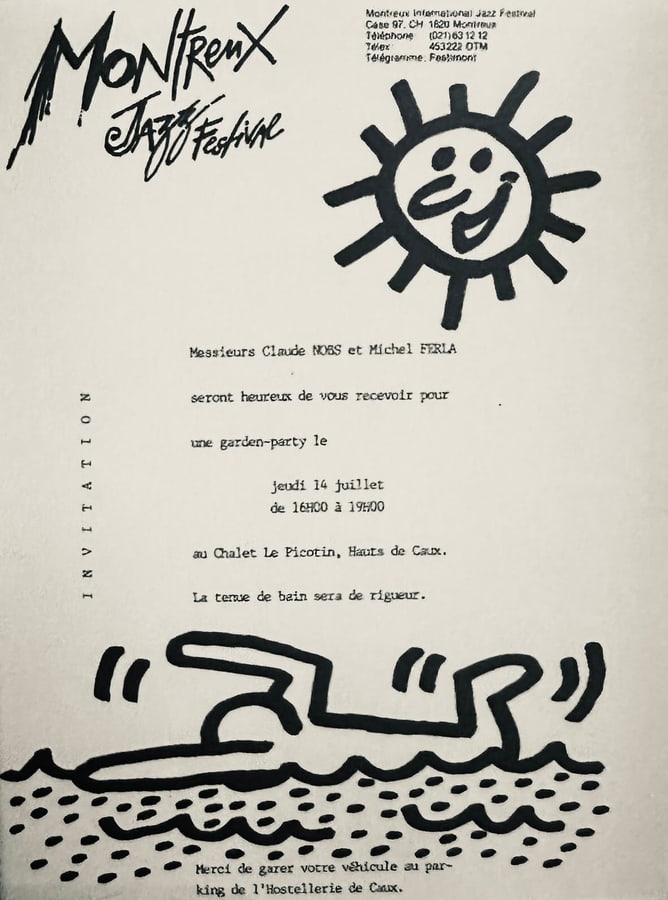
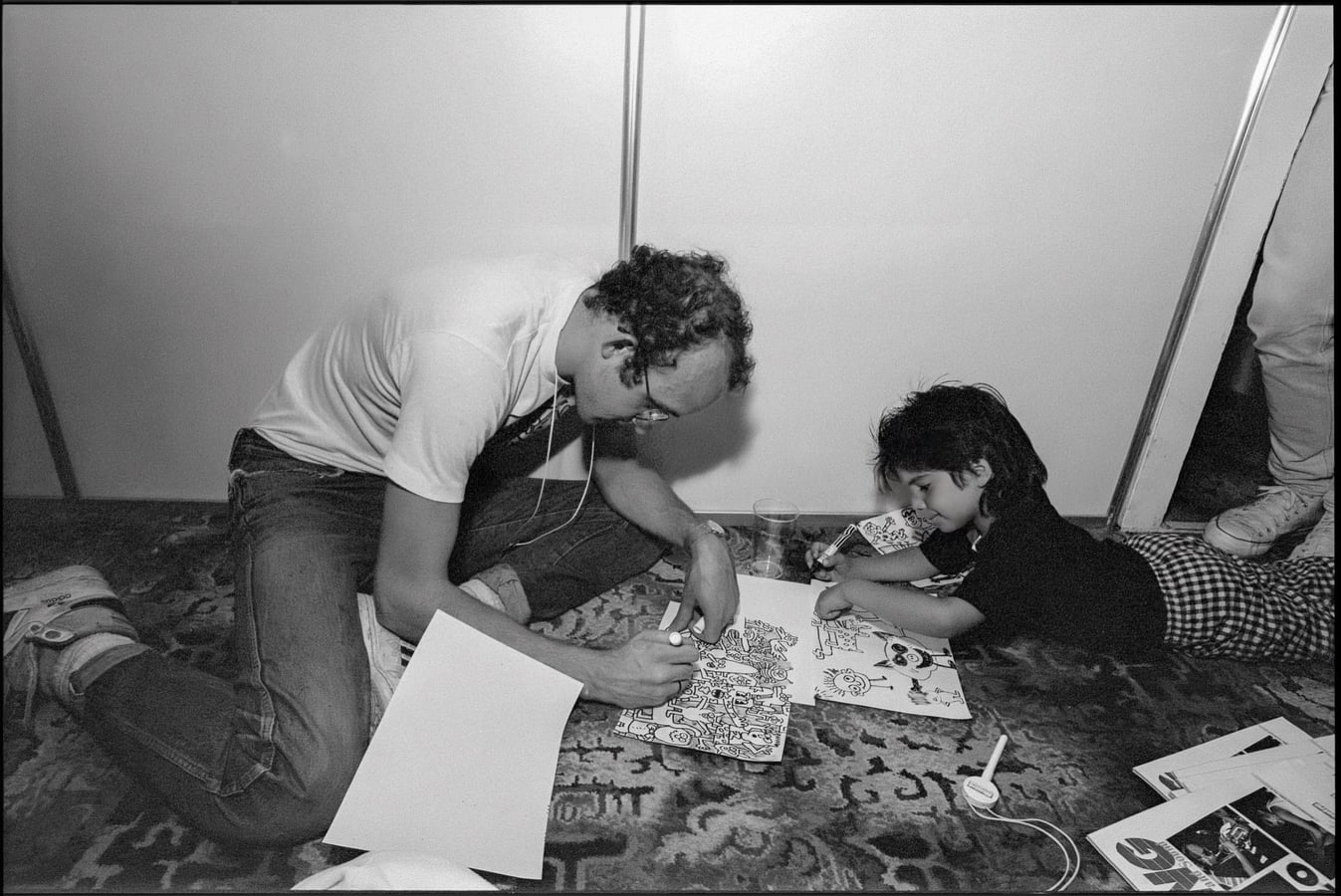
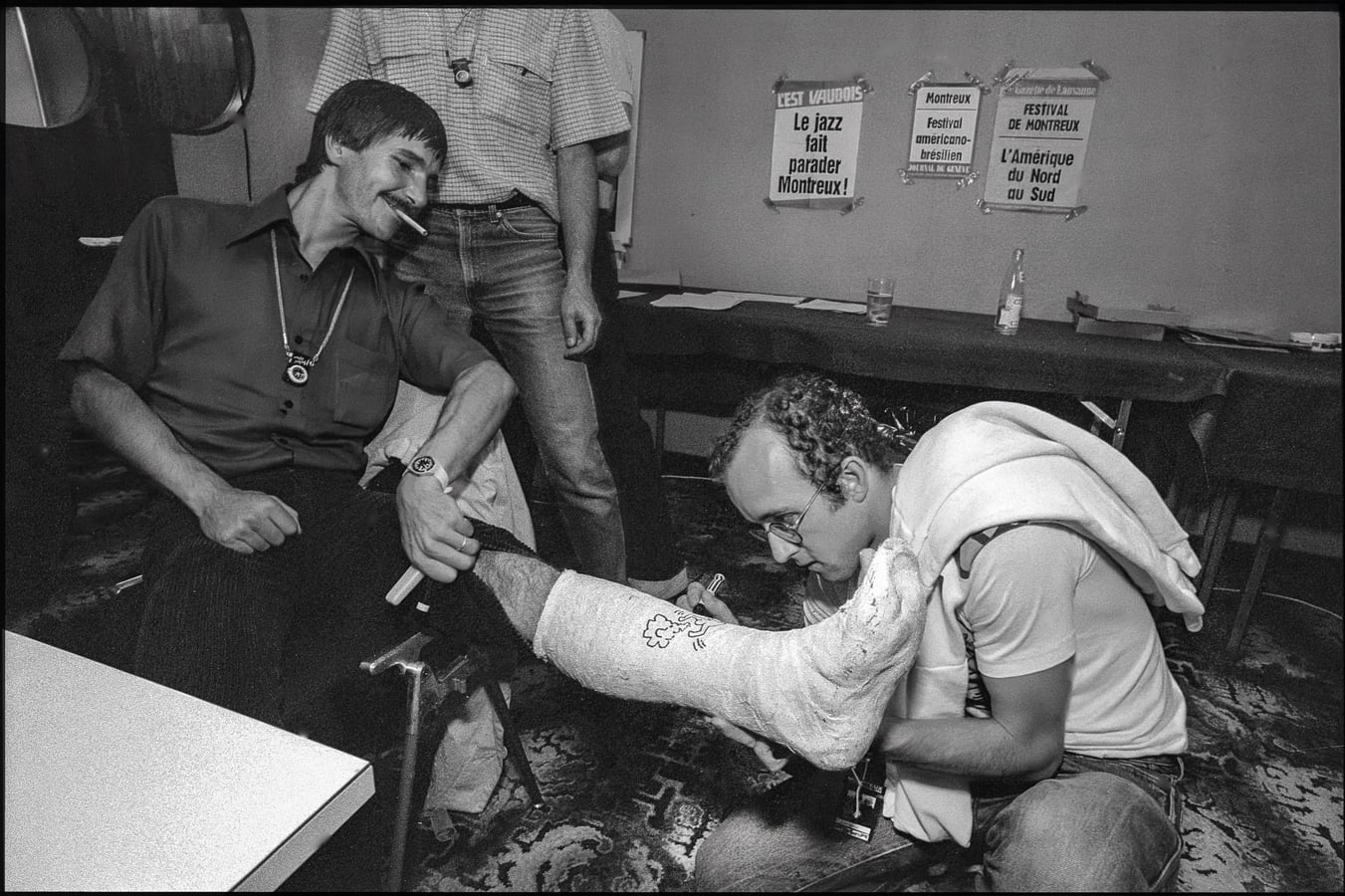
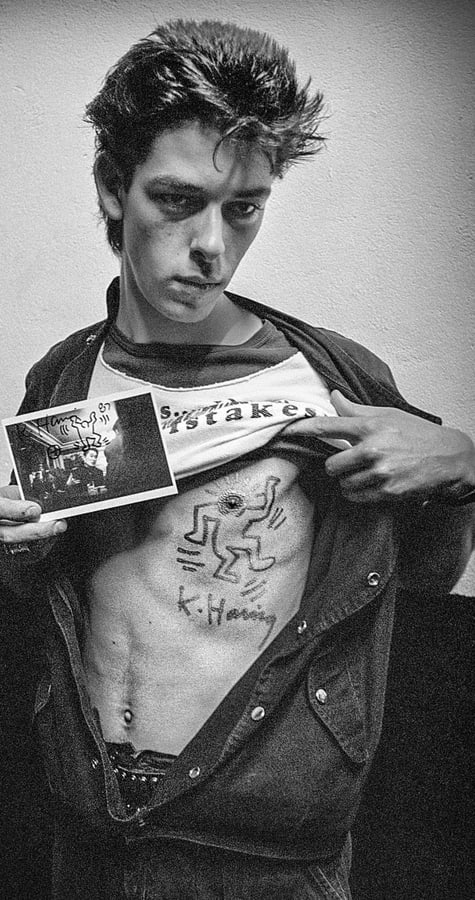
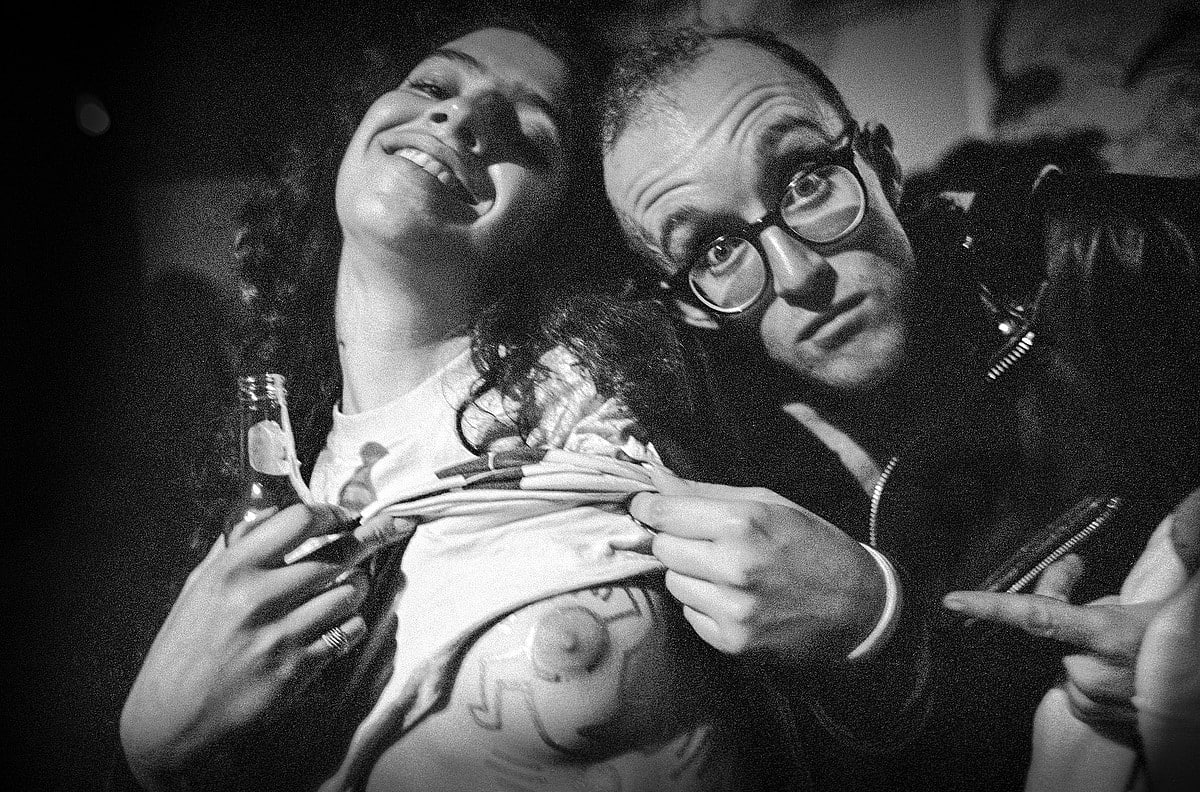
On 14 July he organised a “Keith Haring Day” at the Casino’s nightclub, Le Platinum. Between two interventions he was seen at Claude Nobs’s chalet, at Haut-de-Caux, at table with the comedian Emil Steinberger. He did not draw only on walls: people got their turn too, and in this photograph Claude Nobs carries the marks of his felt-tip.
Eight panels on the Rue du Théâtre: the work lost, then found
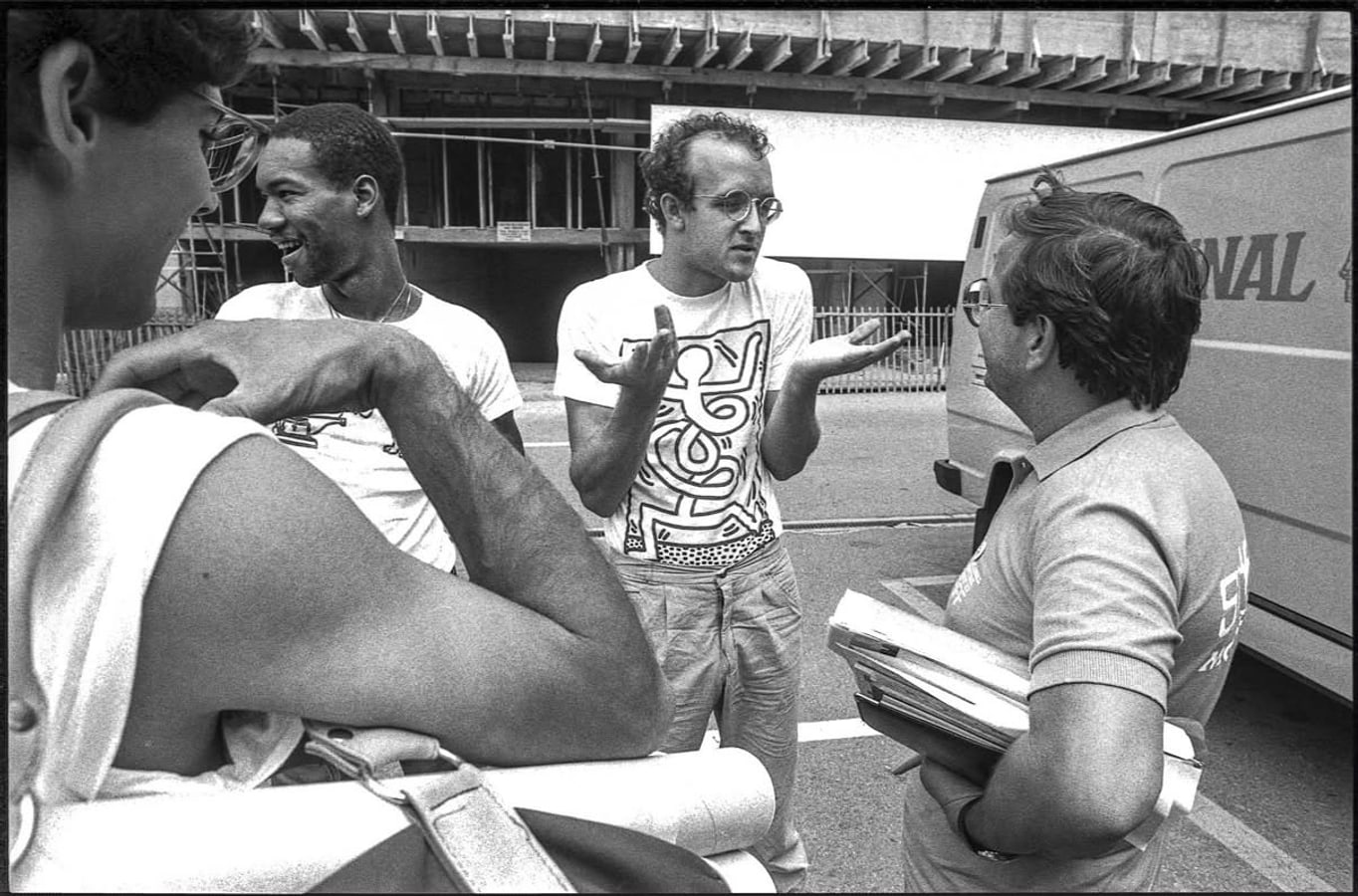
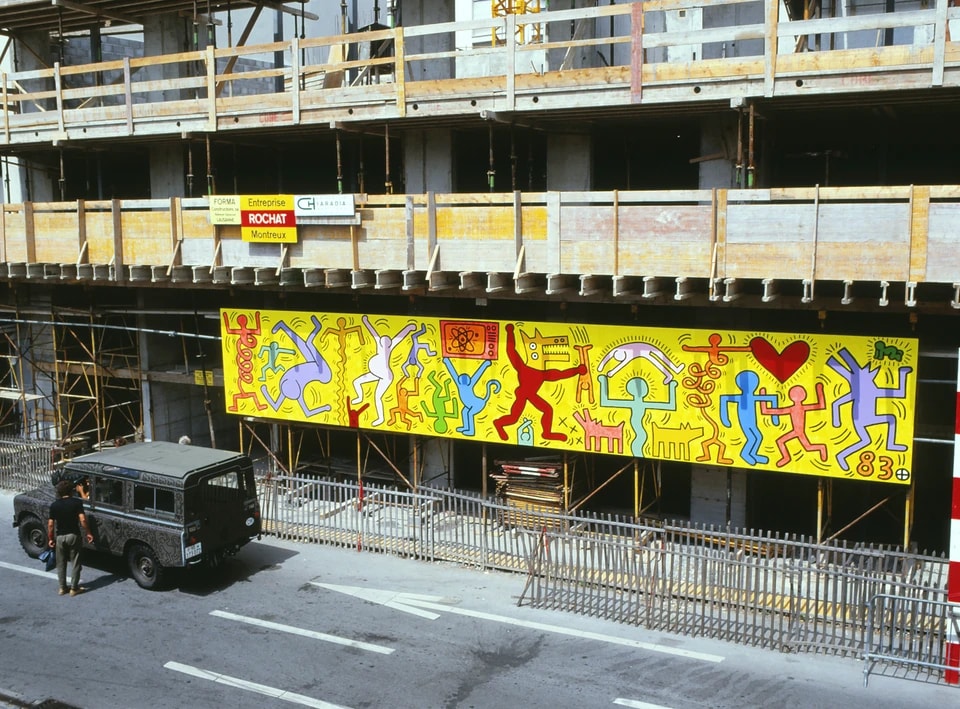
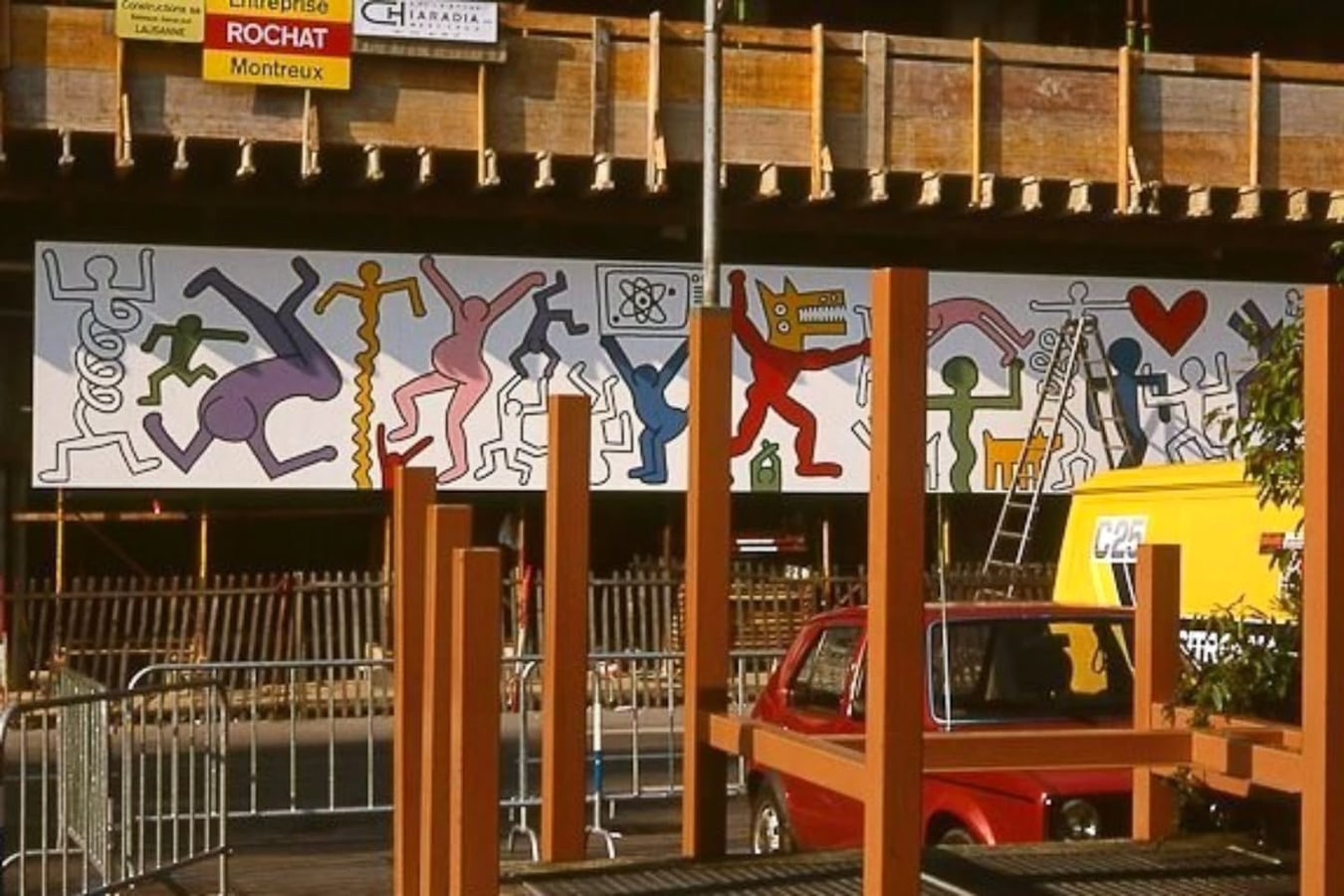
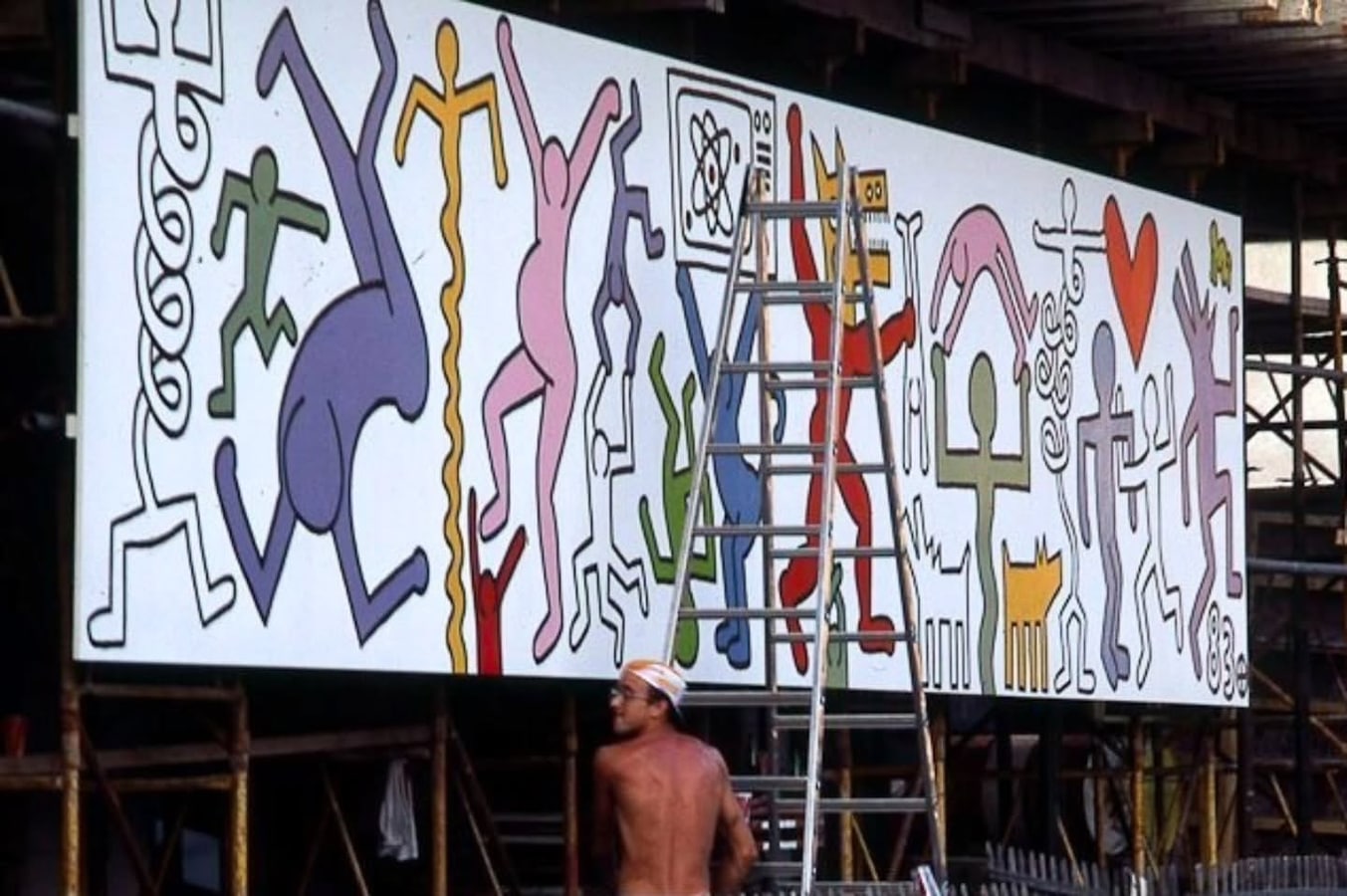
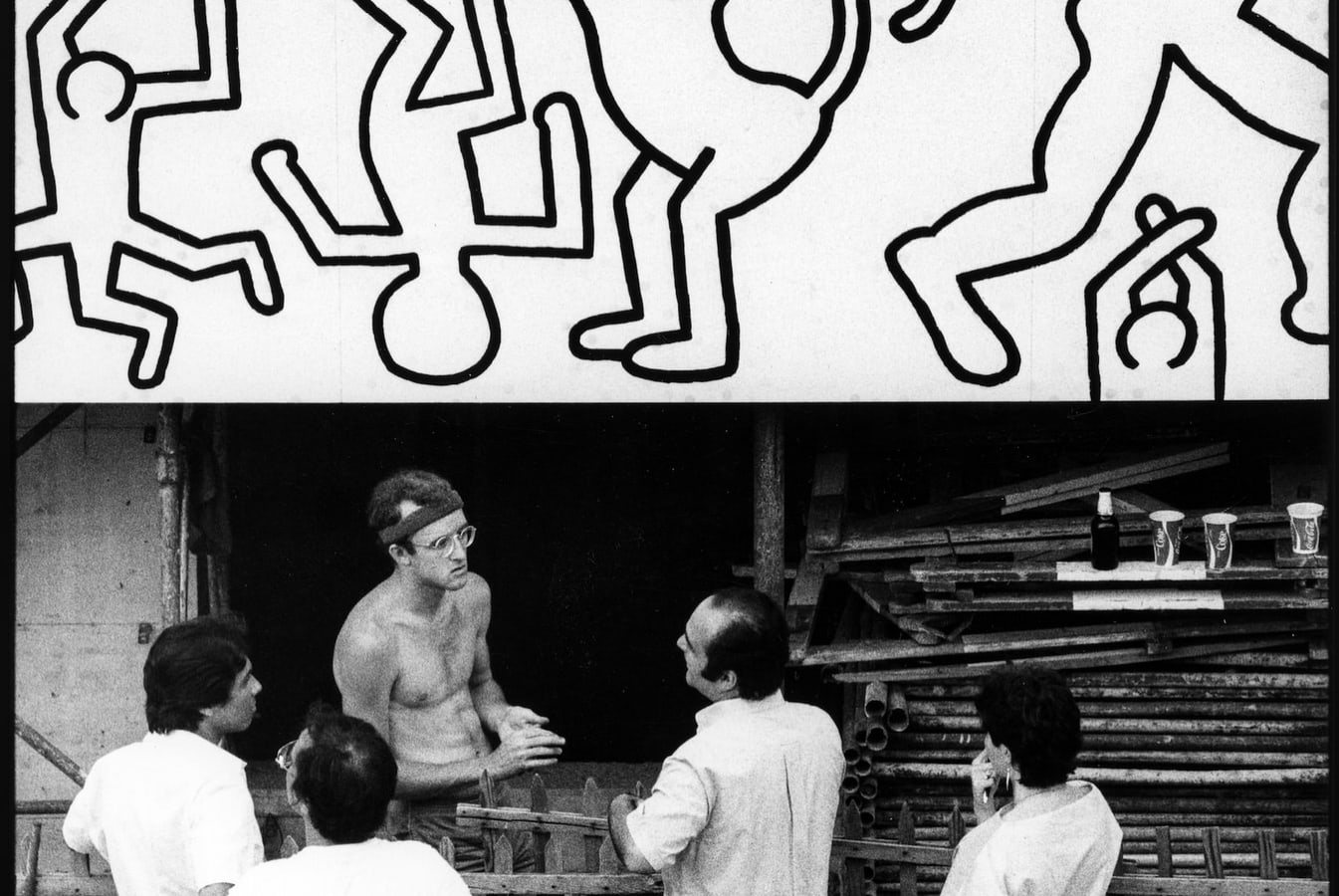
The main work of his stay covered a building then under construction, on the Rue du Théâtre side. Eight acrylic panels hung from the scaffolding, facing the Casino. He worked on it on Thursday 7 and Friday 8 July 1983 — only two days, according to the festival’s records, because the festival opened on the Friday and he had other canvases to paint.
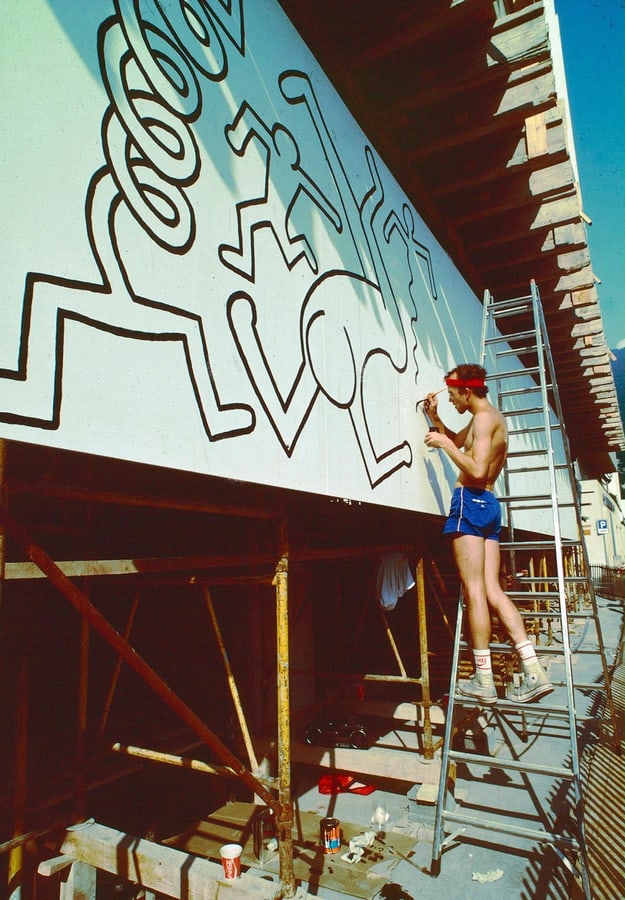
The dimensions vary from one source to another: the festival records give nearly two metres high by twelve long, while the press spoke of a panel ten metres by three.
Shortly after the festival, the work disappeared. It was said the panels might have been thrown out by the site workers. For more than forty years, the photograph taken by Robert Di Salvo, then an employee of the building’s architect, remained the main record of the whole.
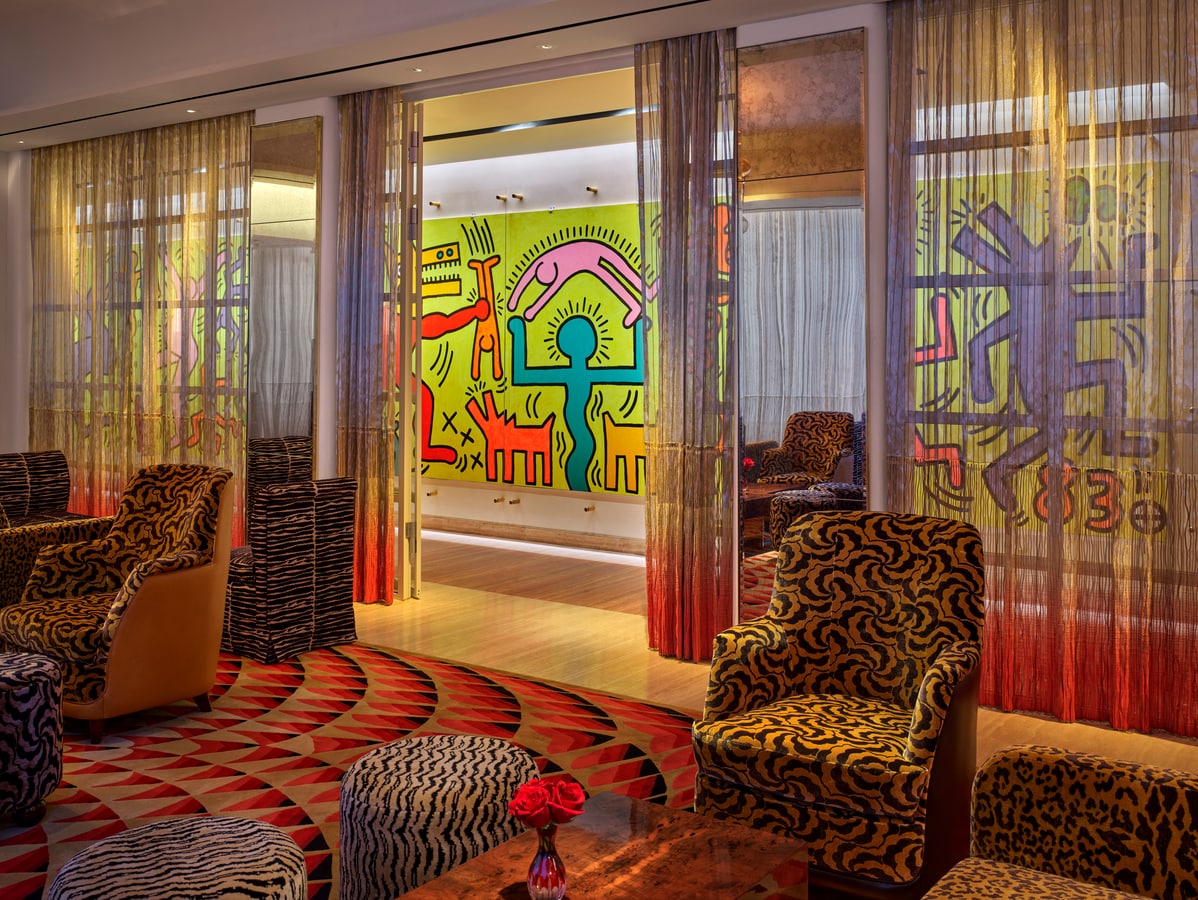
It had not disappeared. After long years in a private collection, it can now be seen at the Faena hotel, in the Chelsea district of New York, under the title “Montreux Jazz Festival”. It hangs in a place people walk through, which restores the public dimension Keith Haring sought in his work.
The work that stayed put, at the 2M2C
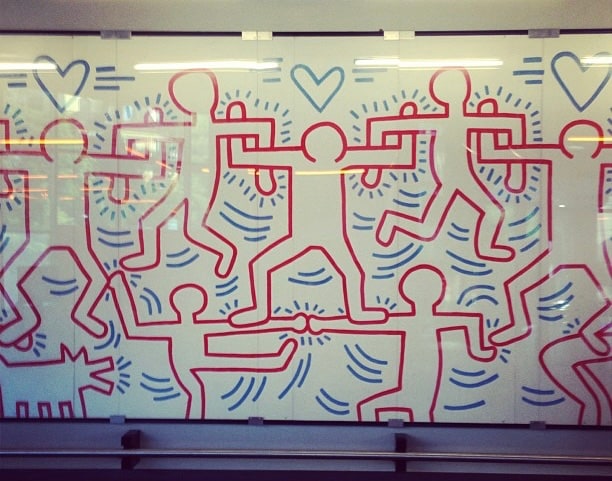
Another work from that stay never moved, and can still be seen: Keith Haring painted it in July 1983 at the 2M2C, the convention centre on the lakefront. Red and blue figures dancing, a barking dog, hearts — the vocabulary he was then deploying in the New York subway.
It occupies one of the building’s halls. It is the second large-scale work he left in Montreux: the one on the Rue du Théâtre went to New York.
The canvas given to Ney Matogrosso
The Brazilian singer Ney Matogrosso was playing the festival. Keith Haring painted during his concert, on stage, and dedicated the canvas: “For Ney Matogrosso”. The film director Esmir Filho sums up the scene in one sentence: “They were two artists in dialogue there, in the middle of the festival.”
The canvas was left to dry. “When they went to collect it, the next day, it had been stolen. Nobody knows where it is.” It has never resurfaced.
Forty-two years later it came back through cinema. In “Homem com H”, the filmed life of Ney Matogrosso released in 2025, a canvas bearing the dedication hangs above the singer’s bed in several scenes. The director had it recreated: “Symbolically, we gave the painting back to the fictional Ney” (Revista Fórum).

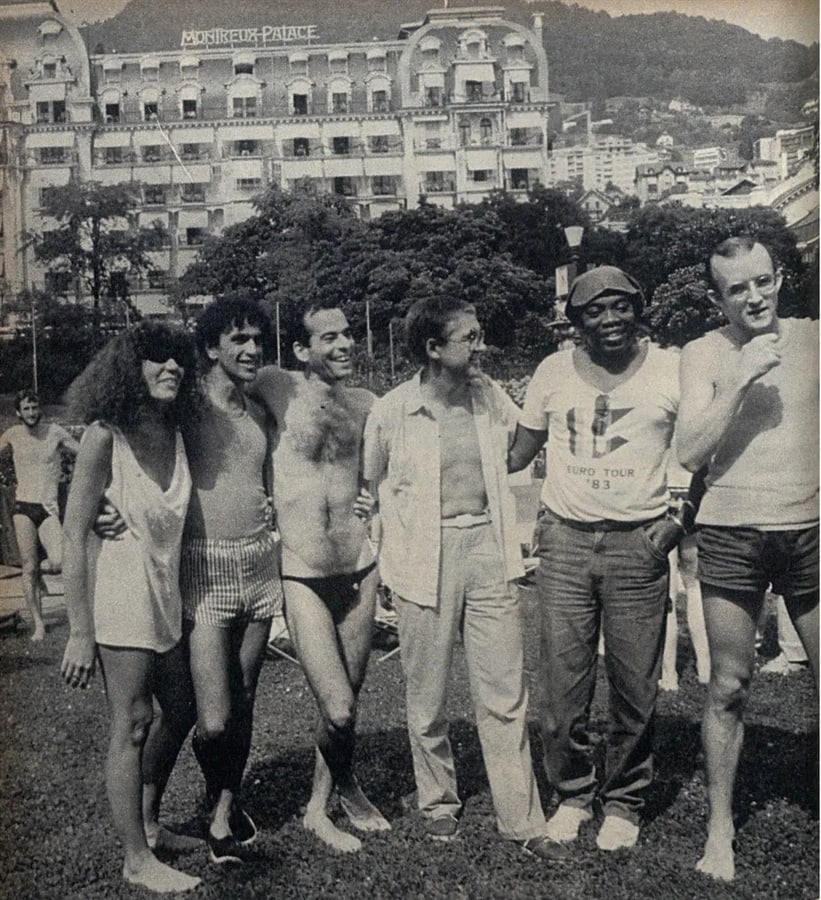
A photograph taken that year in the gardens of the Montreux Palace brings together Elba Ramalho, Caetano Veloso, Ney Matogrosso, Claude Nobs, Milton Nascimento and Keith Haring.
Edouard Curchod’s Land Rover
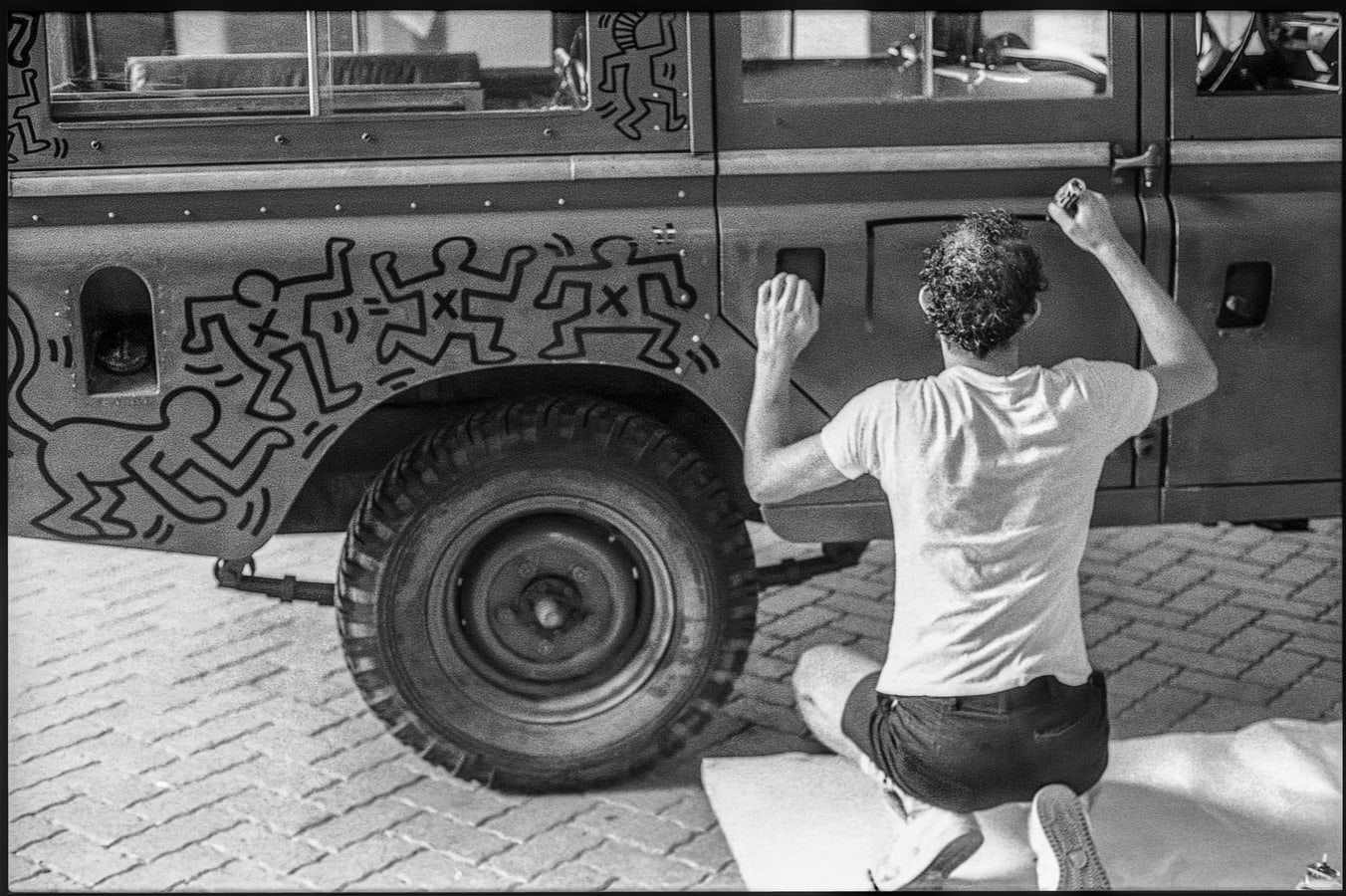
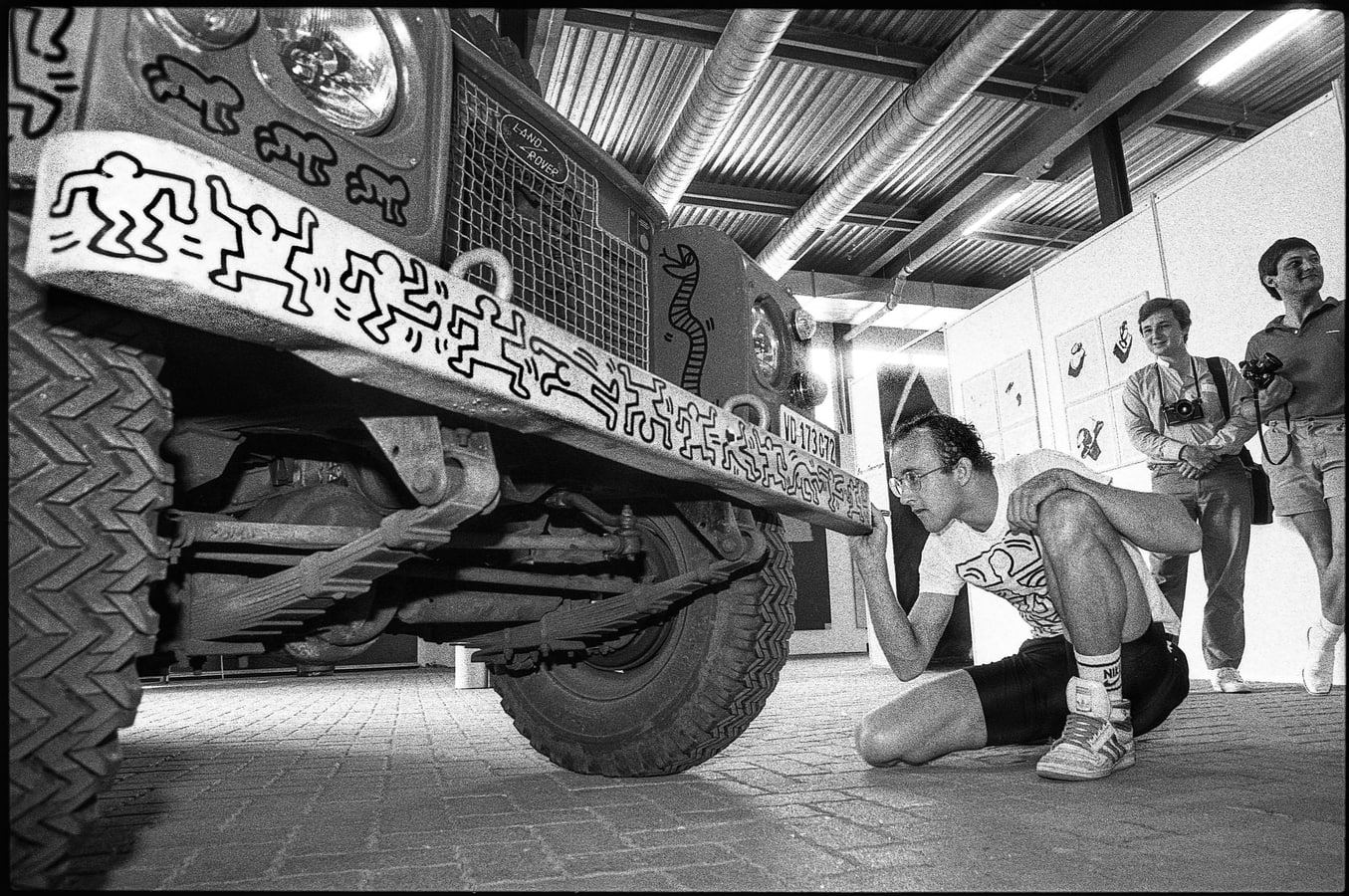
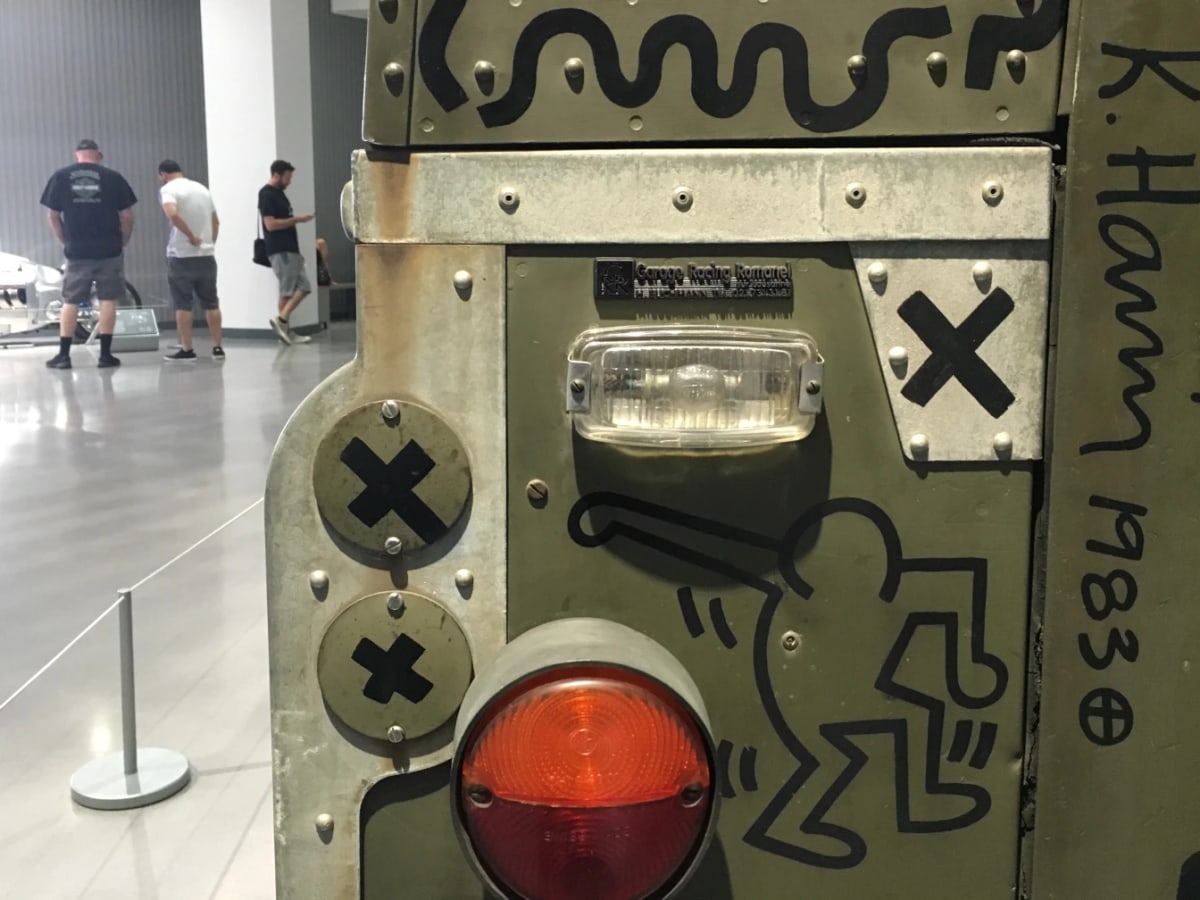
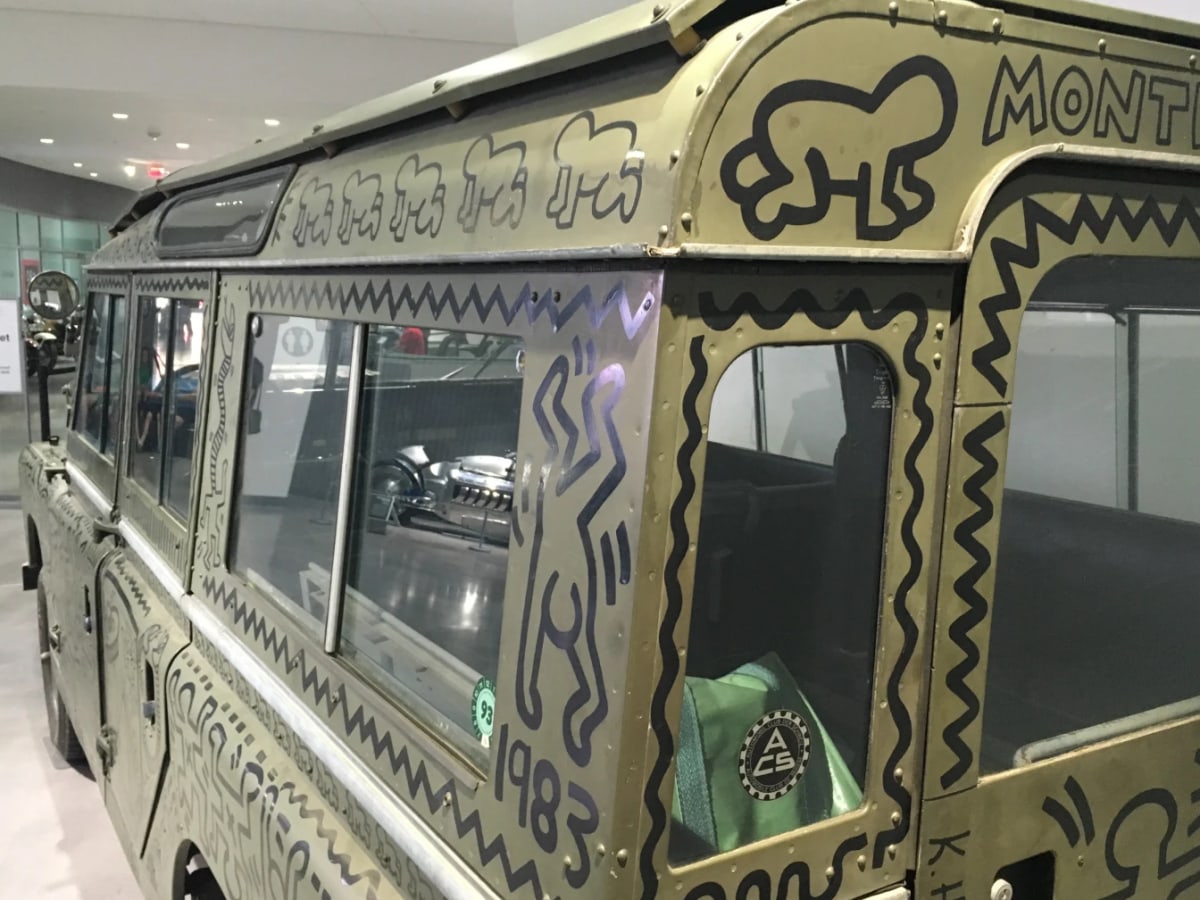
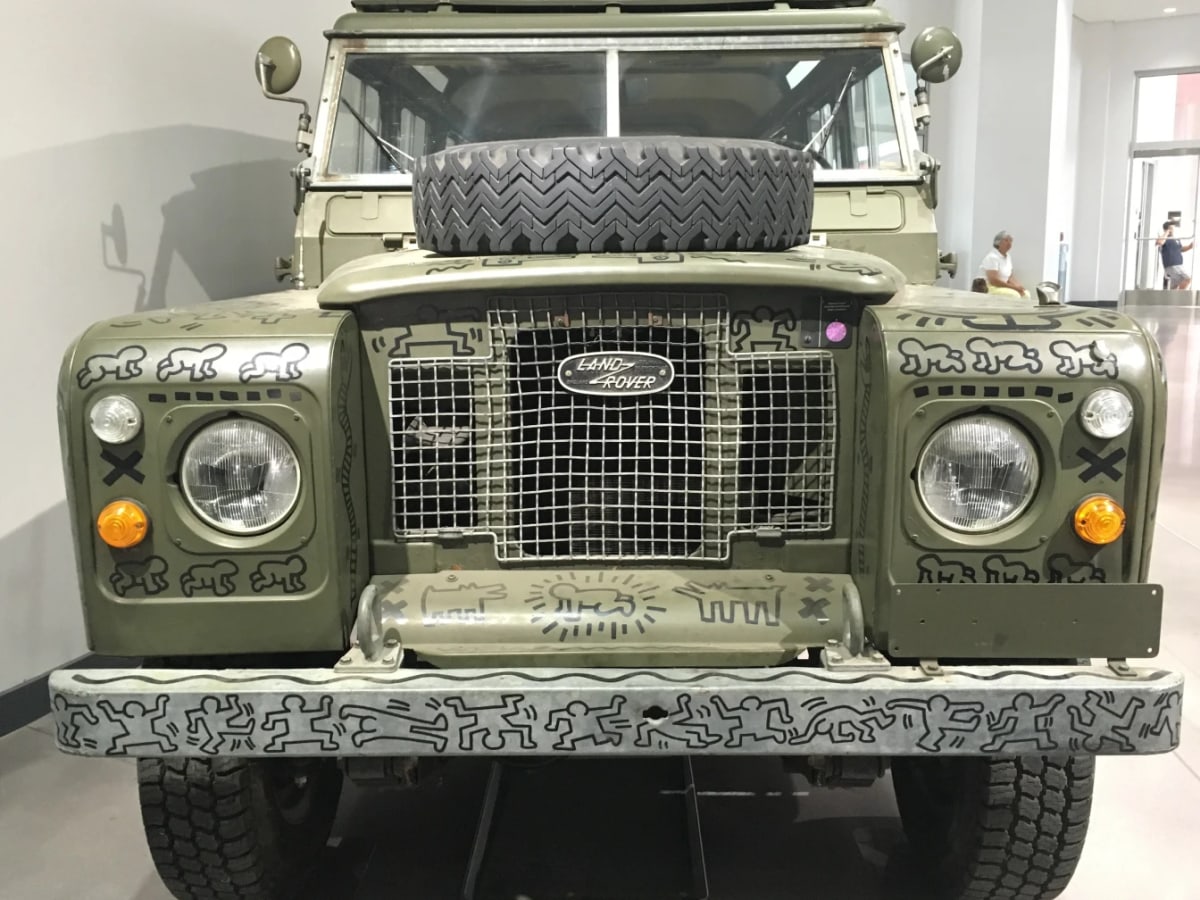
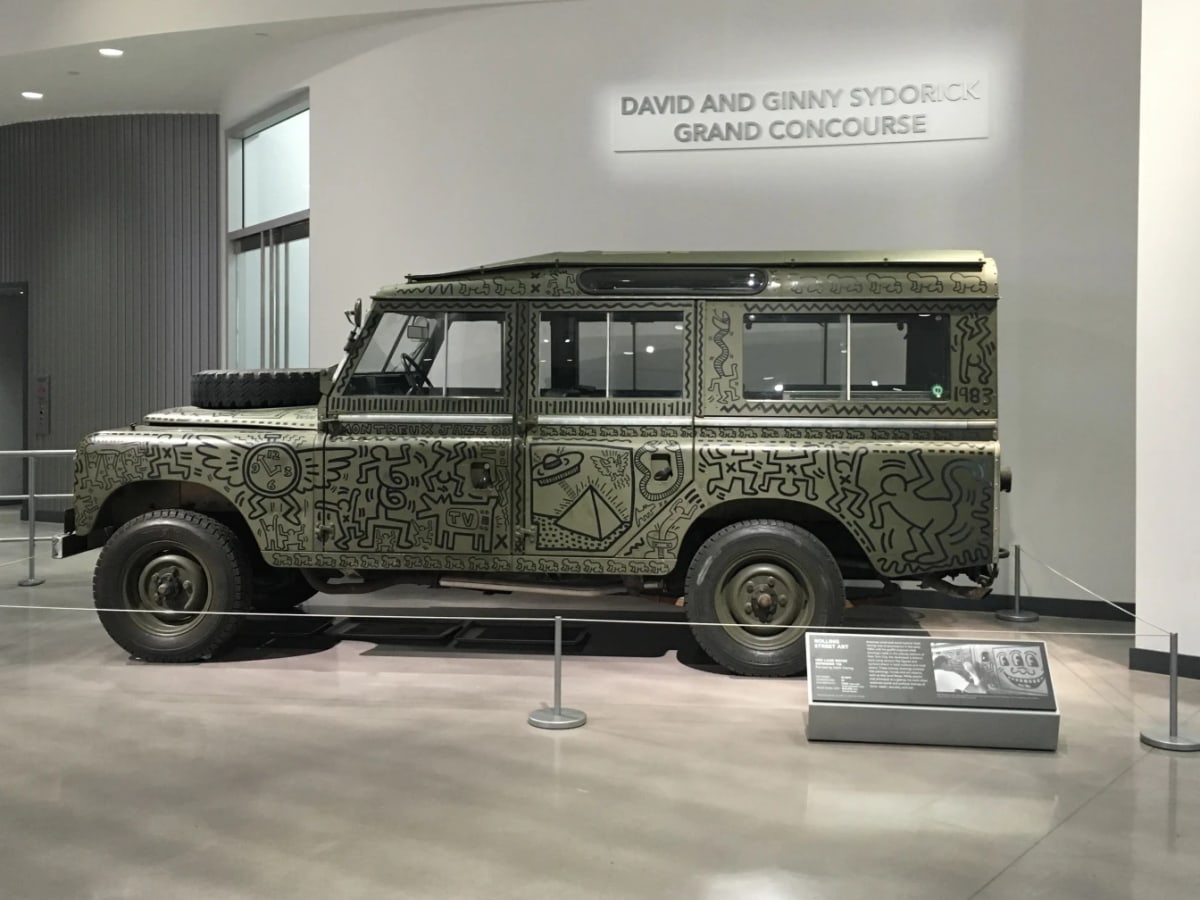
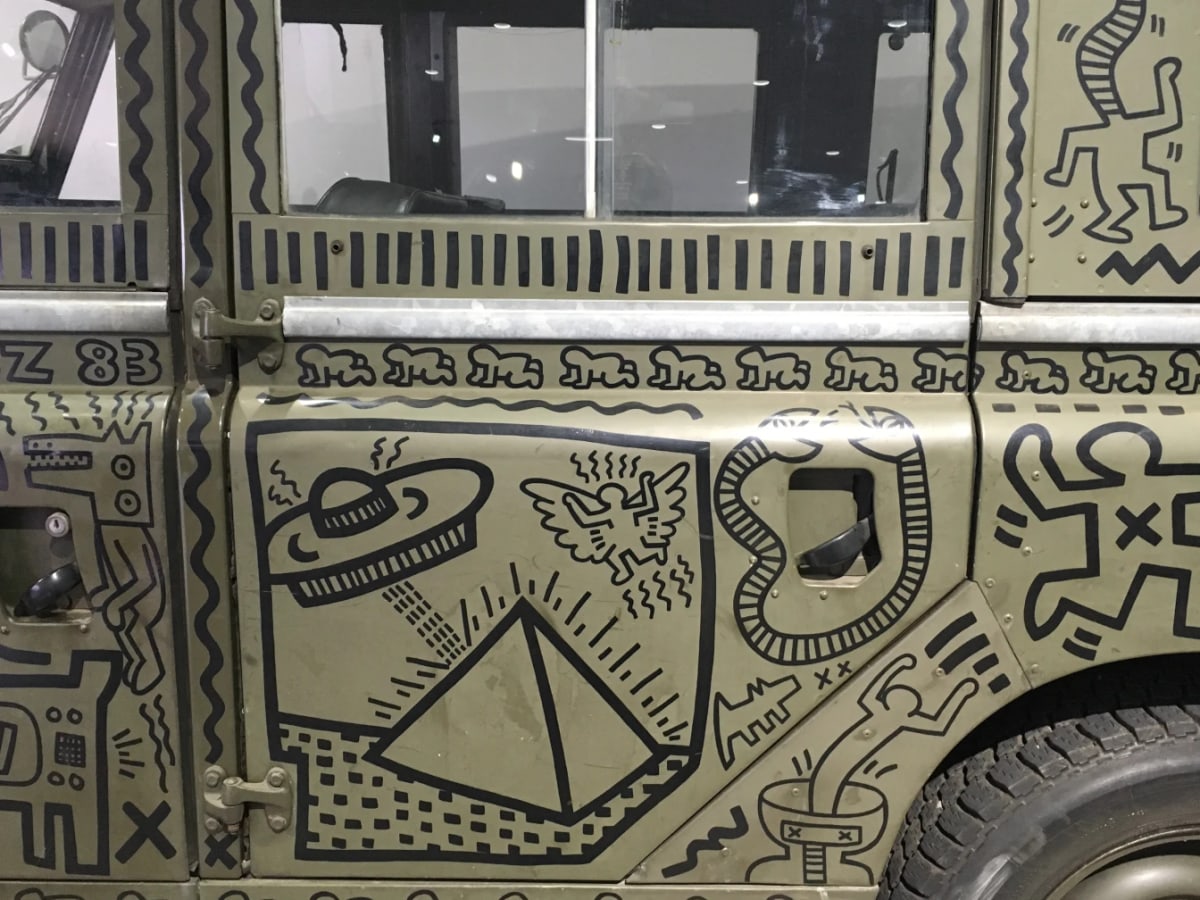
Among the surfaces he covered with his figures there was a car. It did not belong to the tourist office but to the photographer Edouard Curchod, the very man who left most of the images of that stay: a 1971 Land Rover Series III 109 Station Wagon.
It has left Switzerland. From December 2016 to June 2017 it featured in Los Angeles in the exhibition “The Unconventional Canvases of Keith Haring”, at the Petersen Automotive Museum. A bodywork painted in a day in Montreux, turned museum piece.

The festival’s twentieth-anniversary poster, presented with Andy Warhol
The idea came from Pierre Keller. For the festival’s twentieth year he wanted to “do a jam session” and bring two or three artists together. He called Keith Haring, who suggested Andy Warhol. “Andy is not speaking a lot, but they are very good friends,” Keller would say: Warhol accepted at once. The two men worked for three days in the Broadway studio in New York, in late 1985, and produced about ten designs.
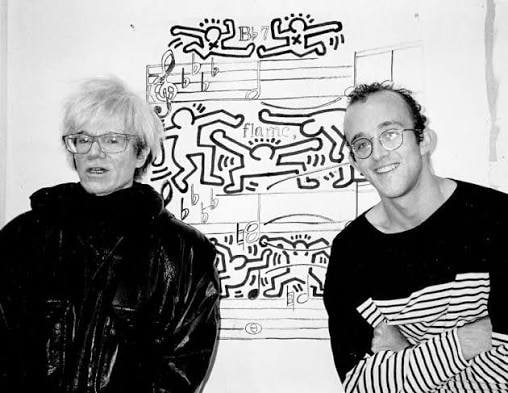
“I chose this because I think it was the best,” says Keller. “An artist can do a very good drawing that may not be a good poster. A good poster is not just a reproduction of a painting. Keith Haring had a fantastic feeling for the public and the import of the image as it relates to the jazz festival.” The poster was printed in Switzerland under his guidance, as a silkscreen edition of five thousand selling at fifteen dollars (Detroit Free Press, 25 August 1986).
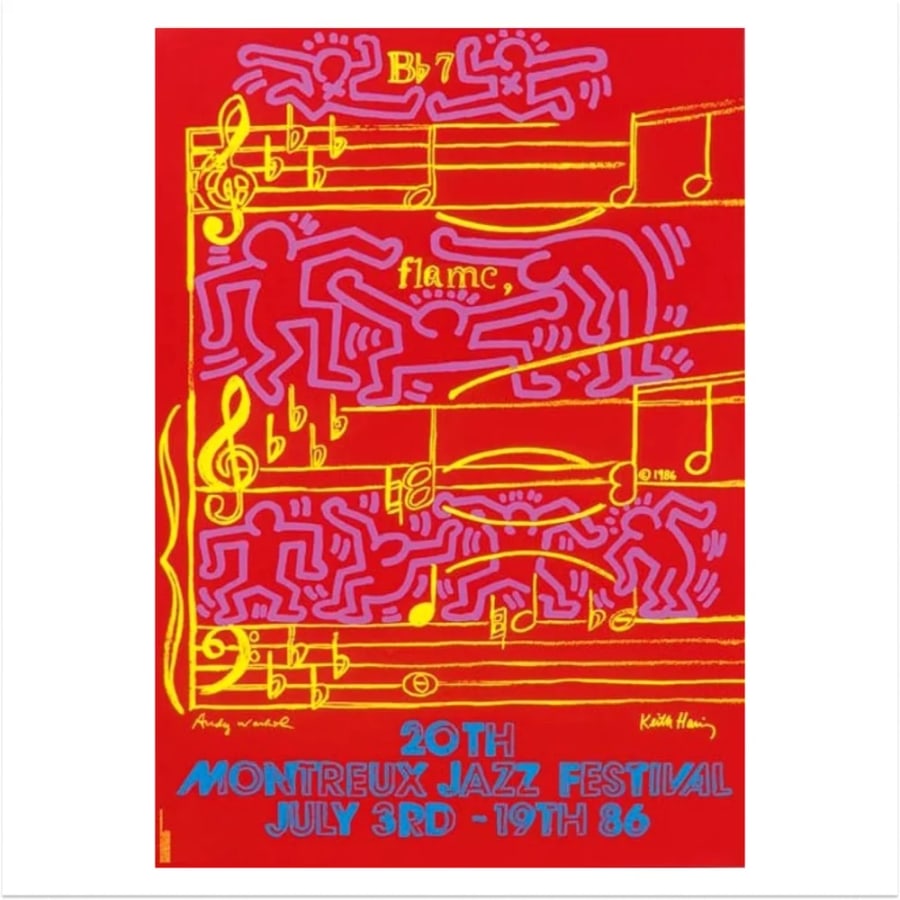
It served both the twentieth Montreux Jazz Festival and the seventh Montreux-Detroit Jazz Festival. It was presented in New York in March 1986, Haring and Warhol side by side.
Andy Warhol died the following year, in February 1987; Keith Haring three years later, in February 1990. This photograph is one of the last to show them together.
June 1987: Jean Tinguely, outside the Rivolta gallery
On 15 June 1987 Keith Haring landed in Geneva via Zurich. Pierre Keller was waiting at the airport, with a surprise: the painter François Boisrond, who had a show in Lausanne. They checked into the Beau-Rivage and ate by the pool.
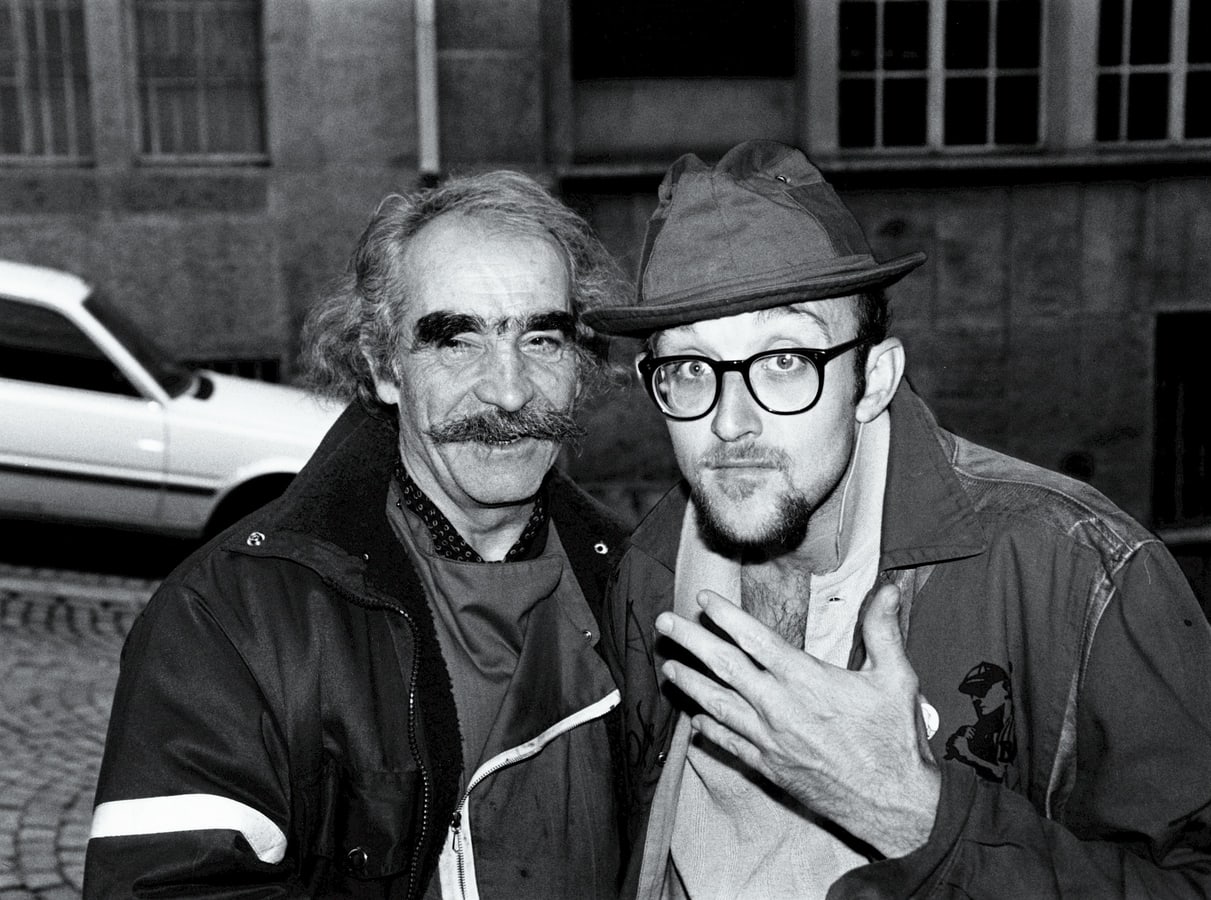
That evening, at Boisrond’s opening, they were to meet Jean Tinguely. Haring bought two small pencil drawings there. Tinguely arrived very late, “which makes Pierre very nervous, but he doesn’t get reprimanded”, Haring notes in his journal, with his new girlfriend and Jeffrey, “really fun and really smart and sort of flamboyant in a very sophisticated way”.
Dinner was at the hotel. Keller had arranged the seating with care; as guest of honour, Haring sat across from Tinguely and Boisrond. “We end dinner by autographing the nametags and menus,” he writes. He gave a drawing to the gallery owner’s son, who asked him for T-shirts — “and, of course, I will”. Then he went up to bed: his stomach hurt all night. It was in that state that he would start drawing the next morning at the Gymnase du Bugnon.
It was that evening that Jacques Straesslé photographed them outside the Rivolta gallery, on the Rue de la Mercerie.
A famous artist at the Gymnase du Bugnon
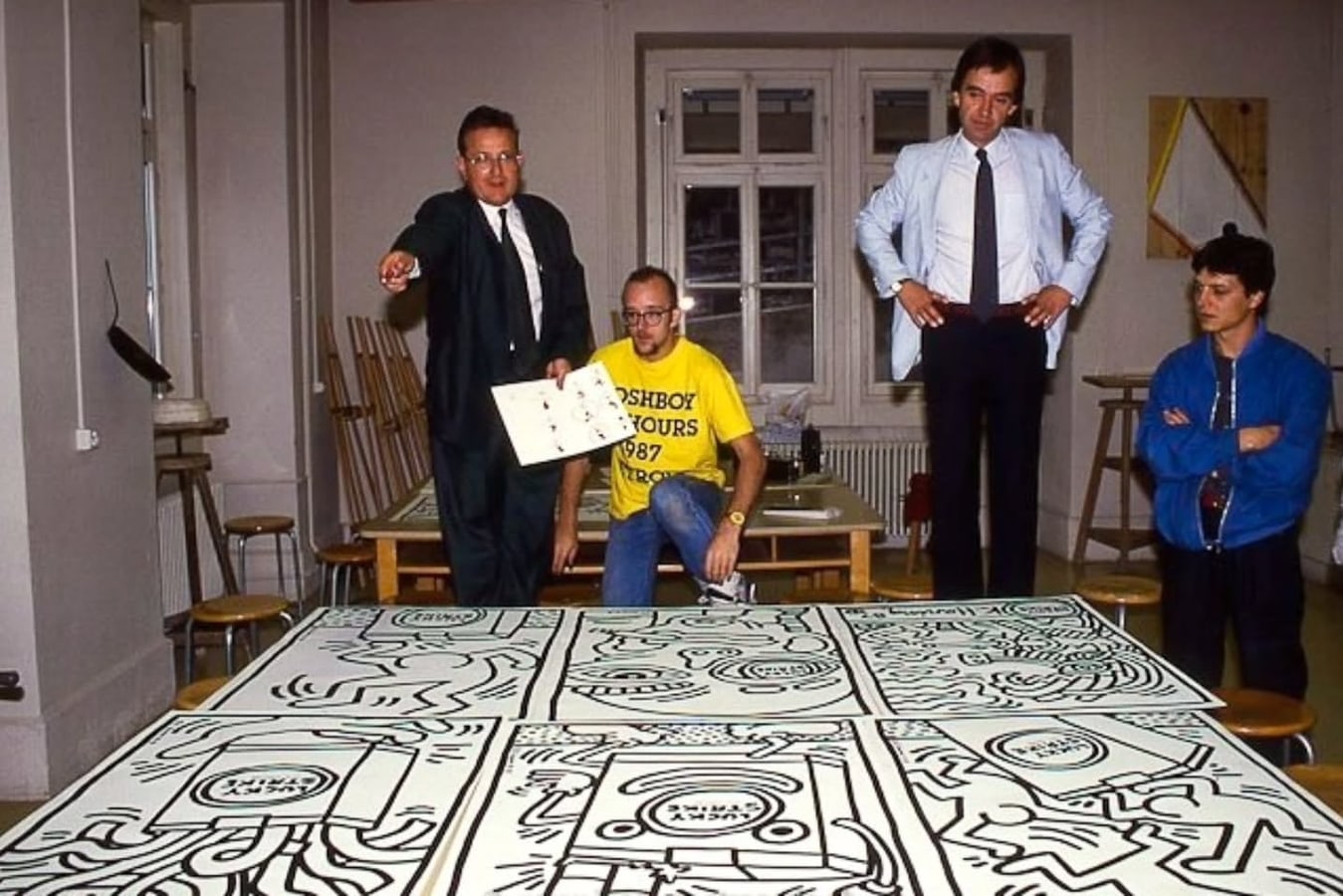
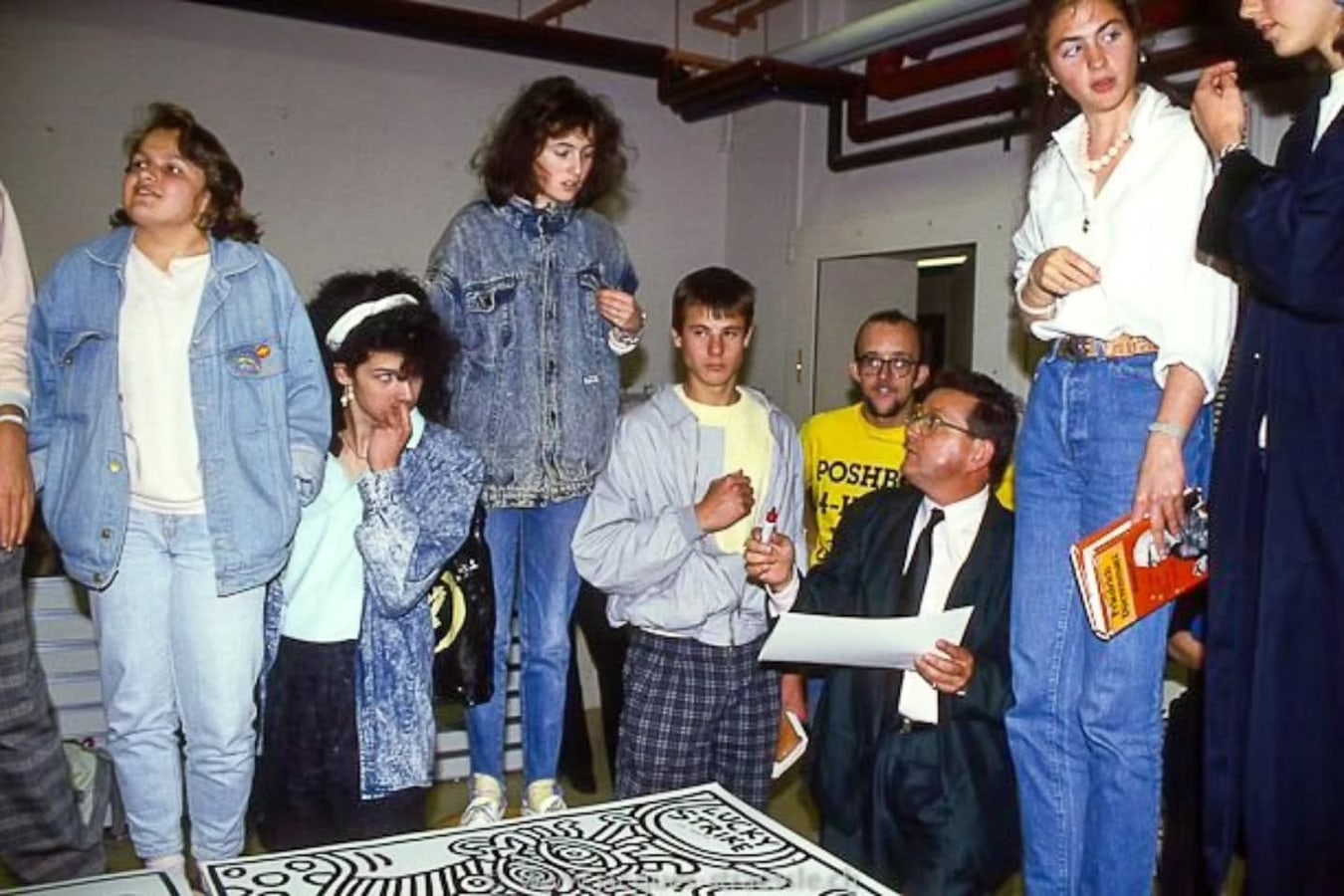
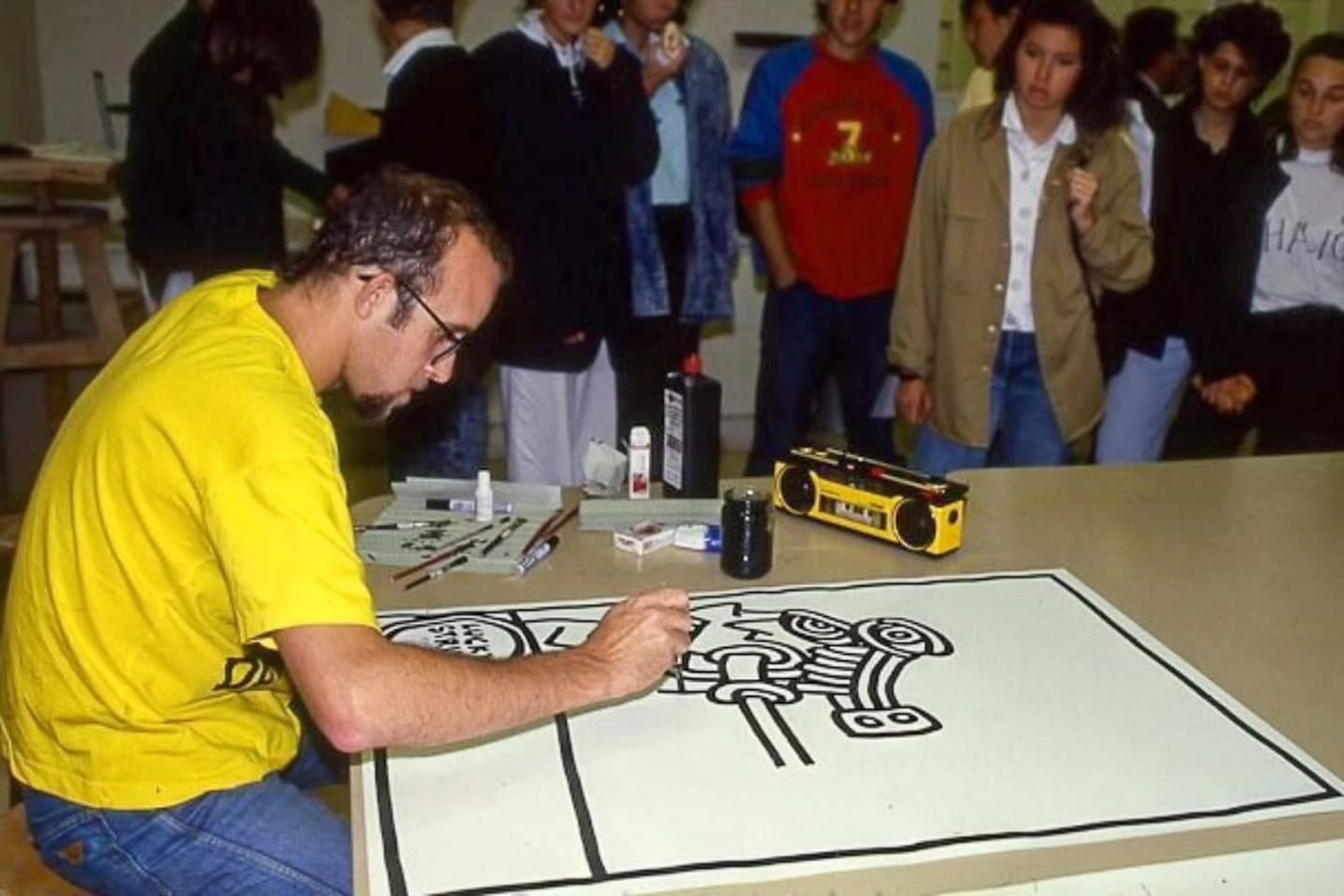
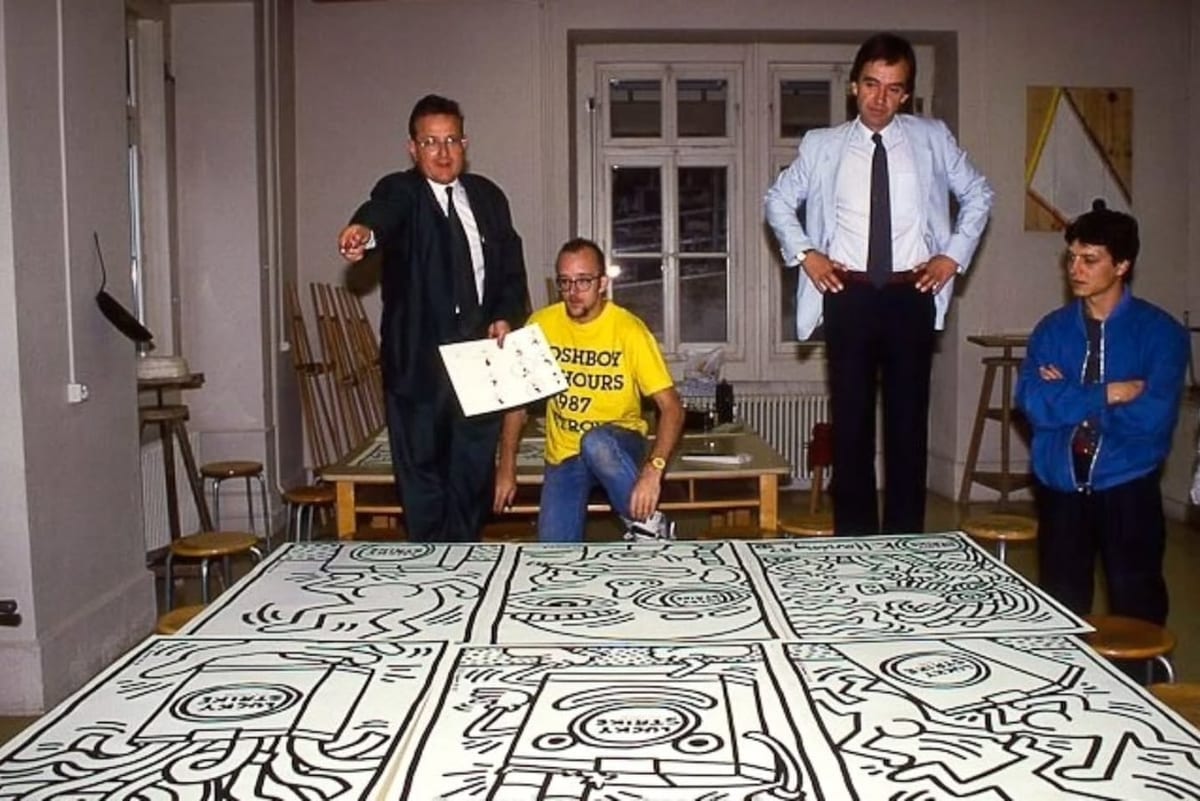
On 16 June 1987 Keith Haring came to the Gymnase du Bugnon in Lausanne, where Pierre Keller taught. Keller was running a workshop there, and Keith Haring drew advertising posters for Lucky Strike, photographed by Jacques Straesslé.
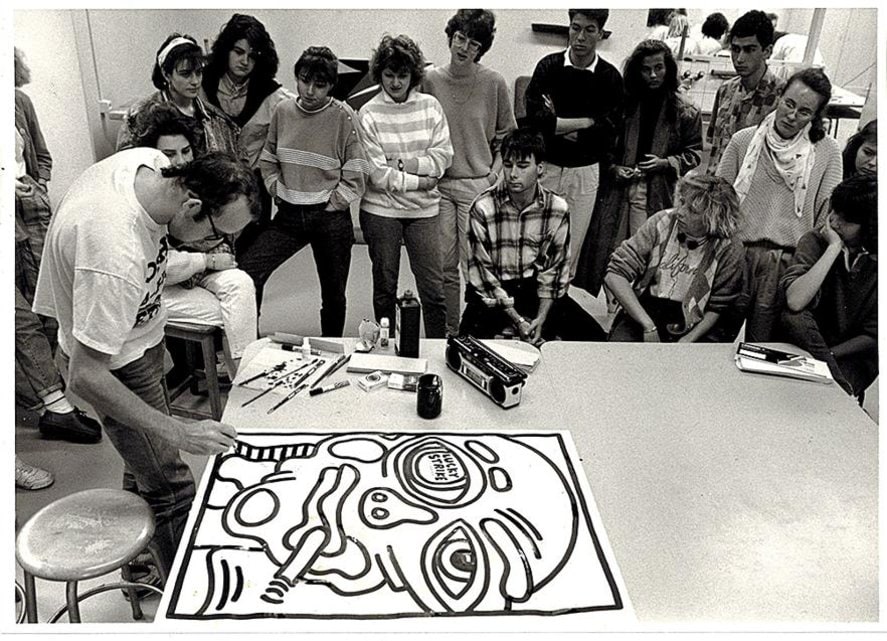
He described the day in his journal: “Tuesday, June 16. I wake up with my stomach still hurting. I am scheduled to be picked up at 7:45 and taken to the bank, then to school (Gymnase du Bugnon) to meet Pierre. The bank is closed so I cannot deposit my money yet. I have dollars from the mural in Düsseldorf. We get to school at 8:30. I begin immediately to do the ink drawings for the Lucky Strike posters. Each poster must contain the logo (drawn) of Lucky Strike. I do nine drawings with variations of different ideas. They actually came out pretty cool—considering how miserable I was feeling when I started.”
“The final drawing (No. 10) was a skeleton smoking a cigarette, which I gave to the school to be hung in Pierre’s classroom. The man from Lucky Strike was not amused, but I could care less. I had a quick meeting with him about the posters and, with the assistance of the students, chose four. Then, I picked the colors and made a drawing to explain the color specs and talked about payment. Also, I designed a button for the school. The students (some of them gorgeous) were pretty interesting and very interested.” (Keith Haring Journals)
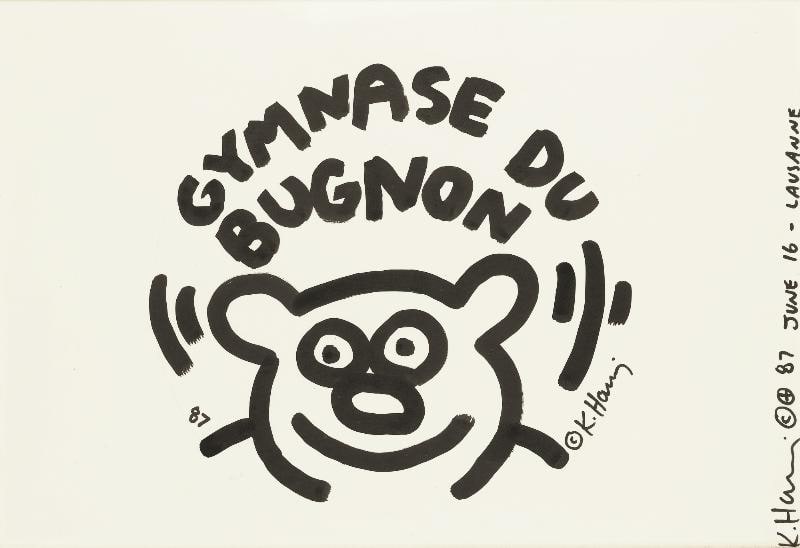
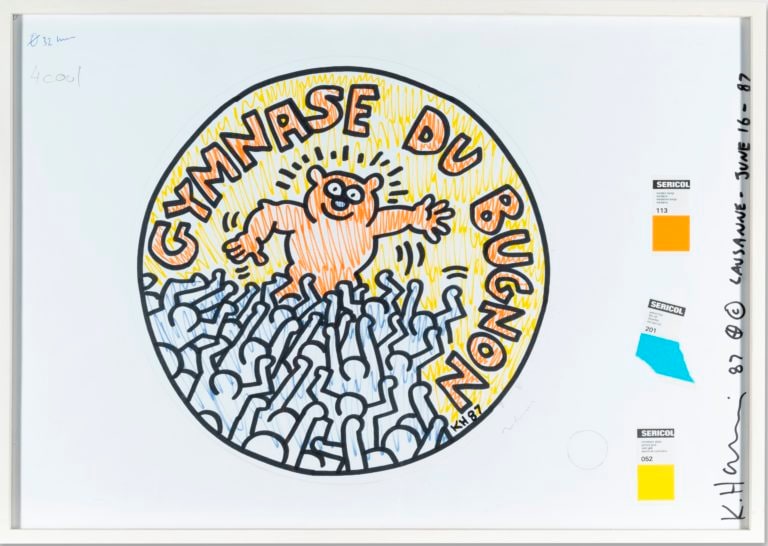
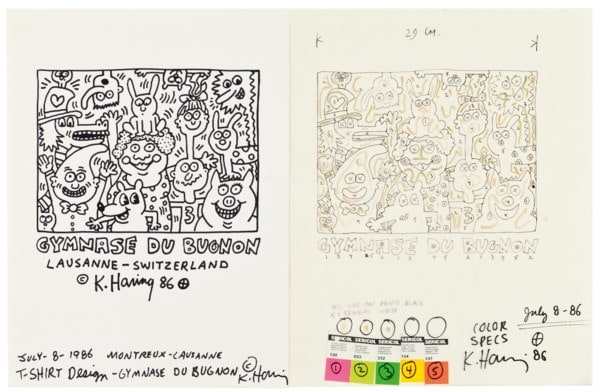
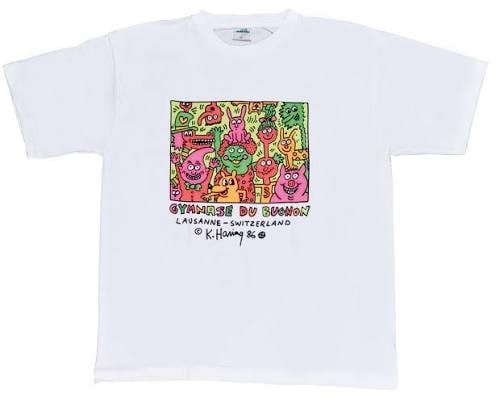
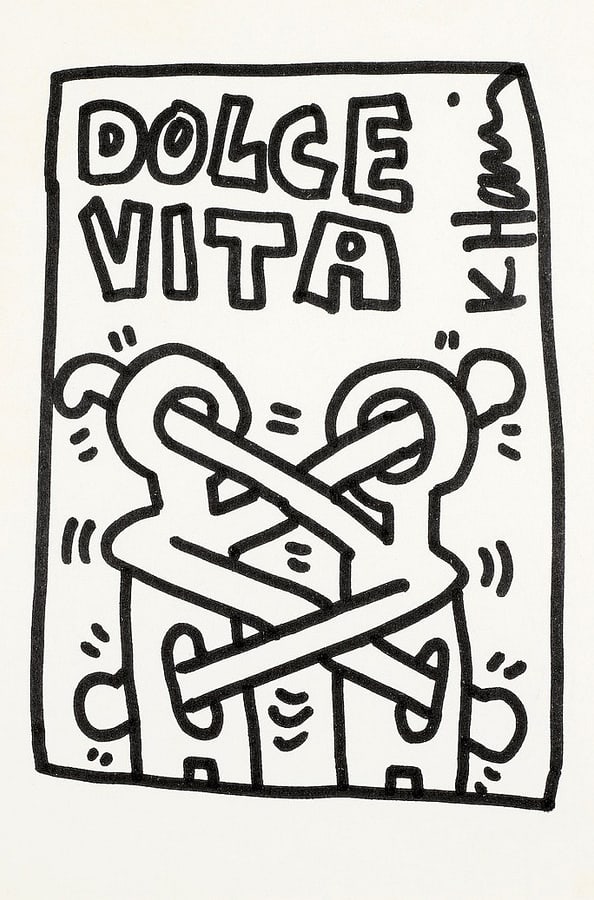
The button his journal mentions exists: the drawing carries the school’s name above a grinning figure, and he signed it in felt-tip down the right-hand side — “K. Haring © 87, June 16, Lausanne”. The original, felt-tip and graphite pencil on vellum paper, measures 36.3 by 51.2 centimetres and belongs to Pierre Keller’s collection.
It was in that same school that David Bowie would later try his hand at engraving, at the invitation of the same Pierre Keller.
Keith Haring at the Dolce Vita, in Lausanne
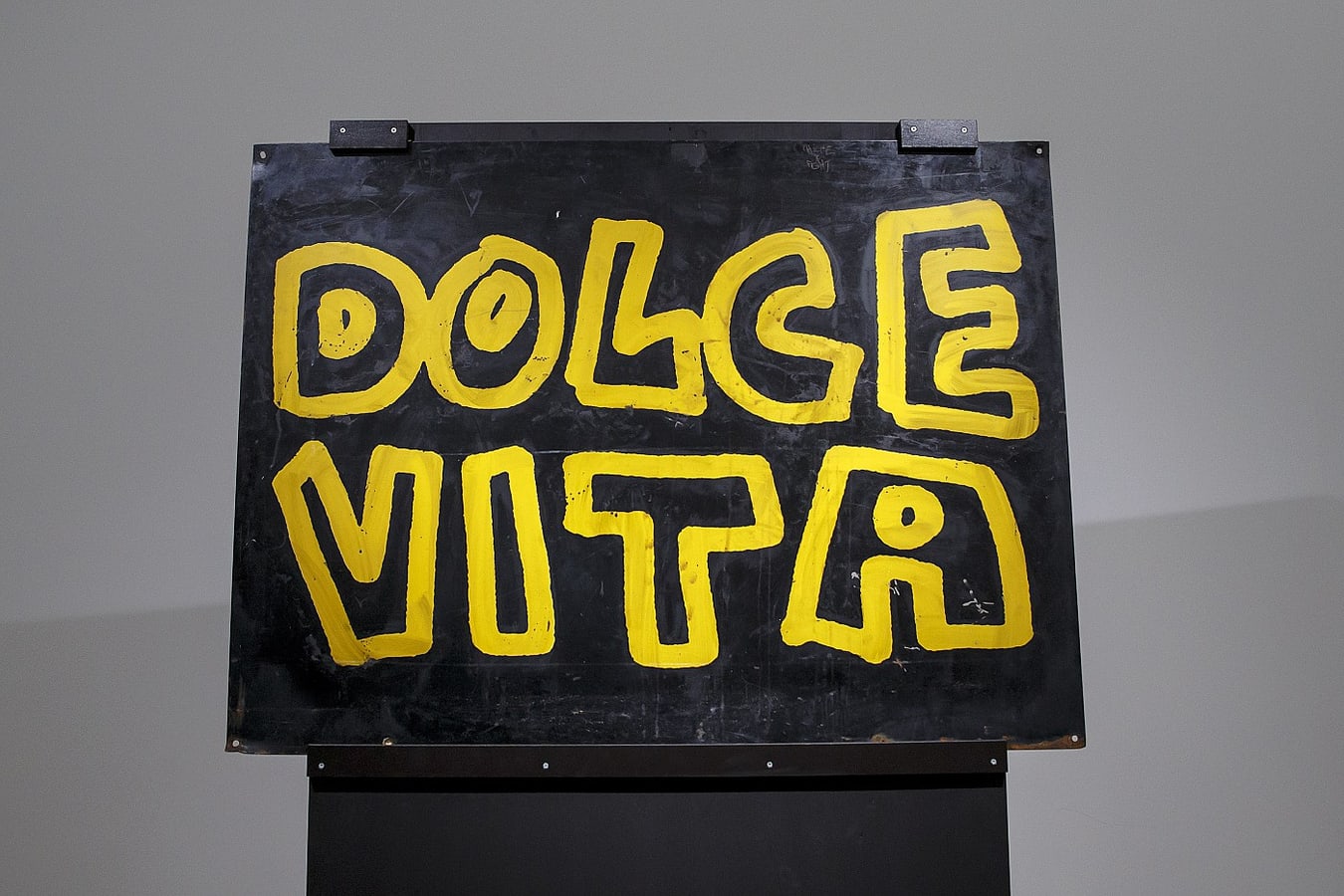
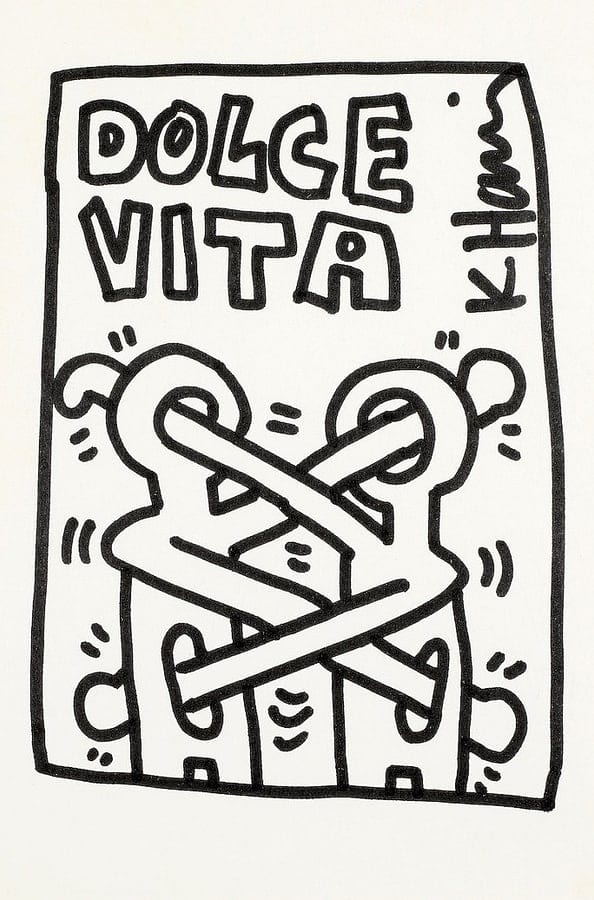
On 2 October 1987 Keith Haring stood in the foyer of the Dolce Vita in Lausanne: he had just drawn its logo.
That drawing is now shown at the Musée historique de Lausanne: nine yellow letters on a black ground, the club’s sign, cut out of a larger drawing in which two fighter-dancers convey the energy of the place. The club ran from 1985 to 1999 (24 heures).
The rapper Carlos Leal, who played his first gigs there with Sens Unik, described the commission in 2022: “Pierre Keller organises Keith Haring’s visit to Lausanne. That is where he created the logo of the legendary club in exchange for… twelve bottles of wine — Mouton Rothschild, mind you.” He places the scene in 1985; the photograph of the foyer, however, is dated 2 October 1987.
Leal describes what the club stood for: “La Dolce, legendary, revolutionary and the opposite of well-meaning Swiss cosiness. Punks, rockers, b-boys, party-goers — Lausanne on the move, the Lôzanne family. I saw the best concerts there, I lived the wildest nights there.”
Videos
27 November 1990: the programme Viva pays tribute to Keith Haring, who died of AIDS on 16 February that year. After Elisabeth Aubert’s documentary “Drawing the Line”, a report by Christian Liardet and Eric Wagner looks back on his ties with Switzerland, from Pierre Keller to the Collège du Bugnon.
Related places
▸Fairmont Le Montreux PalaceHistoric hotelOpen the place →
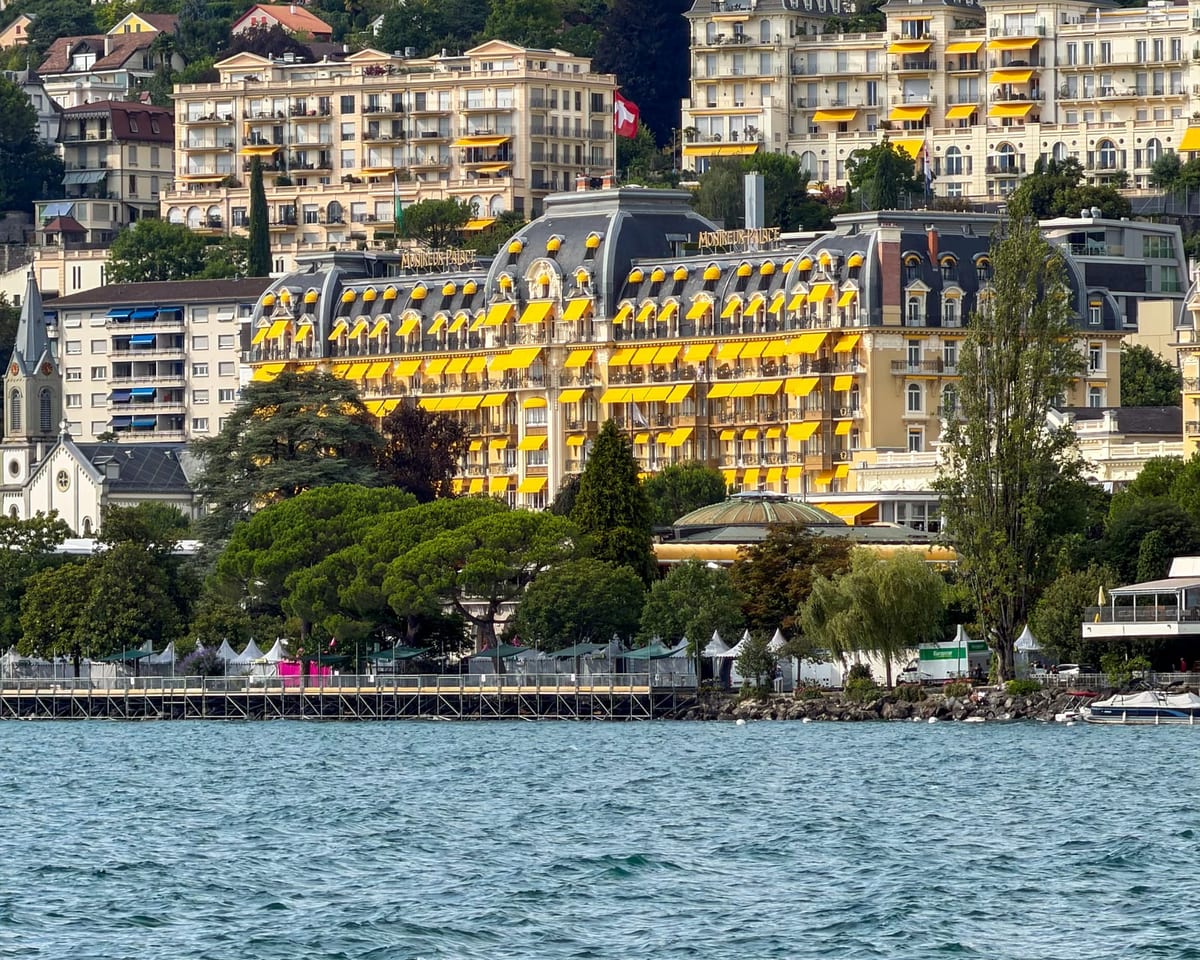
© Visit Montreux The Belle Époque grand hotel of the stars: Michael Jackson lived there for two weeks in 1997 during his Mountain Studios sessions.
▸Montreux Jazz FestivalFestival / 2M2C convention centreOpen the place →
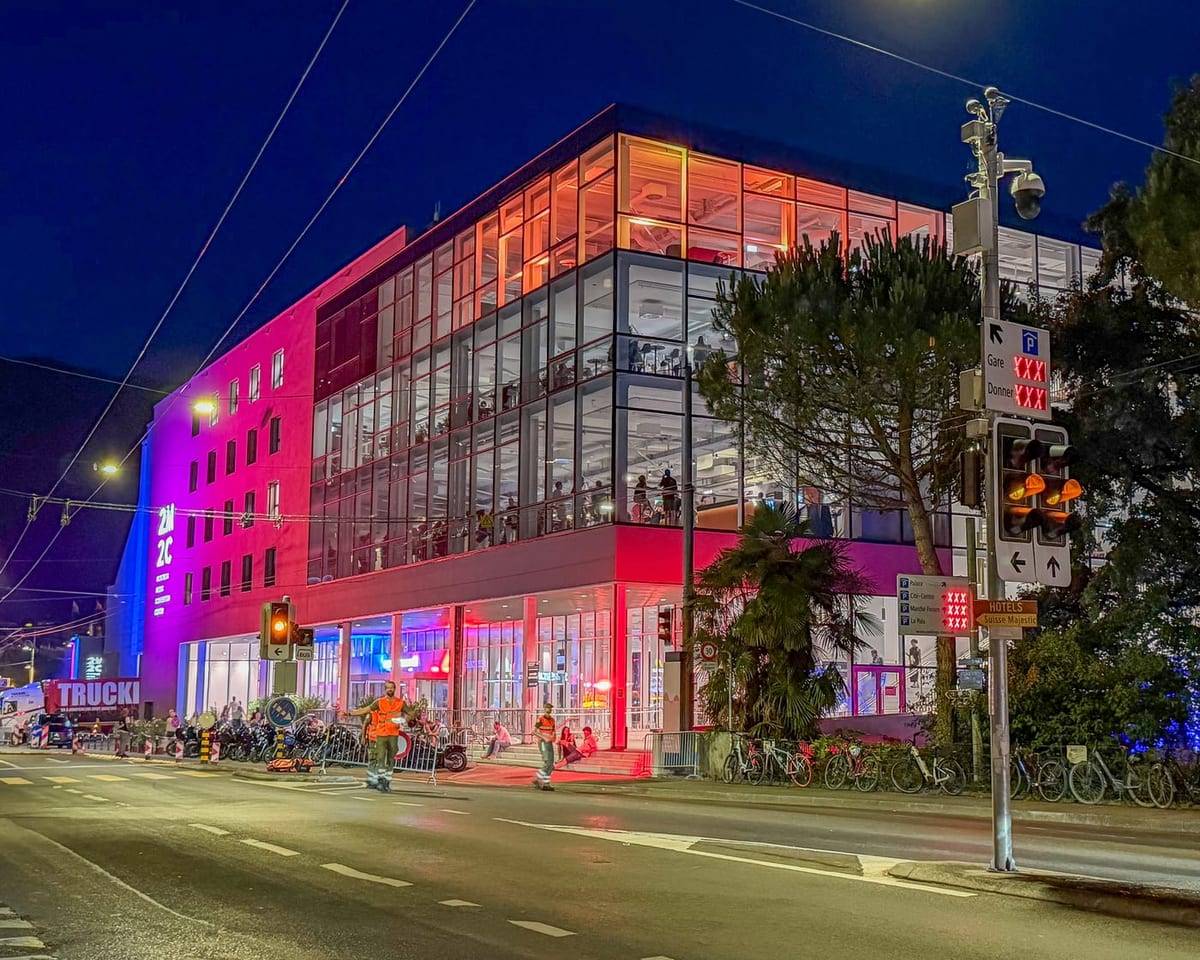
© Visit Montreux The heart of the festival since 1993: under one roof, the Auditorium Stravinski and the halls that host half the history of music every summer.
▸Casino de MontreuxCasino / entertainment venueOpen the place →
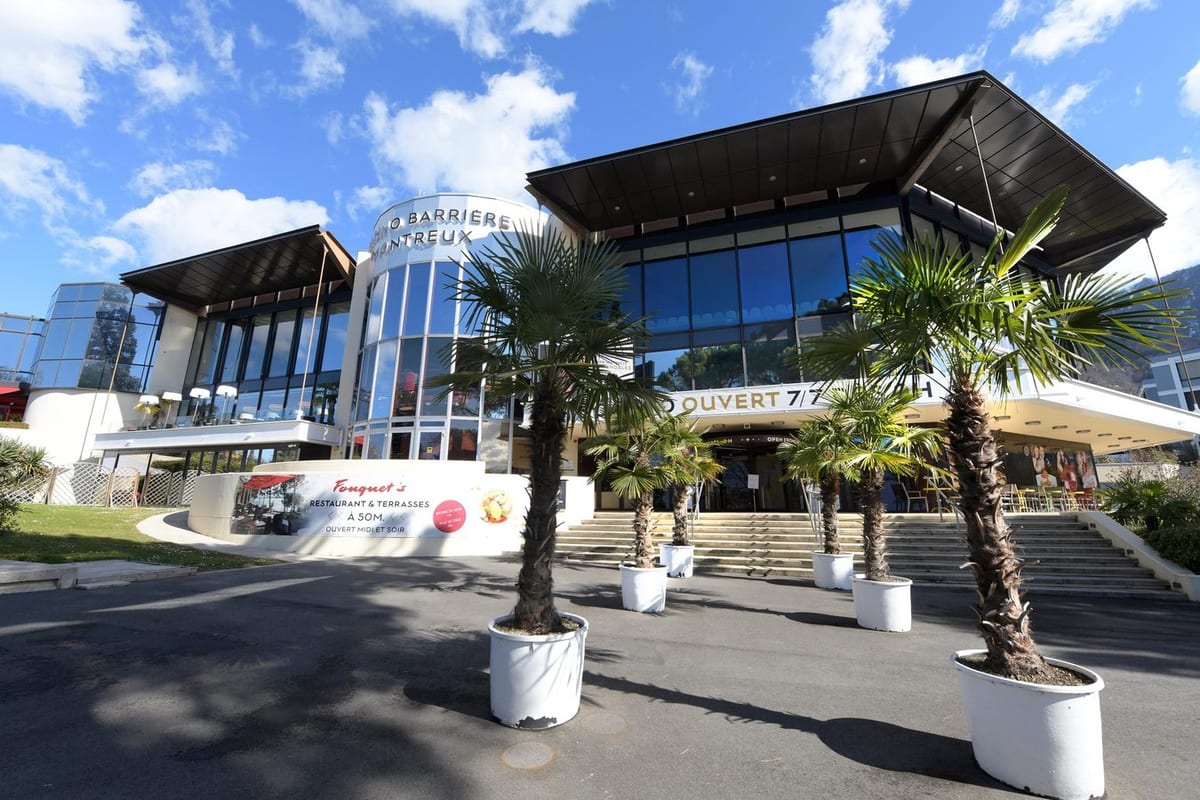
© Chantal Dervey The building around which the whole musical history of Montreux revolves: burned down in 1971, rebuilt, it houses Queen’s studio and saw the festival born.
▸2M2C, Montreux Music & Convention CentreConvention centre / concert hallsOpen the place →
© Visit Montreux The permanent building that hosts the Montreux Jazz Festival each summer, and the town’s cultural season the rest of the year: the Auditorium Stravinski and the neighbouring halls under one roof.
▸Le PlatinumVanished nightclubOpen the place →
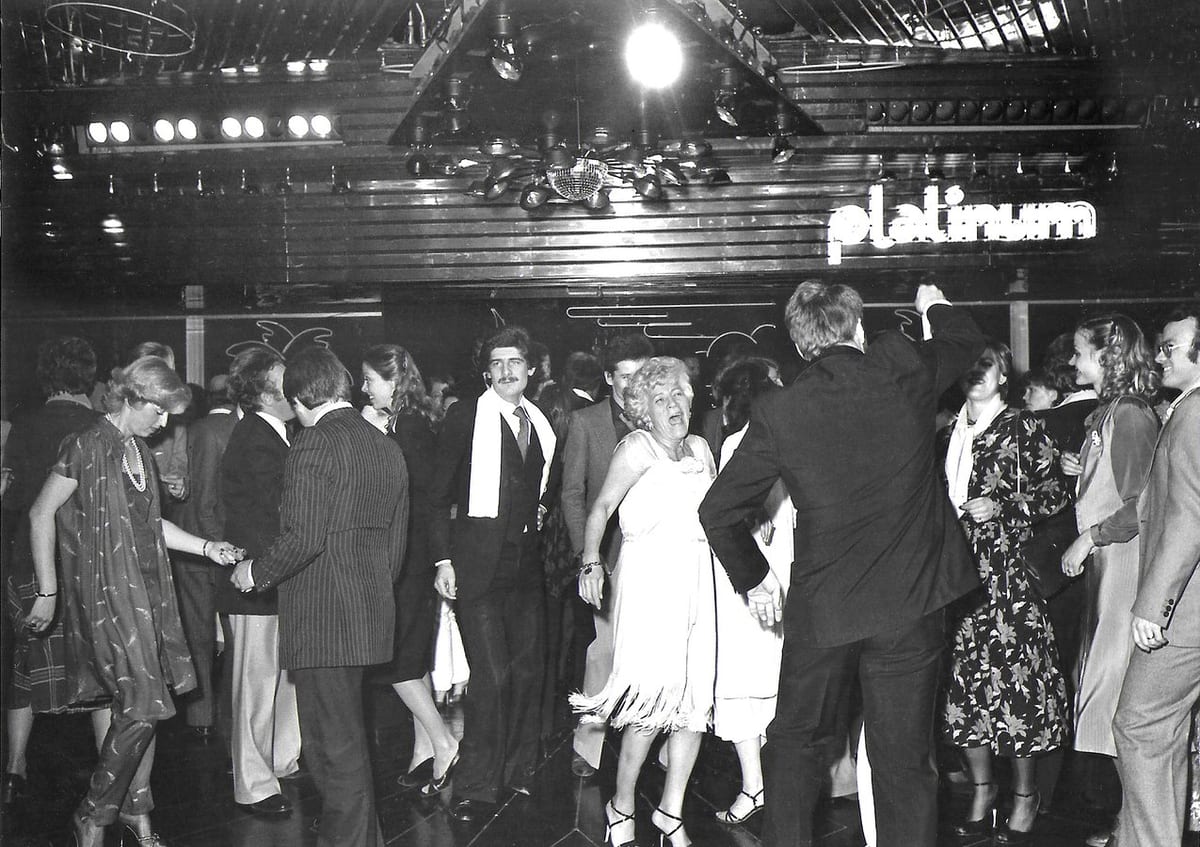
© Collection Lucette Kuhn The Casino nightclub where Patrick Juvet met Freddie Mercury several times.
▸Hôtel Eden Palace au LacHotelOpen the place →
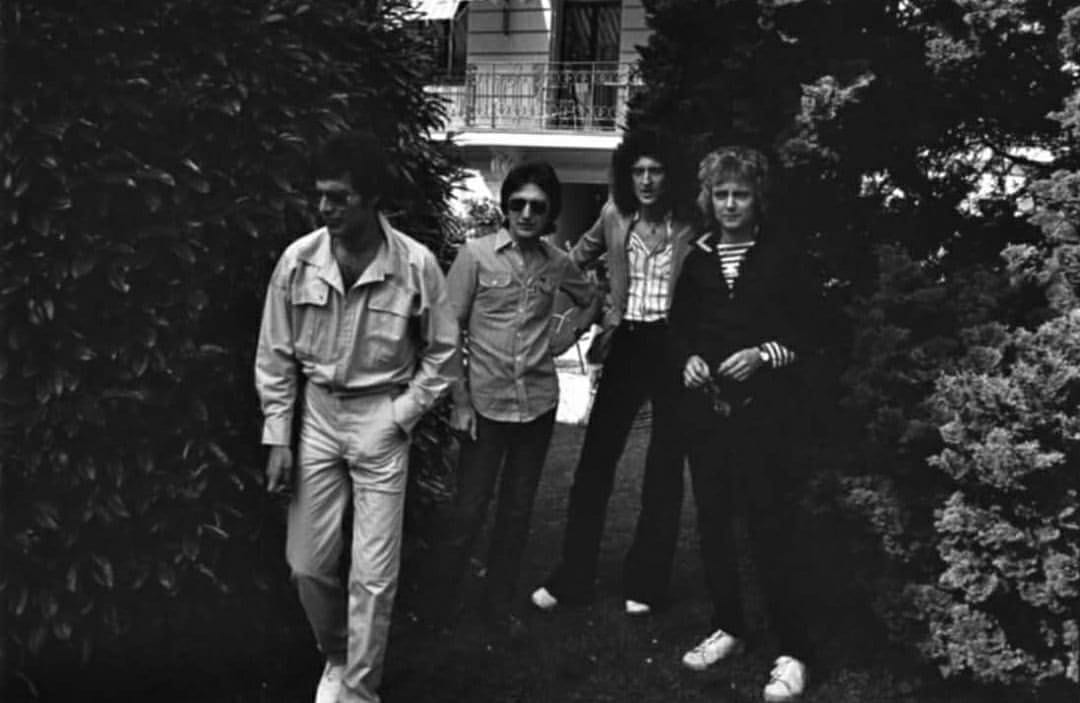
© Peter Hince The Rue du Théâtre hotel where Keith Haring stayed, opposite the site of his work.
▸Gymnase du BugnonSchoolOpen the place →
© Jacques Straesslé The Lausanne school where Pierre Keller ran his workshops: Keith Haring drew there, David Bowie made an engraving.
▸La Dolce VitaVanished clubOpen the place →
The Lausanne club whose logo Keith Haring drew, and where Sens Unik played their first gigs.


