1979
Lodger
The final part of Bowie’s trilogy with Brian Eno, recorded largely at Mountain Studios in 1978-1979. Bowie, a resident of the region, would return there for five more albums.
Rock, pop & metal

Before Queen, David Bowie (1947-2016) was one of the first major rock names to settle on the Riviera. Fleeing turmoil and the taxman, he moved in 1976 to the Clos des Mésanges, a chalet above Blonay that remained his main residence until 1982. There he raised his son, took up painting and found in the calm of Lake Geneva a counterpoint to his Berlin life. A regular at Montreux’s Mountain Studios, he recorded there from “Lodger” (1979) to “Black Tie White Noise” (1993, co-produced by Nile Rodgers), as well as the improvised “Under Pressure” with Queen in 1981. His bond with the town and its festival never wavered.
The decision had very concrete causes. At 29 his finances were in tatters. His first wife, Angela Bowie, recounts in “Backstage Passes: Life on the Wild Side with David Bowie” that a heavy tax bill awaited him if he stayed in California: the money had been spent, and the bill was coming due. Returning to England, where taxation was heavier still, was ruled out.
Switzerland remained. Angela had been to school there, at St. George’s; she flew over and, with a lawyer’s help, arranged residency in the commune of Blonay. She describes the village as “a charming village above Lake Geneva near Montreux in the French-speaking part of the country”, and the house she found there as “a commodious cuckoo-clock of a house très Swiss”.
When David Bowie moved into the Clos des Mésanges, a chalet on the heights of Blonay, in 1976, it was not a star’s whim. He was coming out of the American years, exhausted, addicted to cocaine, hounded by the press. The Riviera offered exactly what he was looking for: silence, distance and an ordinary life.
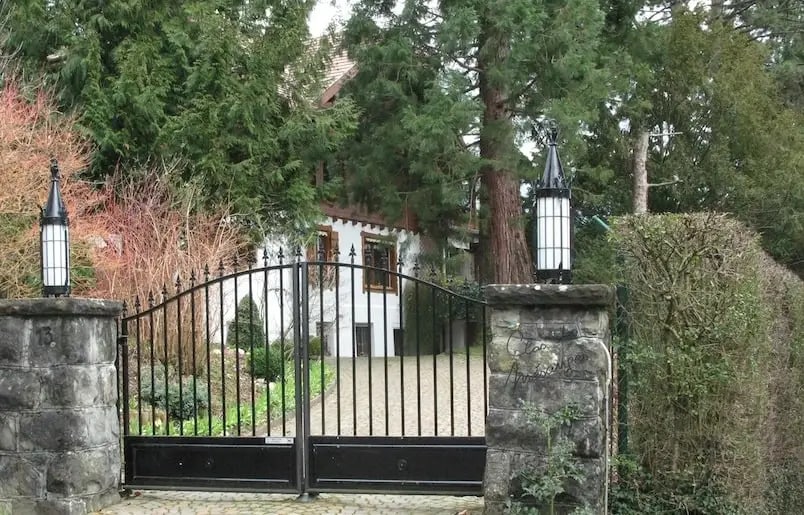
Accounts differ on the first commune. Angela Bowie places the move in Blonay, where she had found the house. His Geneva friend Sandro Sursock and the photographer Philippe Auliac, quoted in the documentary “David Bowie’s Secret Friend”, say he lived successively in Corsier-sur-Vevey, Blonay, then Lausanne (watson).
He lived there with his wife Angela and their son Zowie, the future film-maker Duncan Jones. The chalet stood six kilometres from Mountain Studios: close enough to work, far enough to go home. He painted a great deal during those years.
The day after he arrived, on his agent’s advice, he pushed open the door of Claude Nobs’s offices. “My name is David Bowie, I’ve been told you could help me.” He was looking for a house, a lawyer, a bank, a school, a doctor. Nobs gave him addresses. It was the beginning of a long friendship (Le Temps).
Thierry Amsallem, Claude Nobs’s partner, described the bond: “They saw each other at least once a week and did not talk much. They shared a real complicity, made possible by their great sensitivity. It was as if waves connected them, they understood each other at once. Both were gentlemen. And gentlemen recognise each other.”
His own first impression was astonishment: “The man seemed to float, to live in the air. He was completely out of step with the real world. I had never seen such an aura. Only Miles Davis, perhaps, shared his greatness in Claude’s eyes.”
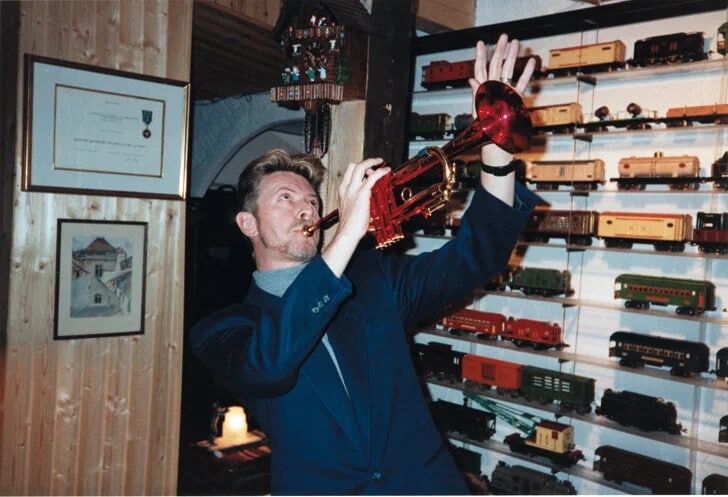
One rule held, though: as long as he lived in Switzerland, Bowie gave no concert there. “On the other hand, you would find him in the audience at Montreux Jazz,” recalls Mathieu Jaton, the festival’s current director (Le Temps).
When Nobs died, in January 2013, Bowie wrote him a letter thanking him for his friendship: “To my friend Claude…” He himself died on a 10 January, three years to the day after him. That evening, the festival founder’s friends were gathered in memory of the date. “They are finding each other again up there,” smiles Thierry Amsallem: “they are sharing a plate of mushrooms…” (Le Temps)
Angela and David divorced in 1980. He nevertheless kept the Blonay house as his main residence until 1982 and lived there with his son Zowie — today the film-maker Duncan Jones — who attended the Commonwealth-American School in Pully, now the International School of Lausanne, in Le Mont-sur-Lausanne.
In 1982 the Blonay house was sold. Father and son moved into a larger place, the Château du Signal, on the edge of the Sauvabelin forest above Lausanne.
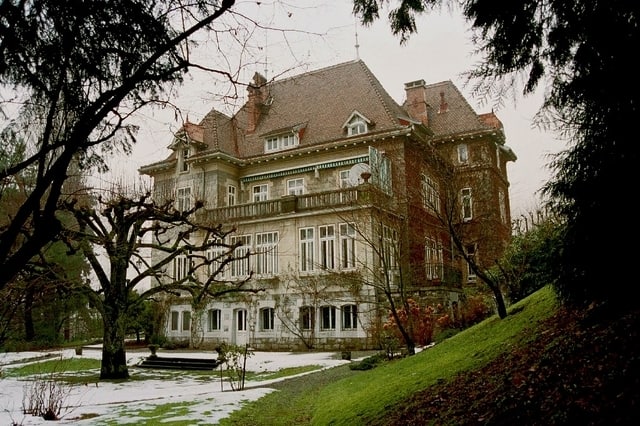
The Château du Signal had fourteen rooms. He lived there with his son and his assistant Corinne Schwab. “A dreadful woman,” laughs Pierre Keller: “with her he needed no bodyguard, she followed him everywhere!”
Always wearing a hat, he went out to buy his vinyl in town. People in Lausanne remember it: they ran into him at Globus, at the butcher’s, or shared his garage mechanic. He left Switzerland in 1997, with Iman, for New York and London — twenty years after arriving (Le Temps).
It was at Mountain Studios that Bowie recorded “Lodger” (1979), the third part of his Berlin trilogy with Brian Eno, a record conceived in Berlin but committed to tape on the shores of Lake Geneva.
In the summer of 1981, an improvised session with Queen, who owned the studio by then, gave birth to “Under Pressure”. The track came out of a jam: nobody had come in to write a hit.
Bowie sang it on stage only once: on 20 April 1992, at the Freddie Mercury tribute concert at Wembley, in a duet with Annie Lennox.
He returned in 1993 for “Black Tie White Noise”, co-produced with Nile Rodgers. Over nearly fifteen years, the Montreux studio accompanied three very different moments of his career.
In the summer of 1981 Queen were working at Mountain Studios, which the band had bought two years earlier. David Bowie, then living on the Riviera, dropped by. What was meant to be a visit turned into a working session: out of that jam came “Under Pressure”.
The track was released as a single on 26 October 1981 and went to number one in Britain. It would appear on “Hot Space” (1982) and, for Queen, remains one of only two songs officially co-credited to an artist from outside the band.
Its bass line, played by John Deacon, is among the most recognisable in rock. It was recorded in Montreux.
On 17 July 1982 the Montreux Jazz Festival booked, for its blues night, a Texan band nobody knew outside Texas: Stevie Ray Vaughan and Double Trouble. Jerry Wexler had recommended them to Claude Nobs, describing the guitarist as “a jewel, one of those rarities who comes along once in a lifetime”.
The set was incandescent, and yet boos rose from parts of the crowd. Vaughan, then unsigned, was hurt by it.
But one member of the audience had heard everything. David Bowie, amazed, would say he had seen nothing like it since Jeff Beck played the blues in the 1960s. The two men talked at length about music that evening, and above all about Texas blues and its roots. Vaughan was struck by how genuine that interest was.
A few months later he recorded the guitar parts for “Let’s Dance”. “David Bowie is real easy to work with,” he said. “He knows what he’s doing in the studio and he doesn’t mess around. Most of the time, David did the vocals and then I played my parts. A lot of the time, he just wanted me to cut loose. Almost everything was cut in one or two takes.”
He was also due to play the Serious Moonlight tour, but was dismissed with less than a week to go and replaced at the eleventh hour by Earl Slick. His course was set, though: by the album’s release Double Trouble had signed with Epic, and Vaughan would become the great blues figure of the 1980s (davidbowie.com).
In late 1982 Nile Rodgers came to his home in Switzerland to listen to the songs for the album to come. Excited by what he heard, he suggested recording demos straight away.
Musicians still had to be found. The two men had no band on hand, so they asked Claude Nobs whether he knew any local players. That is how the Turkish-born bass player Erdal Kızılçay was recruited, along with a drummer and a second guitarist whose names are not known. Kızılçay would work with Bowie for years afterwards, on “Labyrinth”, “The Buddha of Suburbia” and “1. Outside”.
On 19 and 20 December 1982 this makeshift band went into Mountain Studios in Montreux, with David Richards engineering — the sound engineer of “Heroes”, of “Under Pressure” and, later, of “1. Outside”. On the very first day they cut a stripped-back, funky demo of “Let’s Dance”.
That demo stayed unheard for thirty-five years, until Nile Rodgers and Russell Graham mixed it for the first time in Westport, Connecticut. The song had changed face in the meantime: it would become the biggest commercial success of his career (davidbowie.com).
Asked by the Australian programme Countdown shortly before the album came out, in 1983, Bowie said he thought he had written the track while he was in Switzerland.
What the song became, Bowie credited to his producer: “Frankly, the song ‘Let’s Dance’ didn’t start out to be anything more than just another track on the album. It was Nile Rodgers who took it and structured it in such a way that it had incredible commercial appeal.”
Rodgers described his first hearing to the BBC: Bowie played it to him on acoustic guitar, and it was “very reminiscent of a folky kind of song… I thought it was really bizarre, but he was convinced it could be a hit, and I just kept working on it.” He added the rising vocal intro — lifted straight from The Beatles’ “Twist and Shout” — and a bassline pure Chic, cousin to the one in “Good Times”, plus the breakdown where the instruments drop out one by one before everything returns.
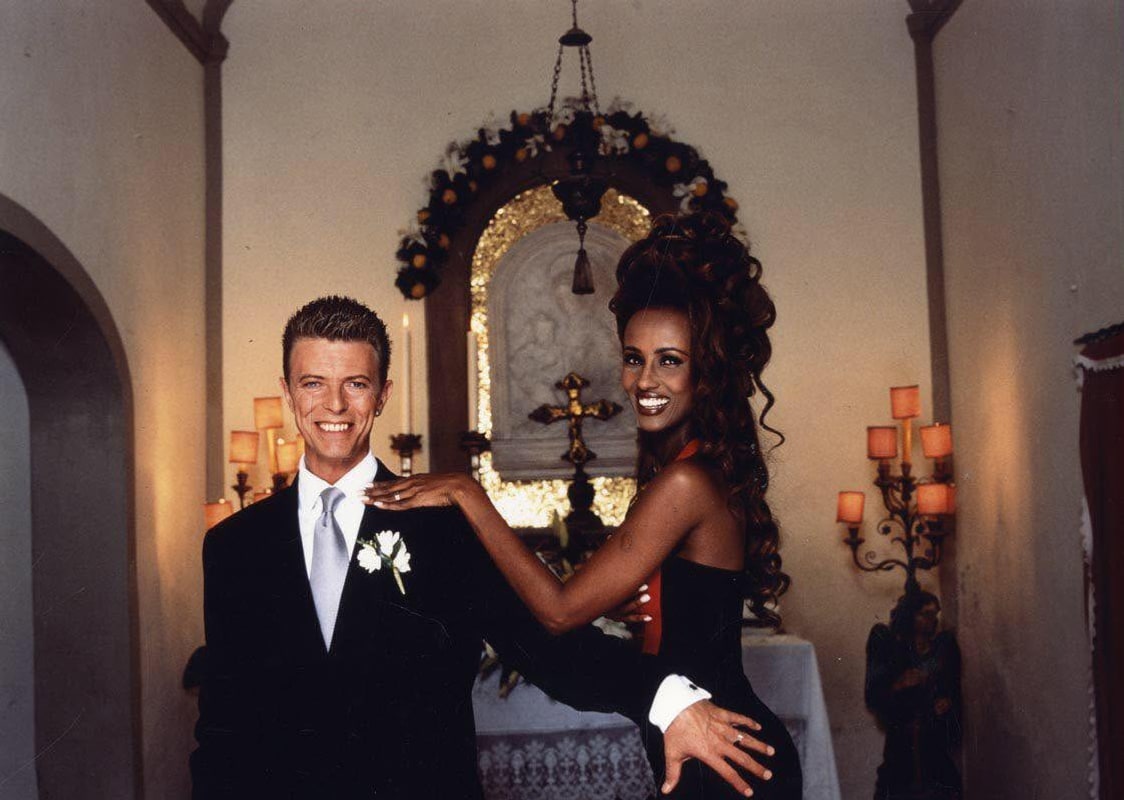
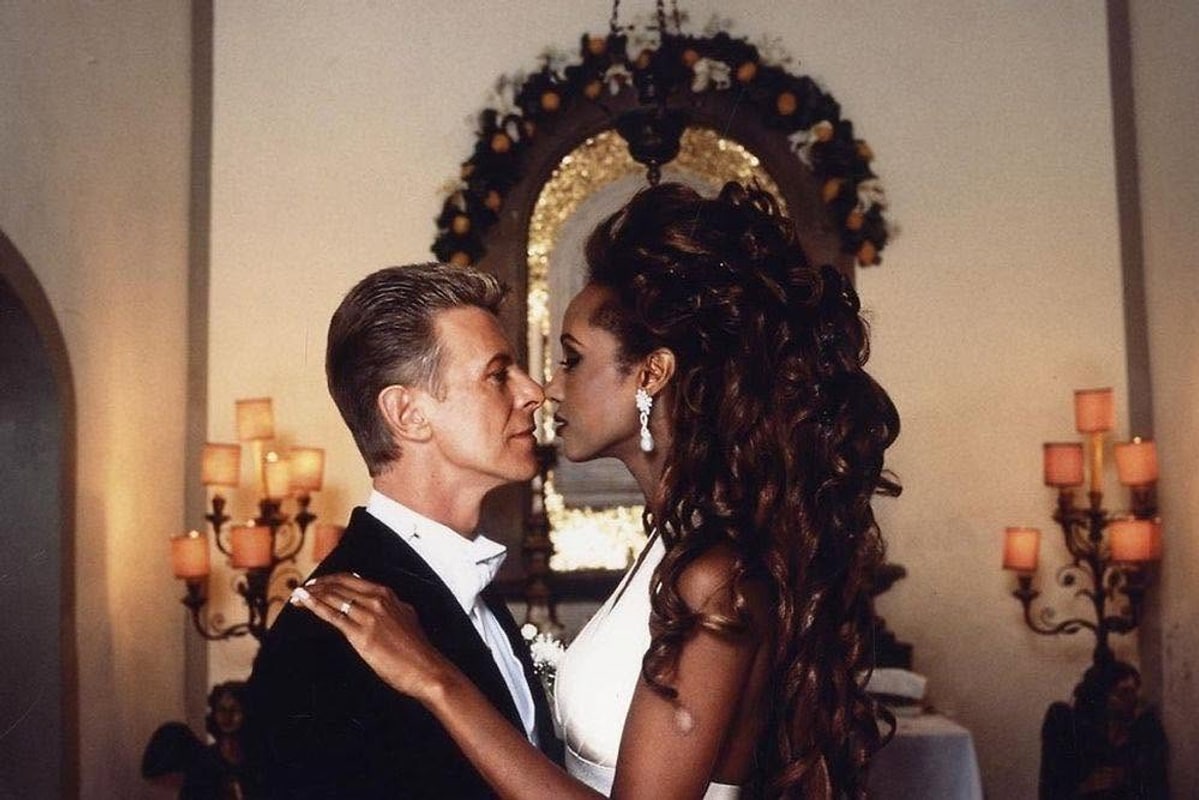
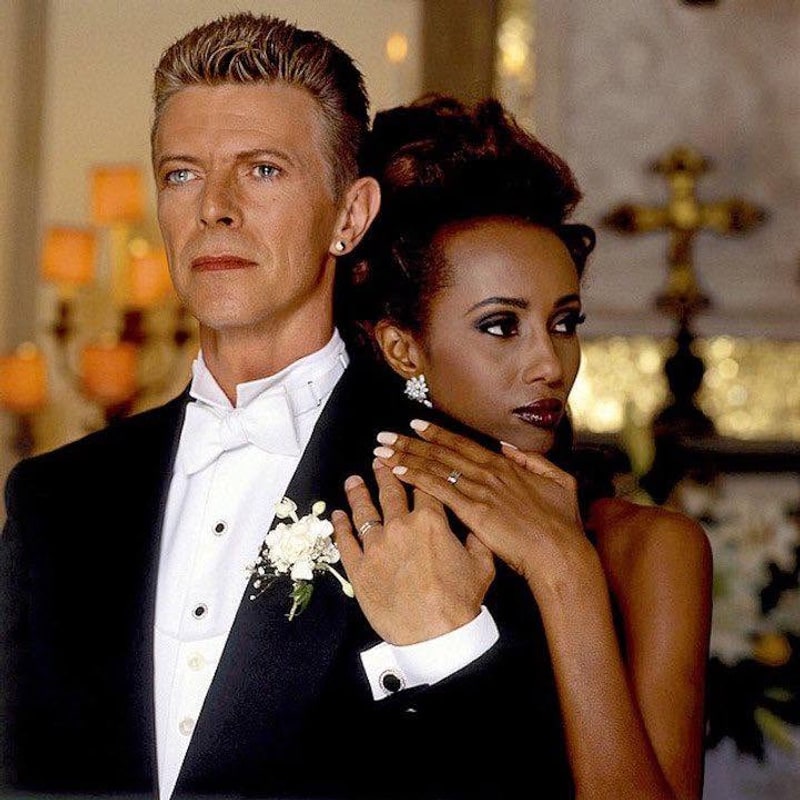
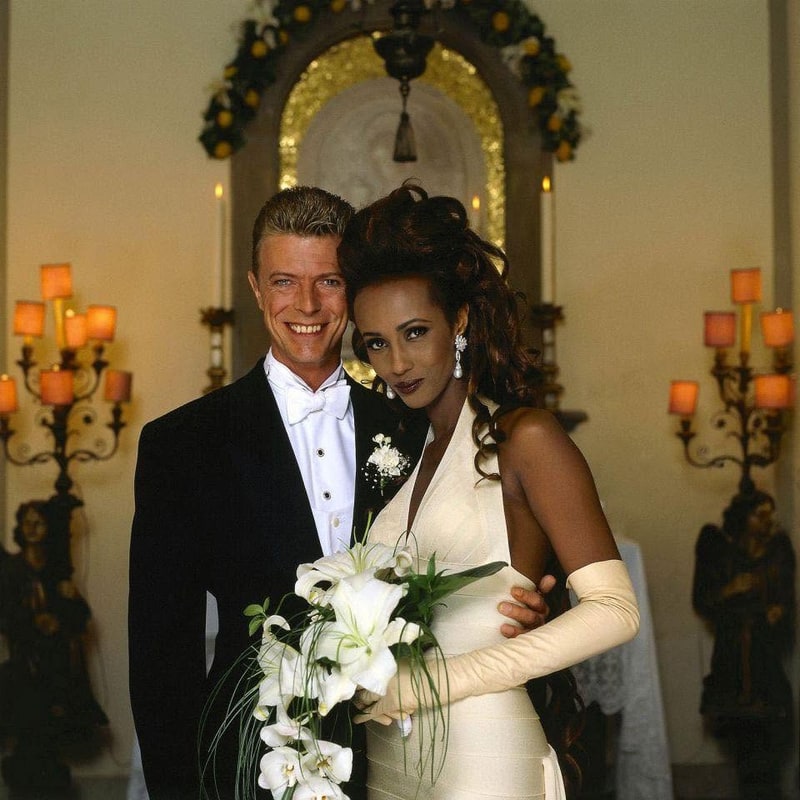
On 24 April 1992 David Bowie married the Somali model Iman Mohamed Abdulmajid at the Hôtel de Ville de Lausanne, on the Place de la Palud, like any ordinary couple of the town. The press only learned of it ten days later.
Michel Perret, the registrar who conducted the ceremony, told the story in 24 heures: “The Swiss embassy in London sends me a file showing that a certain David Jones has completed the formalities to marry in Lausanne. Beside his name it says ‘Bowie’, and under occupation, ‘singer’. Being rather a lover of classical music, I had never heard of Ziggy Stardust.”
Worried about what might turn up on the square, he went to listen to records at the local shops, then watched on television the tribute concert to Freddie Mercury at Wembley, where Bowie sang. That reassured him. On the day, the groom arrived alone at the Place de la Louve in a dark suit, white shirt and tie; the bride came down the Rue de la Mercerie with her two witnesses.
At the couple’s request, no other wedding had been scheduled before or after. There were six people in the room: the couple, the two witnesses, an interpreter and the registrar, the ceremony being held in English.
The man who married them was called Michel Perret. A registrar in Lausanne, he united thirteen thousand couples in his career; he was not a fan. The papers had reached him through the Swiss embassy in London, where the singer was then living, and a Lausanne lawyer had contacted him. The banns were posted on the public board under the birth name: David Jones.
His only worry was about clothes. “I had two worries: what Mr Bowie would be wearing, and if he came dressed as I had seen him in photographs, would I dare tell him I could not marry him like that?”
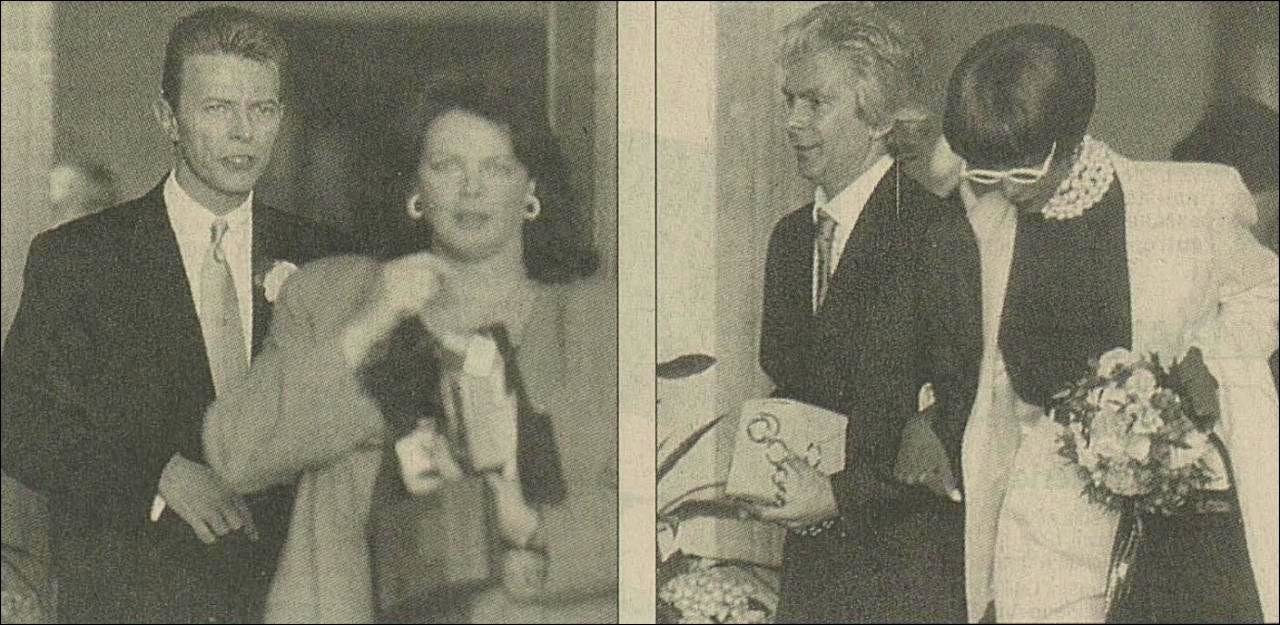
The groom’s one requirement was discretion. No paparazzi. The registrar blocked the other ceremonies for an hour so that the couple would not meet another. The room was not specially decorated: there were the commune’s flowers.
“The couple arrived and left separately, accompanied only by their witnesses, no stars as I recall. Coming by one street, Mr Bowie wore a classic outfit, dark suit, tie. I was reassured. His bride arrived by another street, just as discreetly, in an off-white or beige suit.”
The ceremony lasted twenty minutes, with an interpreter. Perret had read up on him extensively and improvised a speech. Nobody took photographs in the room. Iman kissed him on the cheek as she left. He handed the couple a family record book and a marriage certificate.
The secret did not hold. A photographer from a Lausanne agency had got wind of it and briefly caught the couple arriving at the Hôtel de Ville on the Place de la Palud; the American agency Associated Press put out the news very quickly, to Bowie’s fury — he had signed a deal for coverage of a more spectacular wedding on Mustique, in the Caribbean (20 minutes).
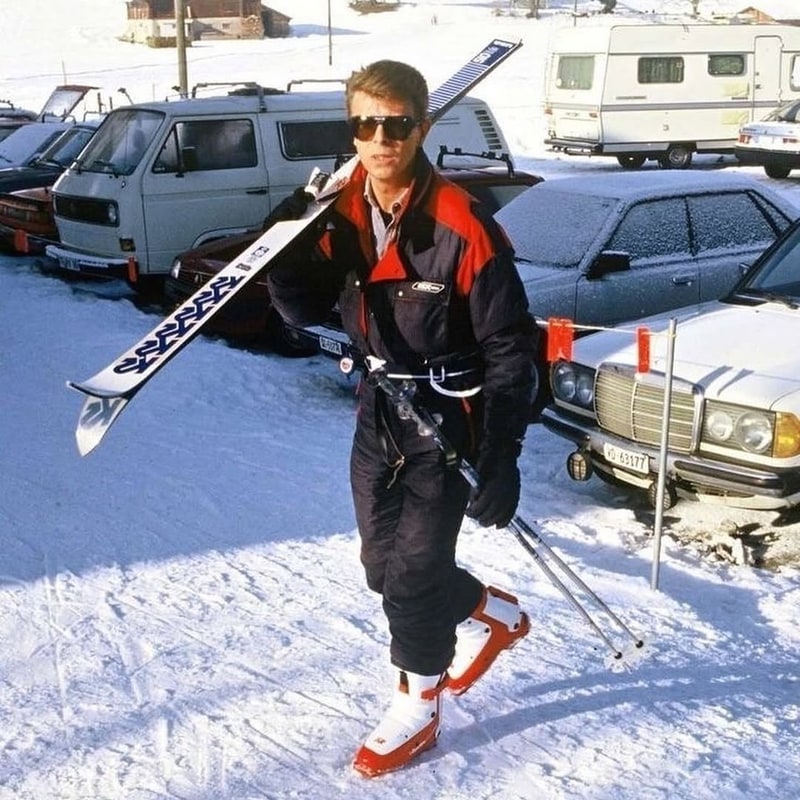
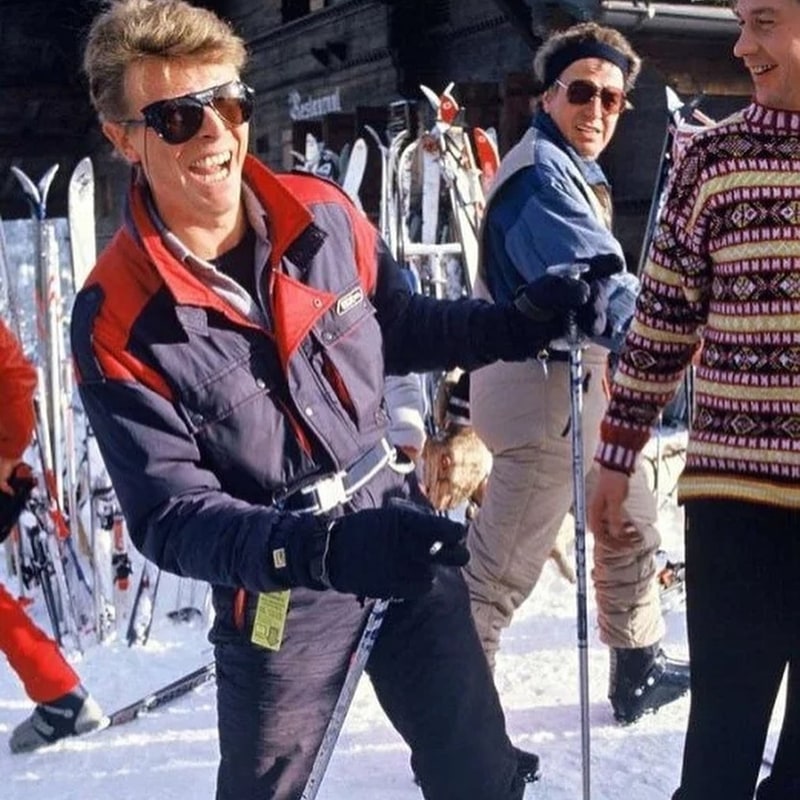
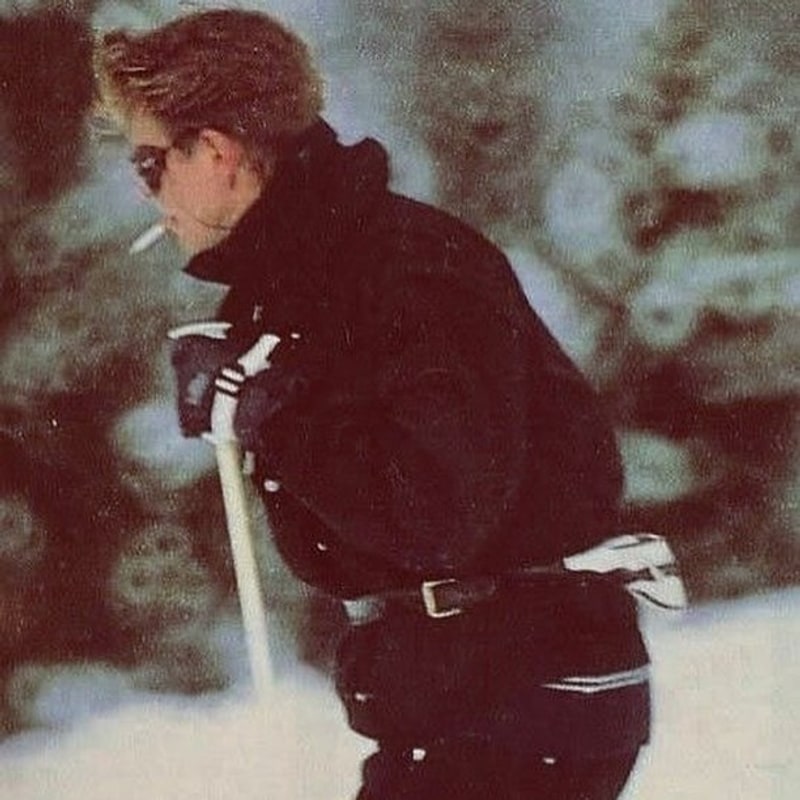
Bowie skied. It is even one of the few things he was spotted doing during his Swiss years: 24 heures recalls that he was seen “now and then at the market on Saturday morning or on the ski slopes of Gstaad”.
Gstaad lies at the end of the panoramic line that leaves from Montreux: an hour and a half by train across the Pays-d’Enhaut. In early January 1993 he spent a few days in Gstaad with his wife Iman. Eleven years earlier, in 1982, other photographs already showed him on the slopes, but in the Italian Alps, on the side facing Zermatt. Claude Nobs was on the trip: that is why these images are held by his foundation. One of them is captioned “David Bowie and Coco Schwab enjoying skiing together in Italy”.

Switzerland did not only give him calm. It made him discover Art Brut, that collection of works by self-taught creators outside any market, gathered by Jean Dubuffet and housed in Lausanne, at the Collection de l’Art Brut.
He said so himself: “Switzerland also allowed me to discover Art Brut; it had a very strong impact on my life, on my creation. I remember taking Brian Eno to the Lausanne museum and spending hours there admiring the works, thinking about the process of creation and the frontiers an artist is willing to cross in their quest…” (L’Hebdo, 6 June 2002)
Bowie was a man of art as much as of music: a collector, a painter himself, and a co-founder of the magazine “Modern Painters”. In 1994 he used it to go and interview Balthus at his Grand Chalet in Rossinière, an hour from Montreux on the same line as Gstaad. 24 heures notes that he played the journalist there, with the “last legendary painter”.
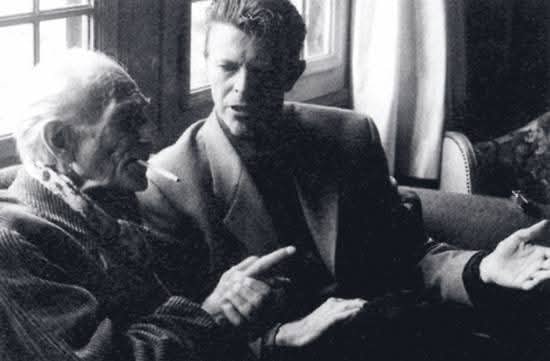
The text he drew from it is worth reading. Sitting at lunch with the painter and his wife Setsuko, he wrote: “Balthus puts down his knife and fork and, staring at some far off point, says quietly: ‘I awoke very early this morning. I went to my studio and started work. It would not come… and I gazed at my painting then the small things around me and I felt such a tremendous… sense of awe.’” His voice dies away, Bowie continued, leaving “a misty trail of remembrances, glories and maybe disappointments. Locked in silence, we three sit, Balthus, Setsuko and I. The tragedy and chaos of the twentieth century rushes through the memory of its last Legendary Painter.”
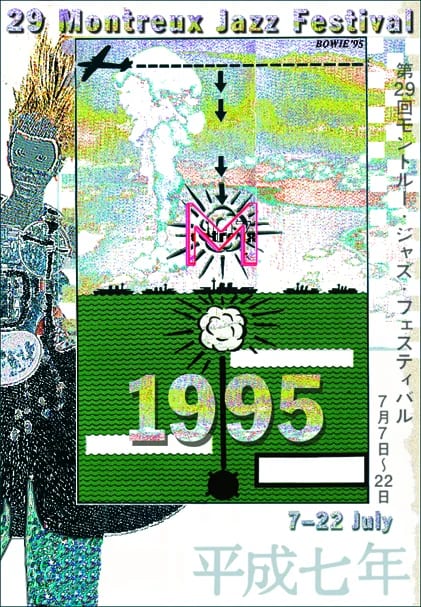
The following year he drew, in his own hand, the poster of the Montreux Jazz Festival for his friend Claude Nobs.
In 1995, Claude Nobs entrusted the official poster for the festival’s 29th edition to his friend David Bowie. The musician, a trained painter and visual artist, composed it entirely on an Apple computer.
The result is nothing like a concert poster. Bowie built his image around the fiftieth anniversary of Hiroshima: it contains the stripped-down graphic of a falling bomb, an “M” evoking power, and the enigmatic silhouette of “Ramona A. Stone”, a character he was then developing across several of his projects.
The poster was silkscreened on paper at 100 × 70 cm by the Bern master printer Albin Uldry, and issued both as a standard version and as a numbered edition of 250 hand-signed copies.
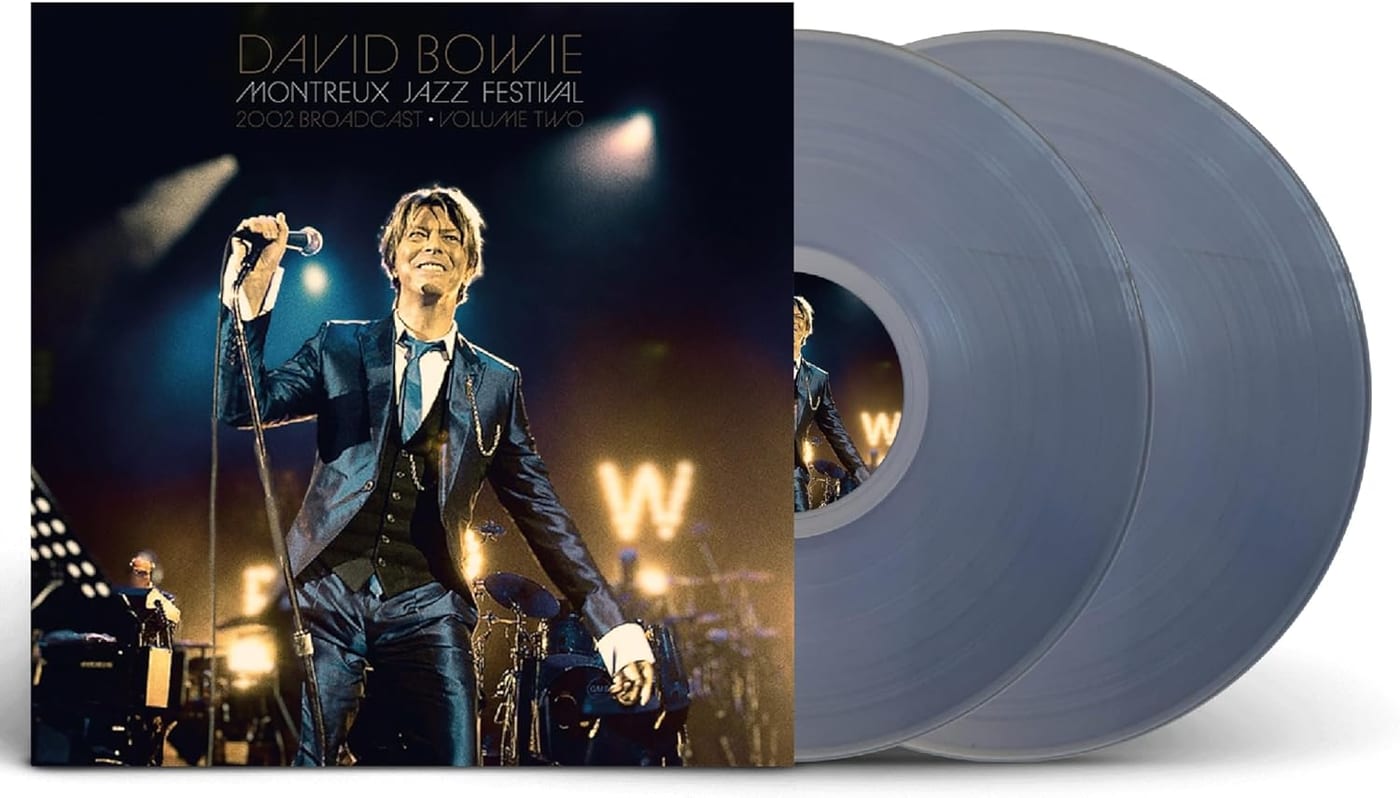
Twenty years after leaving Blonay, Bowie returned to Montreux, this time on stage. On 18 July 2002 he played the Auditorium Stravinski in the concert that closed the European leg of his “Heathen” tour.
The evening was unusual on two counts. Despite crushing heat, he played longer than usual, and above all he gave two sets: the first ranged across his career, from “Life on Mars?” to “Heroes”; the second was devoted almost entirely to “Low”, the 1977 album, played out of sequence and missing only “Weeping Wall”.
The choice resonates particularly here. “Low” opened the Berlin trilogy, whose third part, “Lodger”, he had come to record at Mountain Studios in Montreux. He was thus closing that cycle in the town where he had completed it, a quarter of a century earlier.
In all, he played thirty-one songs that evening.
The day before his only Montreux concert, Bowie asked Claude Nobs for chanterelles. The chef Frédy Girardet remembers: “Hard to find that kind of mushroom in July, but that is what David Bowie asked Nobs for! I cooked, we shared a memorable evening at the Caux chalet. The next day, on stage, he told the audience about his memorable chanterelle meal!”
Pierre Keller, for his part, had drawn him towards engraving: “We were introduced to each other by Claude Nobs and became very good friends. He was a man with two different-coloured eyes, a sarcastic laugh and a voice that seemed to come from beyond. We talked about art, he had an incredible culture. I asked him to try his hand at engraving for an exhibition I was organising at the Gymnase du Bugnon. During his visit, some students made off with the coffee cup he had drunk from.” (Le Temps)
Ten years after the singer’s death, a documentary by Benjamin Kraatz gives the floor to Sandro Sursock, a Geneva friend who had never sought to profit from that closeness and had kept silent for decades. He jokes about it: “We can call it time-barred now.”
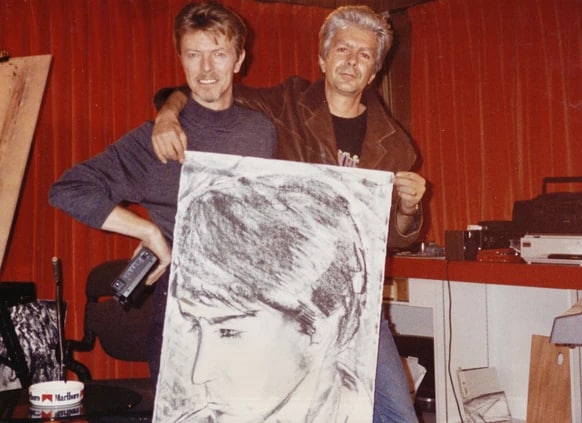
The film gathers private photographs and episodes that had remained unknown. One morning Bowie telephoned Sursock to remind him it was his son’s birthday, and asked him to come along to Mountain Studios, in Montreux, where he was then working on an album: he wanted to prepare a present there. That day, in the studio, he drew the child’s portrait.
We also learn that, at Sursock’s request, he agreed to go to a private party in Gstaad, among guests he did not know. That is the thread of the testimony: during his years in French-speaking Switzerland, Bowie moved about with a freedom that had become impossible elsewhere, because those close to him did not treat him as a celebrity and local discretion did the rest.
Sursock describes less the artist than his way of being: the curiosity, the humour, a very English class, and the ability to join a group without seeking to become its centre. A friendship in which, he says, you ended up forgetting that David Bowie was David Bowie.
The director has his own history with him: at thirteen, Benjamin Kraatz had let himself into the Sauvabelin property without permission, before being politely but firmly shown out by the housekeeper. Forty years later he devotes his first documentary to him, given its world premiere at the Montreux Jazz Festival in July 2026 (watson).
The film also puts forward a more private episode: according to Sandro Sursock’s testimony, Bowie is said to have secretly followed a therapy in Morges to treat his dependence on alcohol. The information comes from him alone, and he expresses it in the conditional.

The producer of Mountain Studios (Queen, Bowie), honoured outside the Casino.

The free exhibition inside the real Mountain Studios, where Queen recorded seven albums between 1978 and 1995.

The former Harry’s Bar, haunt of the stars and of the festival’s jam sessions, renamed in tribute to Claude Nobs.

The legendary chalets of the festival’s founder in Caux, where he hosted the greatest stars in music.

The chalet above Blonay where Bowie settled in 1976, his main residence until 1982.

Founded in 1965 by Claude Nobs, this former hotspot of Montreux nightlife is today a traditional restaurant.

The heart of the festival since 1993: under one roof, the Auditorium Stravinski and the halls that host half the history of music every summer.

The Bernese Oberland resort at the end of the MOB panoramic line from Montreux, where Michael Jackson came to take shelter.

The Italian restaurant where Queen dined and where Freddie Mercury had his table, number 19.

Balthus’s house, at the end of the panoramic line, where David Bowie came to interview him.

The Lausanne school where Pierre Keller ran his workshops: Keith Haring drew there, David Bowie made an engraving.

The Lausanne museum of Art Brut, assembled by Jean Dubuffet, which David Bowie said had shaped his life and his creativity.

The square of Lausanne’s town hall, where David Bowie married the model Iman on 24 April 1992.
1979
The final part of Bowie’s trilogy with Brian Eno, recorded largely at Mountain Studios in 1978-1979. Bowie, a resident of the region, would return there for five more albums.
1981
Born of an improvised session at Mountain Studios in 1981, this historic duet between Queen and David Bowie, two legends intimately tied to Montreux, became a worldwide number one.
1983
One of David Bowie’s greatest hits was born in Montreux: he wrote and demoed it in late 1982 at Mountain Studios, with Nile Rodgers of Chic. First a folk sketch on a twelve-string guitar, the song found its dance direction there before being finished in New York.
1993
Co-produced by Nile Rodgers (Chic, “Let’s Dance”) and recorded between Montreux and New York, the album of Bowie’s solo return after Tin Machine. Funk, jazz and modernity by the lake.