Classical music
Wilhelm Furtwängler

Wilhelm Furtwängler (1886-1954), the legendary director of the Berlin Philharmonic, ranks among the greatest conductors of the 20th century. He chose Clarens, on the lakeside west of Montreux, to live out his final years, from 1945 until his death. A bust, unveiled in 2016, honours him at the Port du Basset.
Wilhelm Furtwängler: a giant of the podium in refuge at Clarens
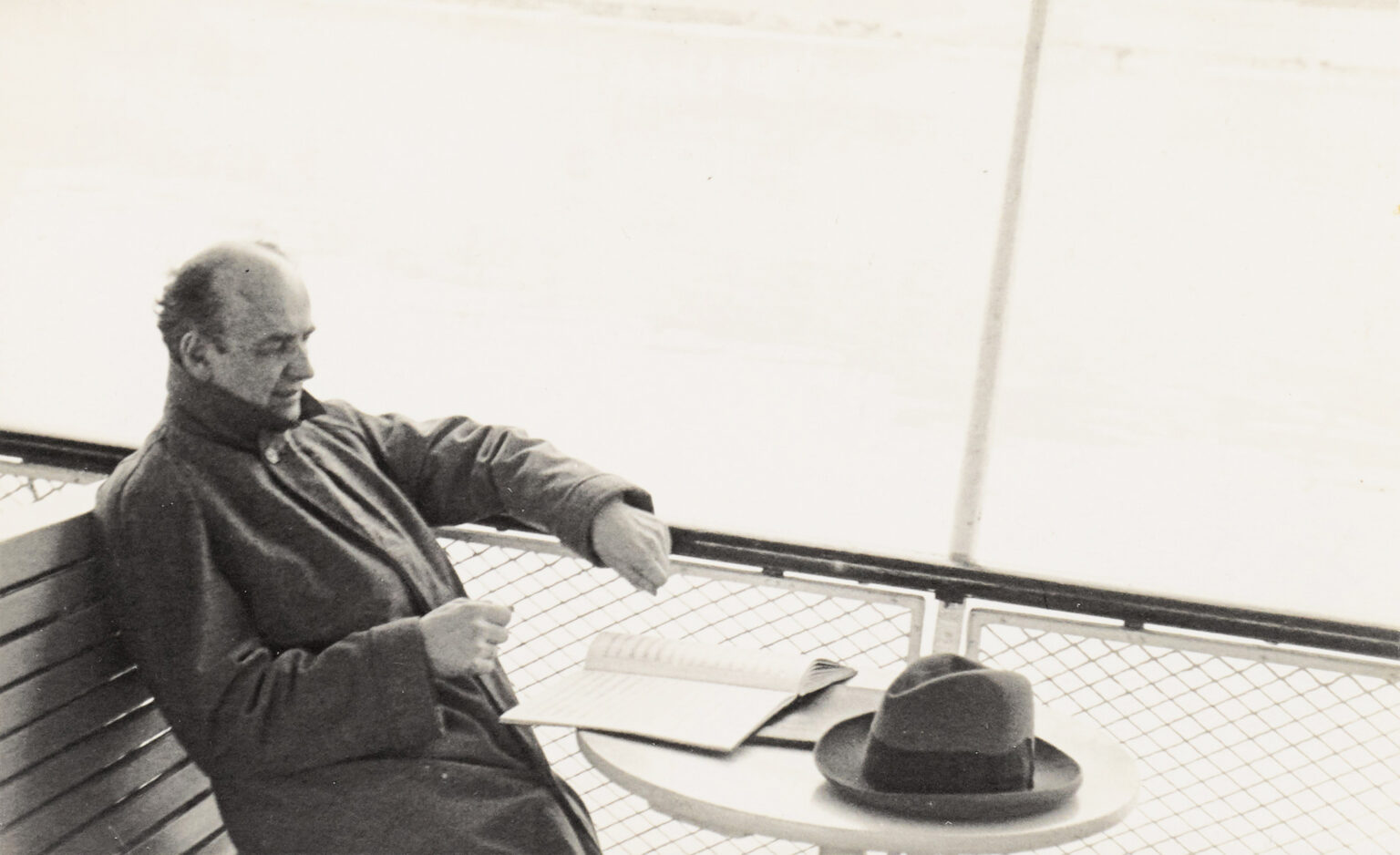
On the lake, on the way to Montreux (1930)
Fifteen years before he found refuge there, Furtwängler already knew Lake Geneva. On 18 May 1930 he crossed the lake by boat, on the way to Montreux, where that very evening he was to conduct his touring orchestra, the Berlin Philharmonic.
On deck, the conductor was so absorbed in the score he would play, Schumann’s First Symphony, that he took to “conducting” an imaginary orchestra, seated before his book. The scene, which became famous, was captured by Paul Bose, a flute and piccolo player in the Philharmonic from 1914 to 1940, equipped with a state-of-the-art Leica.
The flight to Switzerland
Wilhelm Furtwängler conducted the Berlin Philharmonic, one of the most prestigious posts in world music. Having remained in Germany during the war without joining the Nazi party, he ended up becoming suspect to the regime itself.
In December 1944 he asked Albert Speer, the armaments minister and a long-standing acquaintance, whether Germany could still win the war. The answer was no, and Speer advised him to seize the first pretext to get abroad. On 23 January 1945 Furtwängler gave his last concert in Berlin; soon afterwards he was warned that a Gestapo arrest warrant had been drawn up in his name.
On 28 January 1945 he conducted the Vienna Philharmonic in Vienna, his final concert in the Reich, of which the recording survives. Within hours of arrest, he made for the Vorarlberg and crossed the Swiss border in early February.
At the end of February 1945, already safe, he saw one of his concerts in Winterthur disrupted by stink bombs: part of the Swiss press at first regarded him as a cultural dignitary of the Reich. He took refuge in a sanatorium in Clarens, on the lakeside west of Montreux, where he waited out the end of the war and was at last reunited with his wife Elisabeth, née Ackermann, whom he had married in a civil ceremony in Potsdam in 1943, and their son Andreas, born in Zurich in November 1944, whom he then saw for the first time. It was at the Église libre de Montreux, today part of the Église réformée vaudoise, that he had his marriage blessed and his son baptised, at the end of 1945.
Ansermet, Fischer and the return to musical life
The initial hostility soon faded. The conductor Ernest Ansermet, founder of the Orchestre de la Suisse Romande, and the pianist Edwin Fischer were among the friends and colleagues who helped him regain a footing in the country’s musical life.
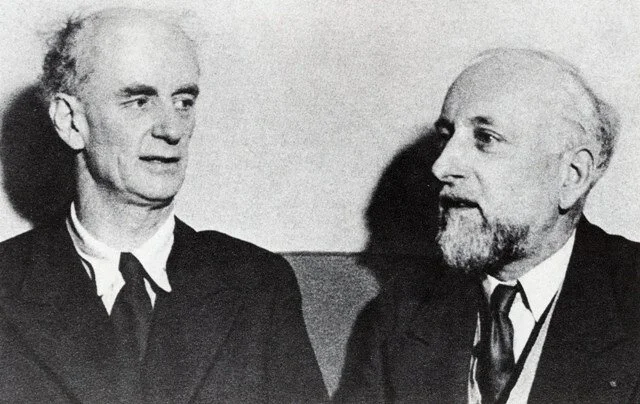
From 1947 Furtwängler was conducting again in Germany and Austria, but he remained attached to Clarens and became a central figure of the Lucerne Festival, returning there almost every summer until his death.
Cleared, then overtaken by Karajan
Once peace came, Furtwängler had to go through denazification, though he had never been a party member. Two trials were held, in Vienna in January 1946 and in Berlin in December. He emerged cleared of all collaboration and regained the right to conduct.
But the ordeal had marked him, and a rival now occupied the ground: Herbert von Karajan, younger and rising irresistibly. From 1952 on, Furtwängler gradually lost his hearing. Yet he kept conducting at the highest level, while keeping Clarens as his home base.
The bust at the Port of Clarens
Furtwängler died on 30 November 1954. He had spent close to ten years attached to Clarens, above Montreux.
On 28 August 2016, the town paid tribute to him with a bronze bust, installed at the Port of Clarens, where the conductor liked to walk. It is the work of sculptor Bernard Bavaud, the very one who modelled the busts of Miles Davis, Richard Strauss and Igor Stravinsky on the Montreux quays.
These places on the map
Tap a marker to open the place page.